

There is good news and bad news for critics of the United States’ bloated 21st century war machine. The good news: the “war on terror” is dead.
The bad news? It seems to have become a part of the walking dead — a kind of zombie war on terror that is continuing and radically expanding, even as the fears and threats that originally motivated all its excesses are seemingly vanishing from the American psyche.
Consider the following facts: despite the public release only a few years ago of evidence showing the Saudi government’s direct complicity in the crime of September 11, 2001 — the central, instigating act of terrorism that drove and justified every aspect of the “war on terror” that followed — associating with or even taking money from that same government appears to carry no stigma. The Biden administration’s efforts to pledge American lives and treasure to defend that same government elicited relatively little controversy. And this year, dozens of top U.S. comedians, from the left-leaning Bill Burr to the right-leaning Andrew Schulz, happily took its money to help whitewash its image. The Saudi government’s expanding encroachment into U.S. sports and entertainment in general continues only to receive an eager welcome.
Meanwhile, after spending more than a decade fighting the shadowy threat of al-Qaida, the U.S. government has now seemingly come to terms with the terror group’s ongoing influence in the region. It has enthusiastically gone along with the installation of an al-Qaida-linked militant, Ahmed al-Sharaa, as the leader of Syria, whose former president Washington spent years trying to remove from power expressly because of his alleged support for terrorism — including the very al-Qaida its new president hails from.
Sharaa swiftly had the $10 million U.S. bounty on his head removed, the terrorist designation of the al-Qaida offshoot he led has been revoked, and just a few weeks ago, he was given a warm welcome during the United Nations General Assembly in New York, where on one stage, former CIA Director David Petraeus acknowledged the two had been on opposite sides of the civil war in Iraq 20 years ago, in between lavishing him with praise and declaring himself a “fan.”
It’s not just al-Qaida. The Biden administration had explored teaming up with the Taliban to fight ISIS’s branch in Afghanistan, while the Trump administration is now inching toward normalizing relations with the group, which George W. Bush once said was “threatening people everywhere by sponsoring and sheltering and supplying terrorists.”
The Taliban’s link to al-Qaida was once upon a time the rationale for regime change and 20 years of U.S. war in Afghanistan — which, of course, ended with the Taliban coming back into power, which Washington appears to be coming to peace with now.
Together, these stories suggest that both the American public and the Washington national security establishment have moved on from the core motivations that drove the “war on terror” for the better part of two decades. Al-Qaida, the Taliban, the government forces behind September 11 — none of it matters anymore, apparently.
And yet the “war on terror” is not just still with us, it’s expanding in radical new ways. The Trump administration has now explicitly repurposed the tactics and powers used against terrorism against a new, unrelated target: drug traffickers — launching airstrikes on private Venezuelan boats in international waters on the basis that drug smugglers are terrorists, and that their transportation of drugs constitutes “an armed attack against the United States.” This is despite widespread doubts about the legality of such strikes and concerns about the risks of this terrorist designation.
Meanwhile, Trump has also continued and escalated the trend started under the Biden administration of turning the “war on terror” inward. The president is now threatening to deploy the military against what he calls the “enemy from within,” as his administration pushes to treat a variety of domestic critics, dissidents, and opposition groups as terrorist threats over their First Amendment-protected activity, and draws up secret watchlists of supposed domestic terrorists.
This is all a vindication of the many civil libertarians who warned over the past 24 years that the expansive powers claimed by President Bush and then Obama would somewhere down the line be used in new, alarming ways they were never originally intended for, including to intimidate and punish political dissent. What’s absurd is that this is happening at the exact time that the threats that originally justified all of this are simply being forgotten.
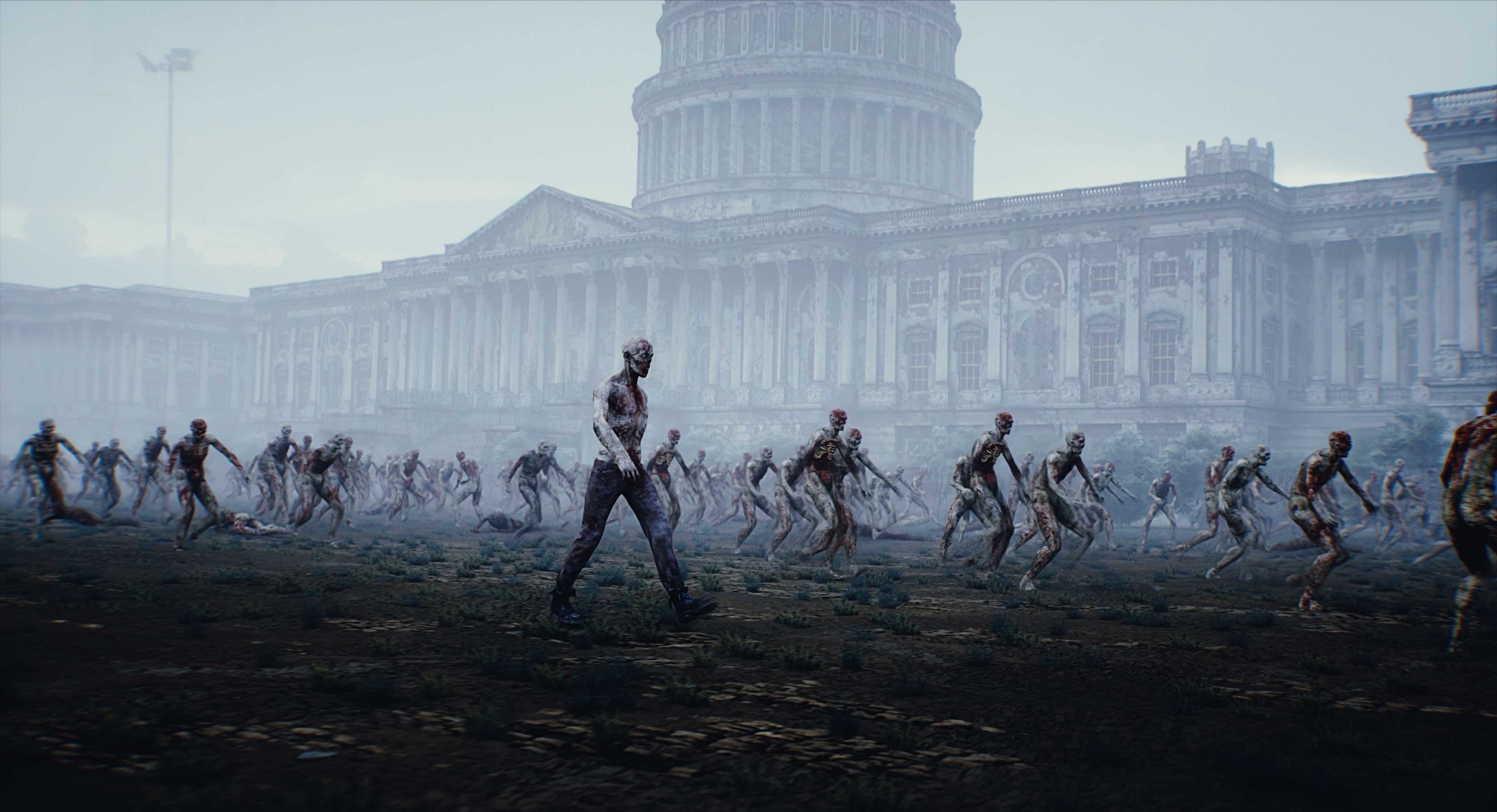
What we are witnessing is the war on terror in zombie form: devoid of its original life force and human drive, but more dangerous than ever, as it shuffles mindlessly forward in a search for human flesh to no end.
Trump may be the first president to use this zombie “war” for ends that it was never meant for, but history suggests he will not be the last, unless we make the collective political choice to put a lid on and roll back the radical growth of executive war-making power that has accumulated year after year since 9/11. Until then, this zombie will stagger on.