

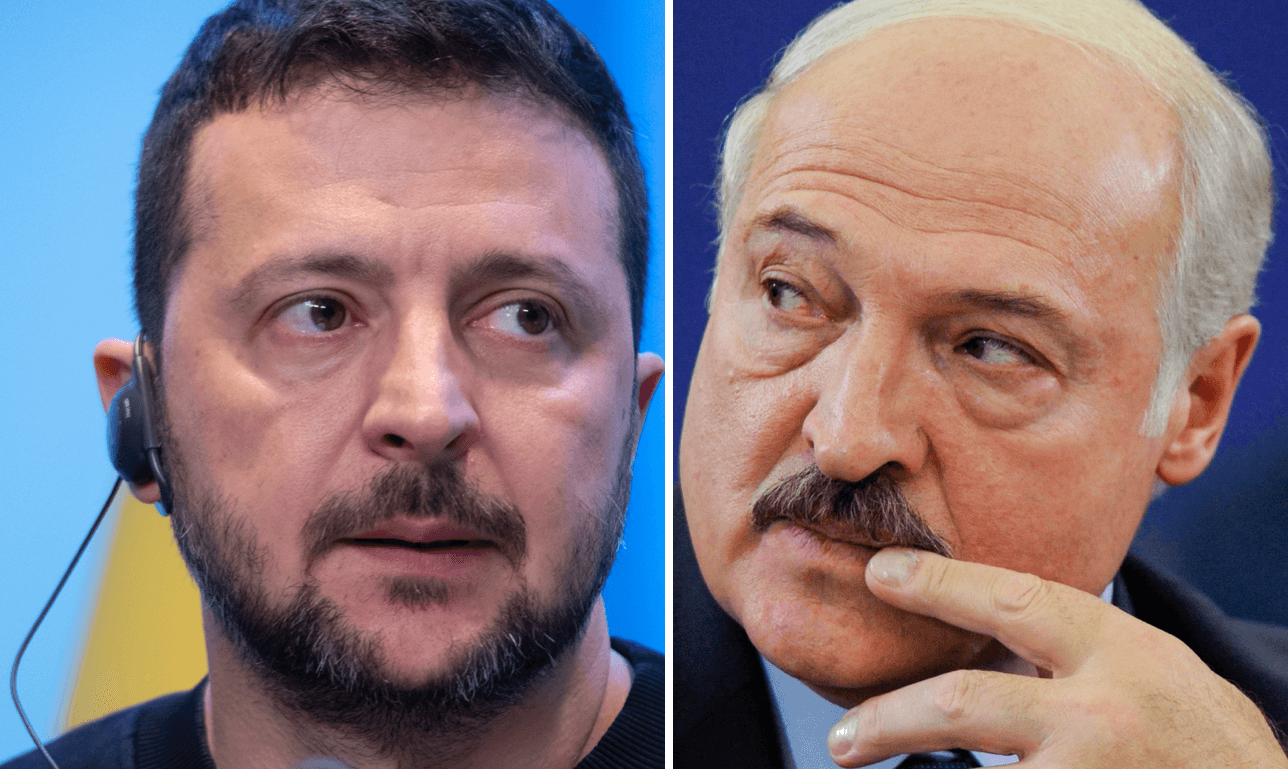
On June 19, Ukrainian President Volodymyr Zelensky gave Belarus leader Alexander Lukashenko a one-week ultimatum: remove all equipment assisting Russia with drone targeting or Ukraine would strike Belarus.
“If he doesn’t do it, we will,” he said, adding that “a week is enough for him to do that.”
From the first days of Russia’s invasion, Ukraine and its Western partners including the U.S. and NATO, have warned that Russian President Vladimir Putin’s ambitions would not be contained to the borders of Ukraine. They claimed that if not dealt with, Russia would attack other European and NATO countries. The UK, relying on its own intelligence and echoing other European leaders, said Russia would be prepared to strike by 2030.
But the real risk of a widening war at the moment comes from Ukraine, and on two fronts — the Baltic states and Belarus. On May 19, a Romanian F-16 fighter jet based in Lithuania shot down a Ukrainian drone in Estonian airspace after it had flown through Latvian airspace. It was not the first Ukrainian drone flying through the airspace of a Baltic country. Russia has accused the Baltic countries of permitting the Ukrainian armed forces to use “air corridors” that reduce flight times to targets deep inside Russia and increase their effectiveness.
In response, the Baltic countries say Russia is “lying,” and Kyiv insists that “Ukraine has never requested such a use.”
Even more serious is Russia’s accusation that Ukraine is coordinating with Latvia to allow Kyiv to launch drones from its territory. Latvia's envoy to the Security Council called the Russian claim “pure fiction.” Latvian Foreign Minister Baiba Braže said this was part of a disinformation campaign against her country.
The Baltic nations — Latvia, Lithuania and Estonia — are NATO members. Putin has warned that “Russia would treat all Ukrainian drone launch sites as legitimate targets, even if they operate from the Baltic states.” This risks drawing NATO — and the U.S. — into a direct war with Russia. The Russian Foreign Intelligence Service has warned that “the coordinates of decision-making centers on Latvian territory are well known” and that “NATO membership will not protect terrorist accomplices from just retribution.”
This war of words, including Zelensky’s most recent threats, is getting dangerous.
In his charges last week, Zelensky accused Belarus of installing four signal relay stations on communications towers on its territory to assist Russia in directing drones targeting Ukraine. He said Minsk has been warned through intelligence and military channels to “stop helping the Russians.” He added that “Russia will keep pushing [Lukashenko] further into this war,” but that the Belarusian president now “understands that Ukraine will respond.”
When the Commander of Ukraine’s Unmanned Systems Forces said that they have identified 500 targets on Belarusian territory and that “we know where Lukashenko is,” Lukaschenko responded that Ukraine may have identified 500 targets, but “we have one very serious target, with precise coordinates.” Lukashenko later apologized for his role in the escalation of words, adding that “no military action should be expected from Belarus.”
Belarus and Russia are strategic partners and members of the Union State of Belarus and Russia. Belarus hosts Russian tactical nuclear weapons that are fully under Russia’s control, and Russia used Belarus territory to launch its invasion of Ukraine in 2022. However, Belarusian troops have not entered the war. People with expertise on Belarus and familiarity with the situation told Responsible Statecraft that Lukashenko has used every means at his disposal to avoid being drawn deeper into Russia's conflict with Ukraine.
While the Ukrainian complaint has a basis, it is being blown out of proportion, say experts. While there is intelligence sharing between Russia and Belarus, some of which is being used to help Russian forces with drone targeting, the scope and impact are not as strategically important as Ukraine is suggesting.
Ukraine has other issues. Despite an increasing series of spectacular drone strikes deep inside Russia, the war on the battlefield isn’t going as well as the mainstream would like us to believe. Russian advances have increased again recently, and the key strategic city of Kostyantynivka is now in real danger of falling to Russian forces.
If it falls, Russia’s goal of taking all of Donbas will be within reach. Zelensky wants the “hot phase” of the war to end by winter, and has suggested certain parts of contested Ukraine could come under the NATO security umbrella to achieve that.
Nicolai Petro, Professor of Political Science at the University of Rhode Island, suggested to RS that Zelensky’s threat against Belarus “may make sense in the context of his overall strategy of trying to provoke an escalation from Russia or Belarus that would necessitate NATO's direct military intervention.”
Petro, however, questions whether European leaders would intervene under such circumstances. Alexander Hill, Professor in Military History at the University of Calgary, agrees, telling RS that he suspects Zelensky’s threat is another part of his “attempts to widen the war and ultimately drag NATO into a more active role.”
Experts say that Kyiv could be signaling to Belarus and Europe that it will not tolerate constructive engagement between Minsk and the EU during the war. Ukraine is anxious to see a European security architecture that emerges from the war confront, not include, Russia. Keeping Belarus out is part of that strategy. If so, that would represent a tragic failure to learn from past mistakes.
The tensions over how and whether Baltic airspace is being used and the threat delivered to Belarus show how dangerous the risk of escalation beyond Russia and Ukraine is becoming. Zelensky may not be posturing or issuing idle threats. Experts believe Zelensky could be seeing how far he can go and that, if there are no existential objections from key European players, there is a good chance he'll keep pushing.
- Washington must act to defuse the Baltic powder keg ›
- Ukraine wants to make its own Patriot missiles. That's a bad idea. ›
- NATO Summit: Time to take the transatlantic crisis by the horns | Responsible Statecraft ›