

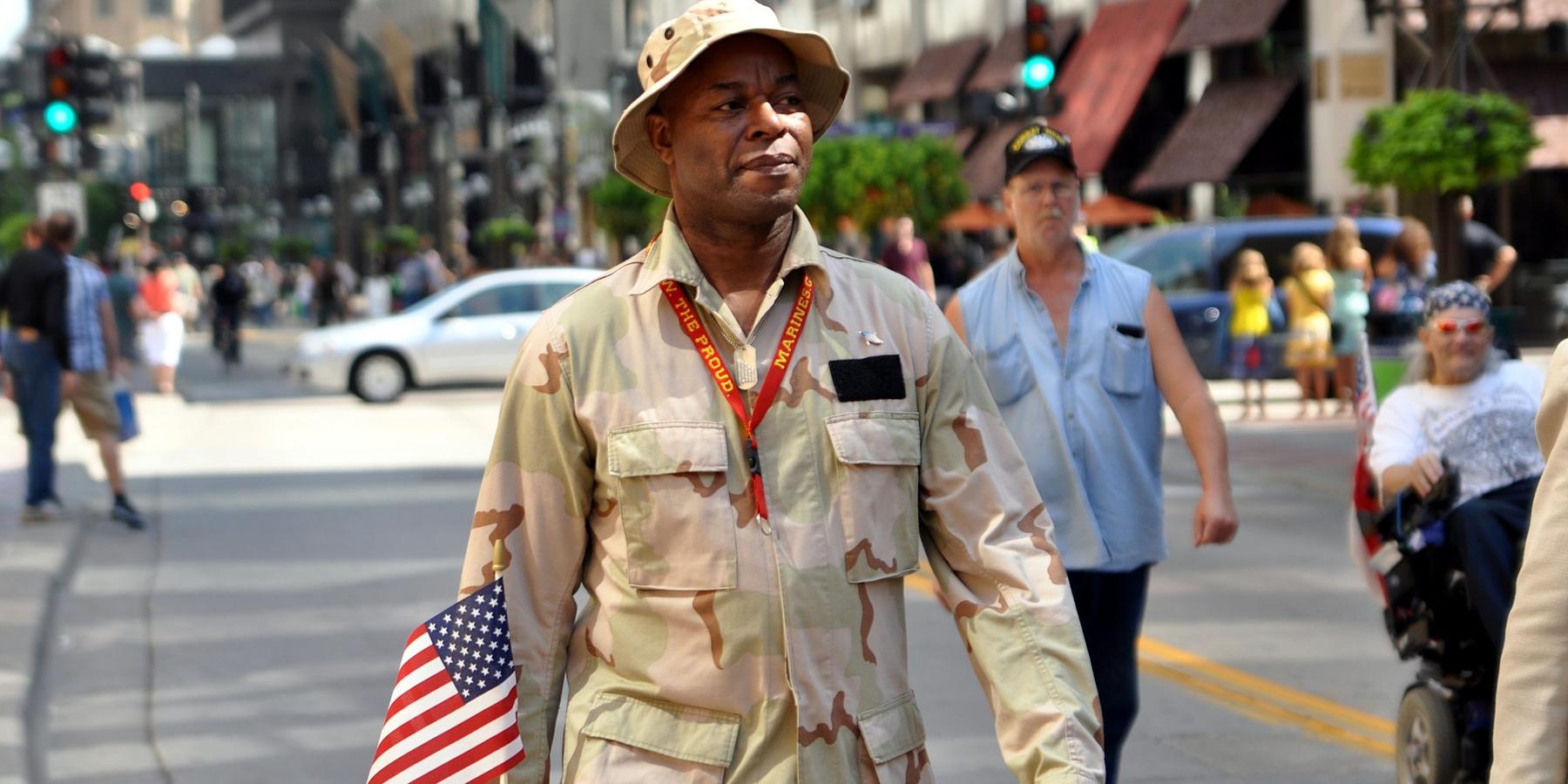
Your experience matters. Whether you have served in combat, supported missions from home, or navigated the transition to civilian life, your perspective can help inform how Americans think about war, peace, and the use of military force.
The Veterans Essay Contest invites veterans and active-duty service members to contribute their voices to these critical conversations. Prize winners will be required to provide proof of military service before awards are distributed.
Applicants may submit one essay responding to either of two prompts: Veterans & Society Essay or Veterans Policy Challenge. The two prompts will be judged separately. For each prompt, a First Place prize of $1,000 and a Second Place prize of $500 will be awarded, for a total of four winners. Worthy prize winning essays may be considered for publication in Responsible Statecraft but will not be paid a separate contribution fee.
Essay submissions should be e-mailed as a PDF to veterans@quincyinst.org by 11:59 pm EST on Monday, August 17th 2026. The Subject Line should be formatted with your surname followed by the specific prompt you are submitting (e.g., Smith_Veterans Policy Challenge). In the body of the email please provide your full name and a brief 1-2 sentence overview of your military experience and veteran status. Specific military experience will not be considered during the judging process. Winners will be announced shortly after Labor Day.
Quincy Institute is committed to publishing fact-based, human-generated content and has a zero-tolerance policy for plagiarism and AI-generated material. Submissions that are determined to be plagiarized or contain AI-generated text will be rejected. However, outside ideas and quoted text may be used to advance an argument so long as a footnote is provided. All citation styles will be accepted and choice of citation style will not be considered in judging the quality of the essay so long as it clearly identifies the source. Footnotes do not count towards word count but should only be used for citations and not substantive arguments or explanation. All submissions must be exclusive to the essay contest and may not be submitted elsewhere.
Veterans & Society Essay: What Do a Nation and Its Citizens Owe Those Who Serve?
(800-1,200 words) Americans often honor service members and veterans for accepting personal risk, fulfilling a duty to the country, and defending the nation. Some critics respond that military service is voluntary and that not every military action necessarily protects the public or advances the national interest. At the same time, decisions to use military force are made by elected leaders in the name of the public, while the burdens of war are carried disproportionately by service members, veterans, and their families. In a country founded on individual liberty, where military service has at times been compulsory but is now voluntary, what – if anything – does the nation owe those who serve? And what responsibilities do citizens bear when their country sends others to war?
Veterans Policy Challenge Essay: What is one specific, achievable policy change that would improve the lives of service members, veterans, or military families?
(800-1,200 words) The proposal may involve veterans’ healthcare, education, employment, housing, military family support, the transition to civilian life, foreign policy, national security decision-making, or the use of military force. Essays should identify a specific problem, propose a realistic solution, and explain how the change could be enacted and measured for success, including by identifying which government institutions or agencies would be responsible for it.
Judging Process
All submissions will first undergo an initial review by Quincy Institute staff for readability, coherence, and seriousness of effort. This screening process will NOT consider an author’s viewpoint, argument, or policy position. Essays advancing beyond the initial review will be anonymized and evaluated by a panel of 10 judges consisting of 5 staff members not involved in the initial screening and 5 outside judges who are veterans. Judges will review essays without author names, ranks, biographies, or other identifying information.
Scores from all judges will be averaged to determine the winners in each category.
Judging Criteria for Veterans & Society Essay: Persuasiveness of Argument: 30 points; Originality and Insight: 30 points; Writing Quality: 25 points; Engagement with Complexity and Competing Perspectives: 15 points.
Judging Criteria for Veterans Policy Challenge: Policy Design and Feasibility: 30 points; Potential Impact: 20 points; Writing Quality: 20 points; Problem Identification: 15 points; Persuasiveness and Use of Evidence: 15 points.
All correspondence, including essay submissions, should be sent to veterans@quincyinst.org