

As Israeli officials lash out against a preliminary deal to end the war in Iran, President Donald Trump is returning the favor. “I'm not happy with the way Israel has handled themselves with Lebanon,” Trump said Tuesday. “Israel would have been blown up a long time ago had I not gotten involved.”
The comments represent a nadir in U.S.-Israel relations under Trump. The dispute is fundamental. Trump is determined to end the war with Iran, and Iran has made clear that a peace deal is only possible if Israel halts its operations against Hezbollah, an Iranian ally, in Lebanon. A purported leak of this week’s memorandum of understanding between the U.S. and Iran explicitly states that the war in Lebanon must end as part of a broader deal.
Israel, for its part, believes its interests are best served by continued war with both Hezbollah and Iran, and it’s insisting that it won’t be bound by the terms of any deal negotiated between Tehran and Washington alone.
The only way to reconcile these positions is for one of the three countries to swallow a seemingly unpalatable compromise. In other words, if the U.S. wants to get its way, then it’ll have to do something it has long avoided: force Israel to back down using America’s extraordinary leverage over the country, including the roughly $4 billion in military aid the U.S. gives Israel each year.
At this stage, there is little indication that Trump is willing to take this step. But, given the rapidly increasing public support for ending weapons shipments to Israel, it’s worth asking the question: what would happen if the U.S. cut off all military support for Israel?
Let’s start with Lebanon. Military experts say a U.S. aid cutoff would slow but not end Israeli operations in the country. The most immediate impact would be to Israel’s fighter jet fleet, which relies on U.S. weapons companies for maintenance.
Israeli F-35s, for example, “would probably not be able to operate for more than a month or at most two months without spare parts,” said Josh Paul, who served for more than a decade in the State Department bureau that oversees U.S. weapons transfers.
Israel’s stockpiles of air-to-ground missiles and air-defense munitions would allow it to continue its campaign in the short to medium term. But, given how many of those weapons are produced in the U.S., Israel would soon have to make difficult choices about where to focus its military efforts. Pro-Israel analysts are acutely aware of this fact; as two writers at the Foundation for Defense of Democracies wrote in 2024, Israel needs to build up its own military industry if it wants to “fight enduring battles on multiple fronts.”
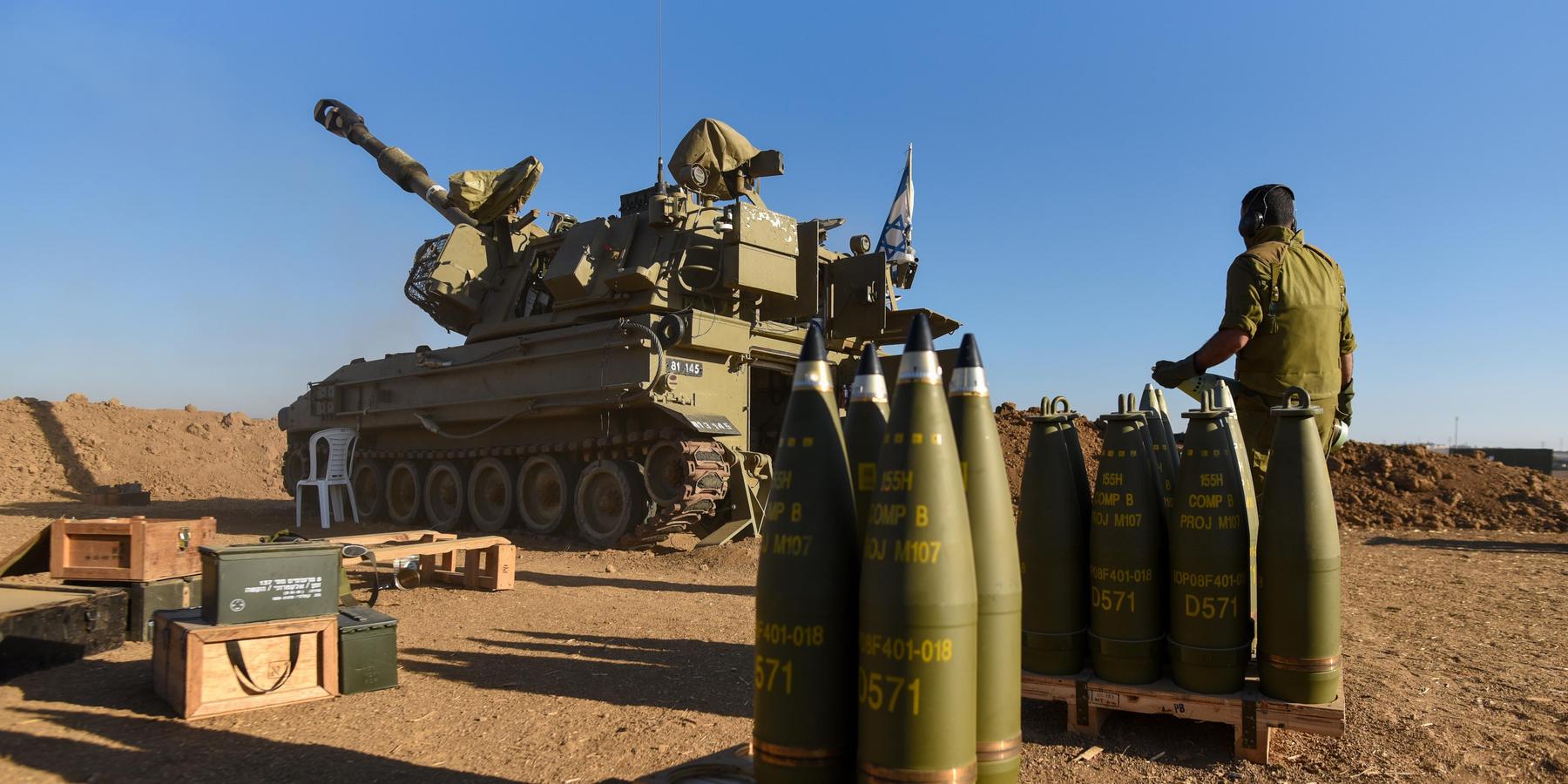
An accounting of U.S. aid to Israel since Hamas’ Oct. 7 attacks helps to demonstrate this dynamic. Over the past three years, the U.S. has given Israel roughly $12.5 billion in supplemental military aid, on top of the usual $3.8 billion that Israel receives each year. This assistance includes roughly 90,000 tons of military equipment and munitions, which make up a “significant component” of Israel’s operational readiness, according to the Israeli defense ministry. This rapid influx of weapons, in addition to direct support from the U.S. military, has enabled Israel to simultaneously pursue ambitious campaigns in Gaza, Lebanon and Iran.
Even a threat to cut off this aid would “send a clear signal to Israel that this guarantee of an American rescue is no longer there, which would fundamentally alter their calculus,” said Jon Hoffman of the Cato Institute. Hoffman emphasized that Israeli forces are “capable of defending themselves” without U.S. help; however, they rely on U.S. assistance to backstop their “expansionist policies” in the region, he said.
The extent to which Israel would have to prioritize would depend on how far the U.S. is willing to go in reducing aid. Iran proved earlier this month that it is willing to strike Israel directly in retaliation for Israeli attacks in Lebanon. If the Trump administration pledged to not defend Israel from Iranian attacks, then Israeli policymakers would have to reckon with the possibility of fighting both Iran and Hezbollah by themselves amid reports of dwindling Israeli stockpiles of missile interceptors. They may well conclude that the war in Lebanon is not worth the risk.
And this only points to the military leverage that the U.S. has over Israel. American diplomatic support provides another key pressure point. Without it, Tel Aviv would have little to shield it from criticism at the United Nations or in other international institutions.
As with all hypotheticals, this builds on some fraught assumptions. One is that Iran would be willing to restart a war with Israel even as it seeks a peace deal with the U.S. Another is that the Trump administration, or any future administration, would be willing to fend off critiques from pro-Israel voices within the U.S., many of whom remain influential in government, think tanks and media. But the bottom line is that cutting off U.S. aid would force Israel to focus more on defending its own territory (and maintaining control in Gaza and the West Bank) than fighting wars abroad.
Recognizing the looming threat to Israel’s forward-leaning security strategy, Israeli leaders and their allies are pushing hard to increase their own leverage. Among their most ambitious efforts in this regard are a pair of recent measures in must-pass bills that would more deeply “entrench” Israel in “the machinery of America's defense industrial base and its intelligence community,” Paul said. If these provisions become law, then even an Israel skeptic in the White House would struggle to fully unravel the U.S.-Israeli security relationship.
Even as these measures move through Congress, Trump still has an opportunity to press Israel to go along with his Iran peace deal and end the war in Lebanon. Short of cutting off aid, he could take a hard line in negotiations over a new memorandum of understanding between the U.S. and Israel, which will likely commit Washington to another decade of subsidizing Israel’s military.
Trump does not have a silver bullet for forcing Israel to go along with a peace deal with Iran. But he does have an extraordinary amount of leverage — if he’s willing to use it.
- Congress quietly moves to integrate US and Israeli militaries ›
- Israelis don't pay for the weapons we 'sell' to them — US taxpayers do ›
- Trump wants to talk to Hezbollah. Will they pick up the phone? | Responsible Statecraft ›
- Pitch for defense treaty and moving US military to Israel is insane | Responsible Statecraft ›