

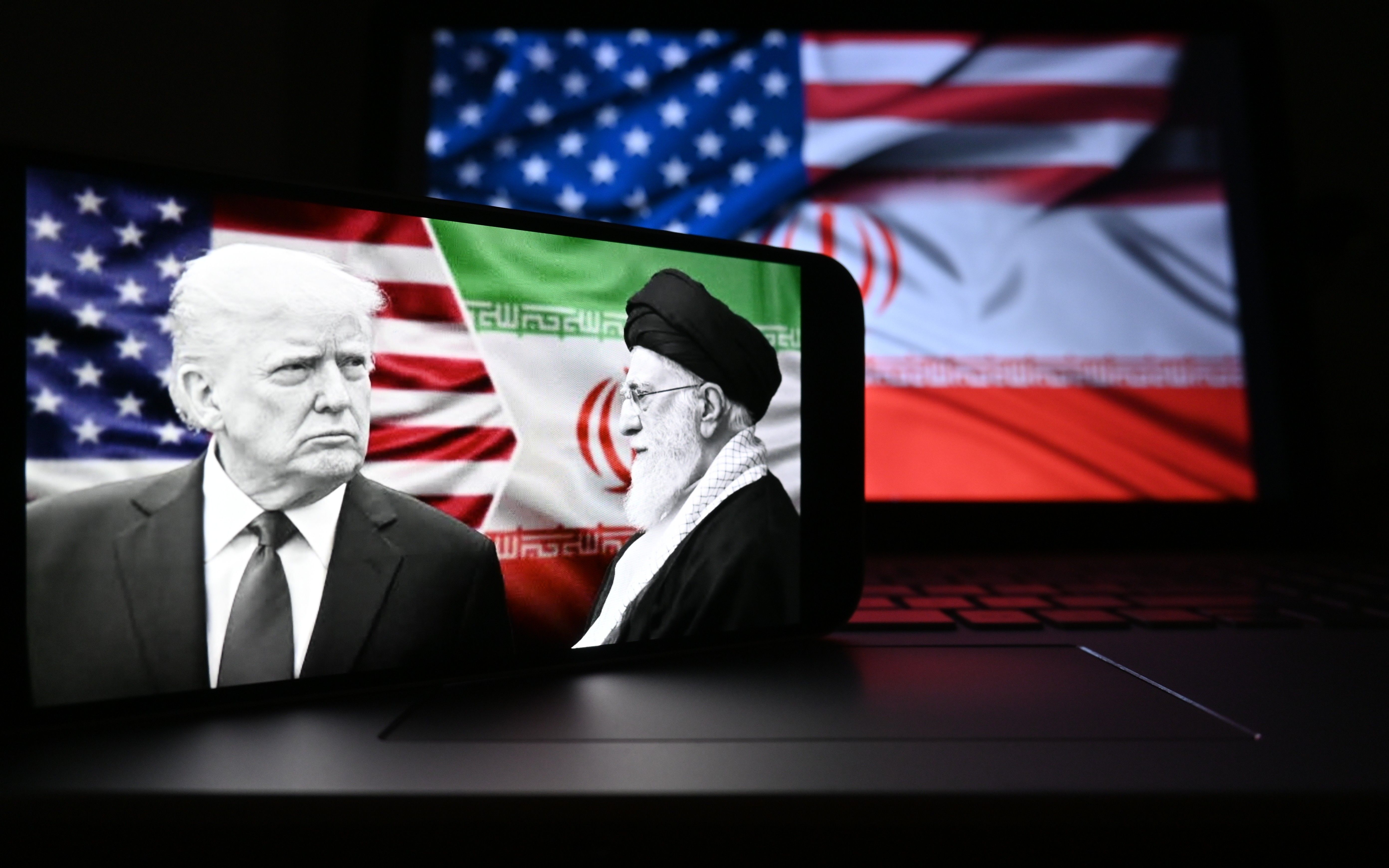
The 12-day war between Israel and Iran in 2025 shattered long-held assumptions, thrusting U.S.–Iran relations into uncharted territory. The conflict, a dramatic escalation of decades-long tensions, has left the Middle East teetering on the edge of broader instability. As the dust settles, the United States faces a critical juncture in its approach to Iran — one that could redefine the region for decades.
Four plausible scenarios loom large, each carrying profound implications for global security, regional stability, and American foreign policy.
Escalation without end
The first scenario is mutual escalation without end: a volatile cycle of strikes, sabotage, and sanctions that has long defined U.S.–Iran relations and reached a new peak in the recent war. In this future, Iran rebuilds its nuclear and military capabilities, refusing to suspend enrichment but stopping short of weaponization. Washington and Jerusalem, viewing this as intolerable, respond with more sanctions, covert operations, or even another major strike.
This path allows leaders in all three capitals to avoid compromise and project toughness. Yet it is fraught with peril. Miscalculations — already evident in the recent conflict — could ignite a full-scale regional war, drawing in actors from Lebanon to the Persian Gulf. Escalation offers the illusion of control while courting disaster.
A deal if someone blinks
Another possibility is a return to serious negotiations, but that would require one side to yield on the core issue: uranium enrichment.
Under the 2015 nuclear deal, Iran was permitted a token enrichment program under tight constraints and the most intrusive inspections regime ever implemented in a non-nuclear weapons state. The agreement was repeatedly validated by both the IAEA and U.S. intelligence.
Earlier this year, Trump’s envoy Steve Witkoff appeared open to a similar framework. But under pressure from Israel — and Trump’s drive to outdo Obama — the administration reverted to the maximalist demand of zero enrichment, a red line Iran has refused to cross throughout the over two-decade nuclear standoff.
Even so, diplomacy wasn’t entirely dead. One creative proposal under discussion involved a regional enrichment “consortium” including Iran and U.S. partners in the Persian Gulf, designed to manage and monitor enrichment jointly. And a sixth round of talks had been scheduled, but Israel’s strike on Iran scuttled the process — cutting short what reports suggested could have been a breakthrough.
Yet structural barriers persisted. U.S. policy remains shaped by pro-Israel hawks and regime change ideologues who view diplomacy as a detour, not a solution. Indeed, even if Iran suspended enrichment, Netanyahu would likely have shifted the goalposts to missiles or regional disputes to keep hostility alive.
For Israel’s current leadership, ongoing U.S.–Iran tension has served a broader strategic purpose since the end of the Cold War: justifying Washington’s regional military presence, securing unconditional U.S. backing, sidelining the Palestinian question, and advancing a “Greater Israel” agenda rooted in conquest of Gaza, the West Bank, and other neighboring countries. In this calculus, Iran remains the indispensable scapegoat.
Could that posture shift? Analysts Ali Vaez and Danny Citrinowicz have proposed a bold Iran-Israel non-aggression pact addressing mutual threat perceptions. In theory, Trump — hungry for a “historic deal” — might see it as an opportunity. Yet under Khamenei, who distrusts Washington and views Israel as irredeemably hostile, and Netanyahu, who exploits the Iranian specter to advance his political and ideological ambitions, it remains implausible. Prudent? Certainly. Possible? Unlikely without seismic political change.
An Iranian nuclear dash
A third path sees Iran, cornered by unrelenting pressure, dashing for a nuclear weapon as its ultimate deterrent. The temptation is clear for a state facing existential threats from Israel and the U.S. But the risks are immense.
Even if Iran succeeded in building a nuclear arsenal, it would face intensified isolation, a potential regional arms race, and ongoing covert warfare.
Russia’s experience offers a cautionary tale: nuclear weapons have not shielded it from economic strain or attritional conflicts. For Iran, a bomb would not resolve its economic woes, lift sanctions, or deter sabotage. While the temptation to cross the nuclear threshold may grow, it remains a risky and likely self-defeating move.
Strategic patience and an eastward pivot
The fourth scenario is one of strategic patience. Iran maintains the status quo, engaging in tactical diplomacy without expecting breakthroughs. It rebuilds its missile and air defense systems, deepens military and economic ties with China and Russia, and fundamentally gives up on hopes of rapprochement with the U.S. and Europe. This path reflects Supreme Leader Khamenei’s long-term calculus: survive, consolidate, and wait for the global balance of power to shift as U.S. attention inevitably pivots elsewhere.
Unlike the volatility of Scenario 1, this is a strategy of endurance. Iran avoids dramatic moves and instead plays the long game — weathering sanctions, absorbing strikes, and relying on time and persistence to outlast American pressure. The lure of this option is growing, especially as Chinese military technology has shown an impressive performance in Pakistan’s recent war with India. For Tehran, which desperately needs more advanced defense capabilities, Beijing’s emergence as a reliable supplier of cutting-edge systems makes the eastward pivot even more appealing.
This drift, however, is not without costs. It entrenches Iran’s isolation from U.S. and European markets and risks over-dependence on China and Russia. Yet it remains consistent with the Islamic Republic’s post-revolutionary ethos of defiance and self-reliance — allowing Iran to survive, consolidate, and bet that a multipolar world will eventually weaken America’s grip on the Middle East.
The real question
The question U.S. and European policymakers must confront is simple: What actual choice is Iran being given? If the strategy remains regime change dressed up as “maximum pressure,” then we must be honest about where that leads. The Islamic Republic will not disappear in a puff of sanctions or airstrikes. Nor will it collapse neatly into a Western-style democracy.
The more plausible outcome is far darker: instability, fragmentation, and the specter of civil war in a nation of 90 million at the heart of the Middle East. A broken Iran would not be contained within its borders. It would send shockwaves through the Persian Gulf, Iraq, Central Asia, and the Caucasus — destabilizing an already volatile region and creating crises far worse than the nuclear program itself.
Which is why the challenge today is not simply halting Iran’s nuclear progress. It's figuring out what endgame Washington and Jerusalem are actually preparing for — and whether they are prepared to live with the consequences.
- Killing the Iran nuclear deal was one of Trump's biggest failures ›
- How 'national narratives' shaped US-Iran relations ›
- Is the US goading Arab states to join war against Iran? ›
- Trump's war is a gift to Iran’s hardliners | Responsible Statecraft ›
- Not so diplomatic: Witkoff, Kushner, and Trump’s march to war in Iran | Responsible Statecraft ›
- Iran war could cripple the 'Yuxi Circle' or 55% of world population | Responsible Statecraft ›
- US can huff & puff, but without political fix Iran won't come down | Responsible Statecraft ›