

The following is an excerpt from Stephen Kinzer's new book: Boiling Point: How America Brought War to Ukraine (Henry Holt and Company, November 2026)
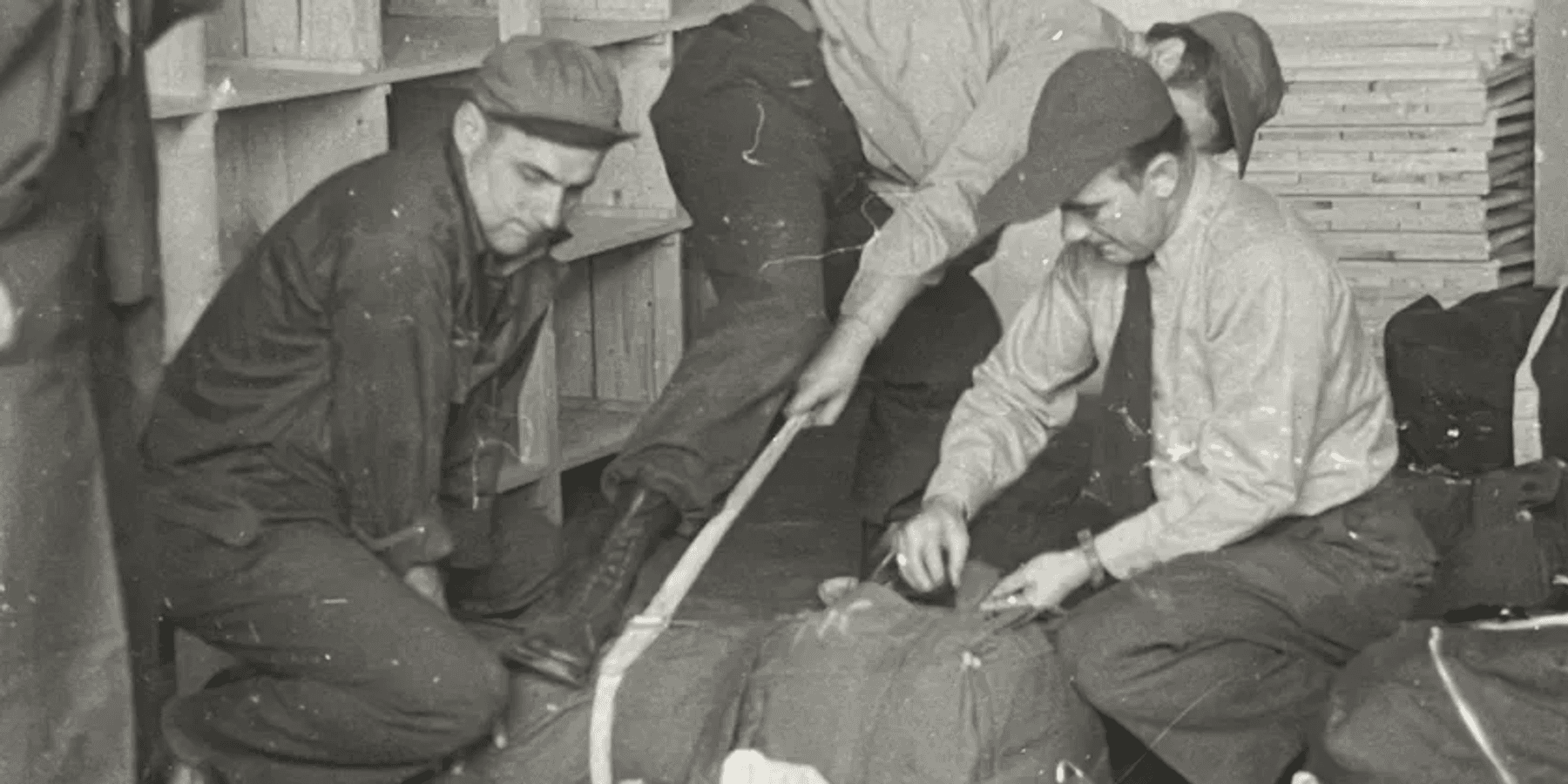
Huddled beside an airstrip in southern Germany, a handful of anti-Communist warriors prepared to fire the first shots of the Cold War. A CIA officer from the Munich Operations Base was in charge. The Hungarian crewmen he had recruited stood nearby in flight suits. With them were two Ukrainian exiles who had volunteered to parachute into their homeland. They were code-named Apostle 1 and Apostle 2. Each carried forged identity papers, a miniature radio transmitter, a pistol, a machine gun, hand grenades, a purse full of gold coins, and a poison pill to be taken in case of capture. An unmarked C-47 transport plane was waiting.
The CIA officer overseeing this operation, a twenty-six-year-old Yale graduate named Stephen Tanner, watched the plane take off and disappear into the night. It flew over East Germany and Poland, then crossed into Soviet airspace. As it approached the Ukrainian city of Lviv, a cargo bay swung open. The two Ukrainians jumped into the darkness. Their mission was to link up with partisan fighters, seize territory, and establish a clandestine base through which the CIA could send them weapons.
That flight, on September 5, 1949, was the first American act of covert war in Ukraine. The two would-be commandos who jumped that night were an advance guard for what became Project Aerodynamic, the most ambitious and furthest-reaching project the CIA ever launched inside the Soviet Union. Its aim was to foment subversion in the Ukrainian Soviet Socialist Republic. Behind it lay a simple calculation: The Soviet Union is America’s mortal enemy; its greatest internal threat comes from Ukraine; the CIA should do everything possible to intensify that threat.
From their base in Munich, Tanner and other CIA officers anxiously awaited messages from the two Apostles. None came. An after-action report concluded tersely that “the Soviets quickly eliminated the agents.” It added, though, that this mission “sparked considerable interest at headquarters.” Losing two agents was hardly enough to derail such a promising project.
On May 19, 1950, another C-47 took off from the same base in Germany. This time it carried four Ukrainian volunteers. They parachuted into western Ukraine with a cargo their CIA overseers had packed. It was enough to arm a potent guerrilla band, including fifty submachine guns, thirty rifles, twenty-five pistols, and a hundred phosphorus grenades. The four volunteers hit the ground. They radioed news of their safe landing with cargo. Then they disappeared.
Later that summer, two more Ukrainian volunteers bade their comrades an emotional farewell. According to a CIA cable, “a round of drinks was served, toasts were made…hands were shaken, tears were shed.” Their plane departed at 6:55 p.m. on August 12. The pilot missed their drop zone in Ukraine, and they jumped twenty miles away. Neither was ever heard from again.
These flights were the centerpiece of a far-reaching operation in which the CIA sought to foment armed uprisings in Soviet-controlled territory. Between 1949 and 1952, the CIA dropped about eighty-five men, all equipped for guerrilla warfare, behind what was then called the Iron Curtain. Three-quarters were quickly captured or shot.
“You’ve got to have a few martyrs,” reasoned Allen Dulles, chief of covert operations for the CIA. “Some people have to get killed.”
Project Aerodynamic was a match made in covert-action heaven. Thousands of Ukrainian partisans had refused to lay down their arms after their Nazi allies surrendered on May 8, 1945. They wanted to keep fighting the Red Army— if they could find a new sponsor. At that same moment, the CIA was looking for a force that it could use to strike against the Soviet Union from within its own territory. Aerodynamic was the progeny of this union. It set off three-quarters of a century of American intervention in Ukraine.
Fear and uncertainty marked the first encounter between Americans and anti- Soviet Ukrainians. In the autumn of 1947, two years before the first CIA airdrop into Ukraine, officers from the Army Counter Intelligence Corps in occupied Germany learned that a band of armed Russians had appeared in the countryside near Munich. At first they thought this might be an advance guard preparing the ground for a Red Army invasion. A patrol was sent to investigate. Soldiers scoured the hills and meadows around the Bavarian village of Waldkirchen. Early on the morning of September 10, they heard voices. They closed in on a campfire around which men wearing military uniforms were singing in what sounded like Russian. After a moment of tension, the soldiers willingly surrendered their machine guns and hand grenades.
These thirty-five men, along with four other members of their band who were picked up nearby, were brought to an American base and debriefed for three weeks. It turned out that they were not Red Army soldiers, but Ukrainians who had consecrated their lives to fighting the Red Army. They belonged to a partisan force that was unknown to most outsiders: the Ukrainian Insurgent Army. Their commanders had ordered them to walk westward, find Americans, and seek help for the partisan rebellion.
One of the partisans told an interrogator that the Ukrainian Insurgent Army was “engaged in armed combat with Soviet troops in the Ukraine at present” and that more Ukrainians were “ready to revolt” if given support. An officer who helped supervise the interrogations cabled to Washington that the Ukrainians were offering services “which may be of interest to you and may tie into an idea which, I believe, is being worked on at home at the present time.”
“If, as I understand, there is some planning going on with regard to how such groups as referred to above might be best used in our interests,” he suggested, “it might be useful to follow up this matter.”
Americans had just begun fighting the Cold War. Their great handicap was that they knew almost nothing about what was happening inside the Soviet Union. Now they learned that Ukrainians were waging war against the Red Army. This was an intelligence bonanza that opened new landscapes of possibility.
Some of the CIA’s most impassioned Ukrainian agents had fought alongside the Nazis just a few years earlier. Among them were veterans of SS Einsatzgruppen — mobile death squads assigned to massacre Jews and other civilians. This history troubled some of their American handlers, but not enough to disrupt their partnership.
Across Europe, American intelligence officers scoured teeming displaced persons camps looking for Ukrainians who were willing to join a covert anti-Soviet war. Recruitment was easy. Hundreds of thousands of young men — not just Ukrainians but refugees from all over the continent — were huddled in the bleak purgatory of these camps. The best they might hope for was work clearing rubble or picking crops. When men introducing themselves as part of the “American Intelligence Service” offered them paying jobs with good living conditions, plus the prospect of returning to war against Bolshevism, many jumped to accept. Vetting was minimal, so recruits included more than a few who had worked with the Nazis as militia members, police officers, and executioners. One recruiting officer said his job was easy: “You’d go to a refugee camp and say, ‘Here, Joe, you want to join a special project?’ Most of these people were, like, the homeless.”
This recruitment laid the foundation for Project Aerodynamic. Over the following years, it would overlap with other CIA projects using various cryptonyms, among them Acrobat, Androgen, Antler, Cartel, Carthage, Crust, Outbound, PDDynamic (PD was code for the Soviet Union), Plumb, and Red Sox. The goal — using Ukraine as a platform for covert war against Moscow — never changed.
- CIA in Ukraine: Why is this not seen as provocation? ›
- I was there: NATO and the origins of the Ukraine crisis ›