

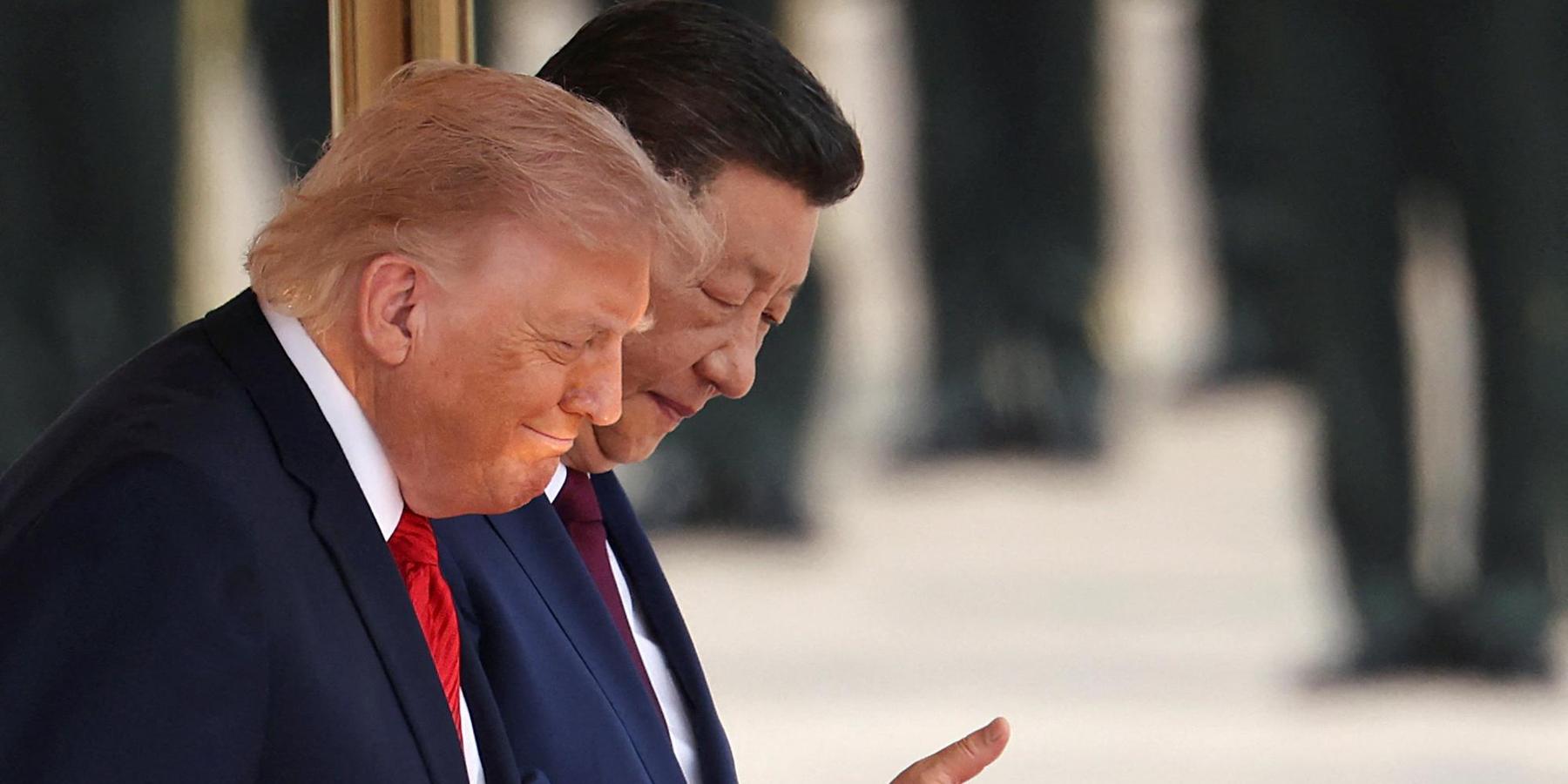
In conversations held during and immediately after his visit to Beijing, President Trump clearly expressed his views about Xi Jinping, China, and the U.S.-China relationship. The effect is rather jarring, because they constitute a major departure from the dominant hawkish viewpoints of many people who served in his first and second administrations.
At the time, those individuals had trumpeted the fundamental change that Trump had wrought in America’s approach to China, from Biden and Obama-era competition and cooperation to an all-out policy of intense strategic competition, and even confrontation, with Beijing. It was no more Mr. Nice Guy with Beijing, despite some kind utterances about President Xi Jinping uttered by Trump from time to time. The stress was on “winning” the strategic competition in a largely zero-sum manner.
Trump’s summit remarks this week, and those uttered afterward on Air Force One and in interviews, have conveyed a radically different perspective. It appears that the president does not look at China as a conventional security threat, and certainly not an existential one. Yes, Beijing poses an economic problem, perhaps even an economic threat, but a very manageable one that can produce a great outcome for both countries. He believes this can be achieved by working with his “great friend” XJP in a kind of personalized G-2 relationship.
So, no need for confrontational efforts to “win” in a do-or-die competition. Everything is subject to transactional deal-making.
As a result of this view, now more clearly expressed than ever before, Trump doesn’t see Chinese investment in the U.S., which is strongly opposed by many on both sides of the aisle in Congress, as necessarily threatening, for example. He views it as a potential boon, if properly structured, to American industry and employment.
As the hottest button issue between China and the United States, he wants the Taiwan situation to stay the way it is (with both sides “cooling it”) and regards arms sales to Taiwan as a great source of leverage in dealing with both Taipei and Beijing. He might tell Taiwan’s pro-independence President William Lai that if he wants to buy more U.S. arms, he will need to calm down and avoid any provocative pro-independence actions.
At the same time, he might tell his pal Xi that if he wants to see fewer arms sales to Taiwan, China will need to halt its demoralizing pressure tactics directed at the Taiwanese people, or reduce its threatening military activities around the island. What this “middle ground” position towards arms sales actually consists of, if there is one, remains to be seen.
But the point is that Trump sees every aspect of the relationship as in some way transactional, based on his sense of what would constitute a mutually beneficial outcome. So, forget the policy guidance provided by the Taiwan Relations Act, the three Sino-American joint communiques, and the so-called Six Assurances. Sure, they will need to be publicly reiterated from time to time to give a semblance of continuity and a stable status quo. But the real source of stability will be Trump’s dealings with Xi.
In other words, Trump takes a stance toward China that is neither one of conventional engagement nor do-or-die great power competition. He apparently thinks that if he can make some great deals with Xi on Taiwan, on trade, and technology, etc., the great power problem will be resolved, and he can take another step toward his long-coveted Nobel Peace Prize.
The problem with Trump’s novel treatment of the China-U.S. relationship is rather obvious, however. Great power relations are not real estate deals. Enduring, positive changes in those relations can only occur if leaders’ decisions reflect compromises involving deep-seated structural and political interests across their respective societies and polities.
For Trump and even the more authoritarian Xi, this requires the creation of broad-based support among key colleagues and powerful interest groups for a move away from mutual suspicion and hostility and toward a genuine search for mutually beneficial compromises and a no-final-winner, moderated competition.
It is highly problematic that this can occur, however. Given Trump’s general unpredictability and impulsiveness and Xi’s apparent unwillingness to rule on the basis of a genuine collective leadership structure, Trump’s desired personalized G-2 is unlikely to prove sustainable, or even achievable. Only a well prepared, comprehensive strategy rooted in a clear understanding of the political, personal, and institutional interests operating on both sides — and, in any case, not a seat-of-the-pants, highly personalized two-leader set of deals on specific issues as they arise — can produce lasting stability in the world’s most important bilateral relationship.
- China's position on the Hormuz Strait: What 'open' really means ›
- Trump leaves China with little of substance after summit ›