

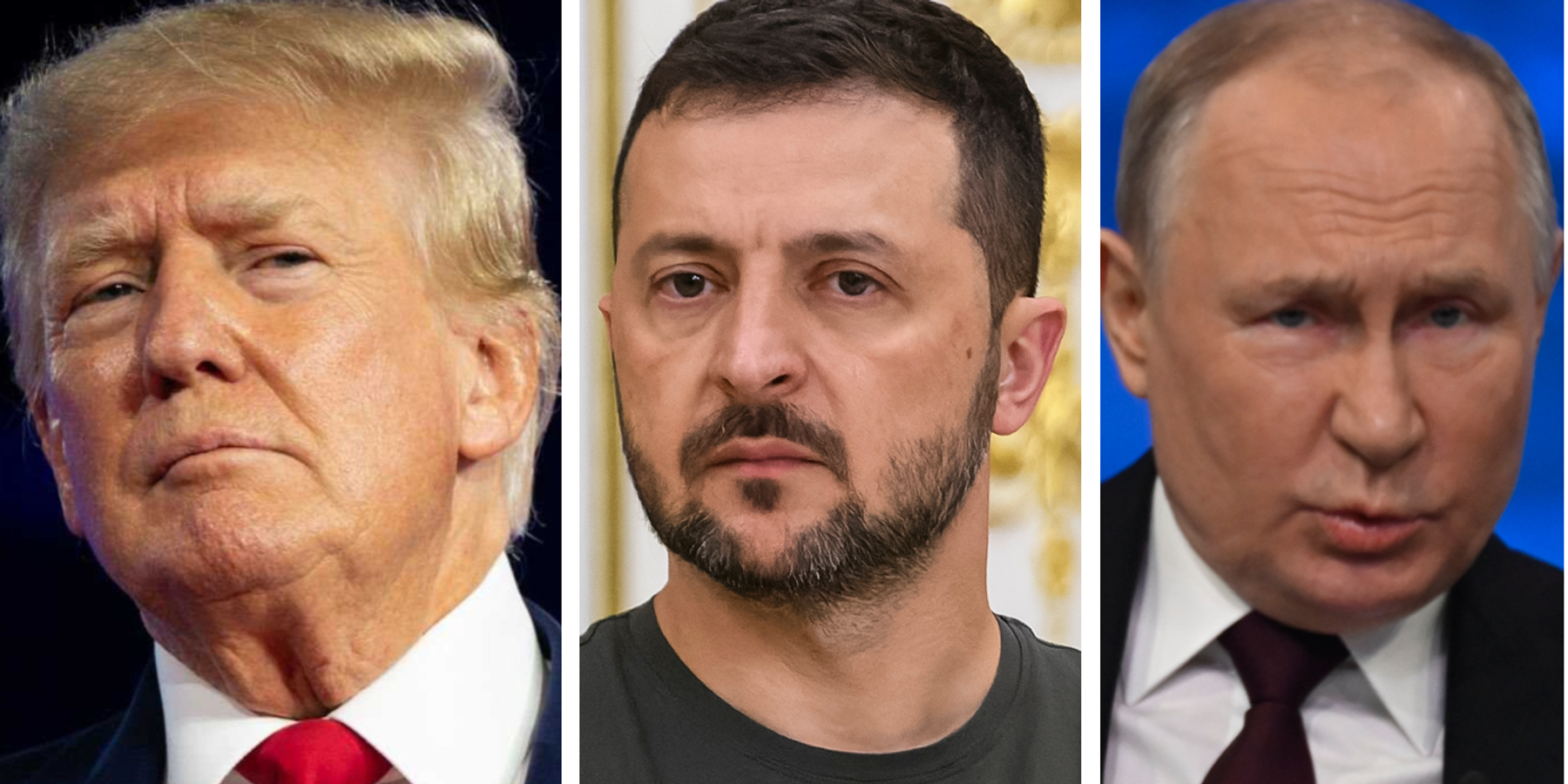
As President Trump prepares to meet with Ukrainian President Zelensky on Friday, much public discourse has focused on whether the United States should provide Ukraine with Tomahawk cruise missiles to increase pressure on Russia. But a much more important question has been all but ignored: What is this increased pressure on Russia intended to achieve?
The short answer — to force Russia to the negotiating table — obscures the fact that Russia has already been negotiating with the United States over what it regards as the root causes of the war.
The Russians claim that at the Alaska summit, Trump and President Putin reached significant understandings on a framework for ending the conflict. Putin showed flexibility by dropping Russia’s insistence on Ukrainian withdrawal from Kherson and Zaporizhia, and he indicated at the concluding press conference that Russia was ready to address ways to ensure Ukraine’s security.
As Trump has grown increasingly frustrated with stalled progress toward a settlement, Putin and other senior Russian officials have emphasized in recent public statements that they hope to continue the process of negotiations in accordance with the Anchorage understandings. What then has gone wrong?
Two possibilities come to mind, each rooted in crossed signals between the White House and the Kremlin. Judging from Putin’s public remarks after the summit, it is likely that Trump and Putin agreed on a fundamental geopolitical compromise over Ukraine, whereby the United States would close the door on Ukraine’s membership in NATO and Russia would accept Ukrainian accession to the European Union.
In the wake of the summit, however, controversy almost immediately erupted over the question of a post-settlement peacekeeping operation. Putin probably indicated a readiness to accept such an operation, but this question quickly became entangled in Europe’s insistence that it include a European “reassurance force” of combat capable troops.
For the Russians, there is an important distinction between a neutral peacekeeping operation, which they believe should be under United Nations auspices and focus on monitoring the implementation of a ceasefire, and a deterrence force aimed at countering the Russian military. Russia has for decades opposed the possibility of Western combat forces in Ukraine, and in fact one of the chief objectives of its invasion has been to preclude such an outcome. If one of the purposes of increased US pressure on Russia is to force Moscow’s acceptance of a post-settlement European military presence in Ukraine, that pressure will fail.
The other crossed signal very likely involved the question of direct Russian-Ukrainian negotiations over territory, reparations, cease-fire provisions, and other largely bilateral matters. At Alaska, Putin may well have indicated a willingness to negotiate with Ukraine on these issues and even to meet with Zelensky, but it is likely that the important question of sequencing was not addressed.
At the post-Alaska meeting in the White House between Trump and European leaders, it became clear that Trump expected Putin to meet quickly with Zelensky to negotiate the parameters of a ceasefire agreement. But Putin has long insisted that any summit meeting with Ukraine must follow — not precede — working-level negotiations that would hammer out most of the key elements of a deal. This would allow the presidents (as is the norm in international diplomacy) to focus only on the remaining disagreements and minimize the likelihood that a summit would fail.
These miscommunications over peacekeeping and sequencing have allowed Europeans and other opponents of a compromise settlement with Russia to paint Putin as both disingenuous and opposed to negotiations. The only viable path toward peace, they argue, is toughened economic and military pressure on Russia.
There is profound irony in the fact that Trump seems to be contemplating an approach that doubles down on former president Biden’s policy of maximizing pressure on Russia to force Moscow’s capitulation, an approach he had heretofore consistently criticized.
That approach failed because it was based on a fundamentally flawed assumption: that Putin views the war as an elective, a bid for land and empire that he will abandon if the costs of conquest prove too high. But Putin has always viewed this war as a security imperative, designed to prevent the NATO alliance from ensconcing its forces in Ukraine and threatening Russia’s heartland. He will not end the invasion until he at a minimum achieves Russia’s key security objectives.
At this point in the war, there is little that already overstretched Western military factories can do to address Ukraine’s shortage of air defense systems at a time when Russia has amassed a formidable arsenal of missiles, glide bombs, and drones, and is intensifying its strikes on Ukrainian infrastructure. Deep strikes into Russia with Tomahawk missiles, which cannot be provided in large numbers even if Ukraine were to devise some means of launching them, will not change this picture.
Moreover, Ukraine is losing the manpower war, as Russia is consistently exceeding its monthly recruitment targets while Ukraine falls short of the numbers needed to replenish its growing losses, including to many of its most effective forces.The only way Trump can remedy this shortfall would be to commit Western troops to combat operations alongside the Ukrainians.
Trump therefore faces a fundamental choice. If he backs his way into the Biden strategy, Russia will almost certainly accelerate its military operations. Sooner or later the increasingly exhausted Ukrainian military will approach a collapse, in much the same way that the attritional warfare in World War I ended. Trump will be forced either to stomach an unstable and dysfunctional Ukrainian rump state or bring the United States into war with Russia.
But the path toward a compromise that addresses core Russian concerns while still ensuring Ukraine has an effective, Western-aided self-defense capability is still open, at least for now. That will require putting an end to European insistence on a combat-ready “reassurance force” in Ukraine, pressing Zelensky to re-open working level negotiations with the Russians, and codifying the understandings Trump and Putin reached in Alaska.
The result could be a framework agreement that — not unlike the Gaza deal — still requires further negotiation but puts the war in Ukraine on a clear path toward a stable settlement.
All statements of fact, opinion, or analysis expressed are those of the author and do not reflect the official positions or views of the U.S. Government. Nothing in the contents should be construed as asserting or implying U.S. Government authentication of information or endorsement of the author's views.
- On Ukraine war, Euro leaders begin to make concessions — to reality ›
- Russia likely laughing off Trump's 'open door' to Tomahawks ›
- Finally, Trump takes a sensible turn on Ukraine | Responsible Statecraft ›