
Follow us on social

google cta
Trump Iran

No, even a 'small attack' on Iran will lead to war

The deal Trump wants is a no-go for Tehran, which is resigned to retaliating if bombed again, limited or otherwise

QiOSK
google cta
google cta

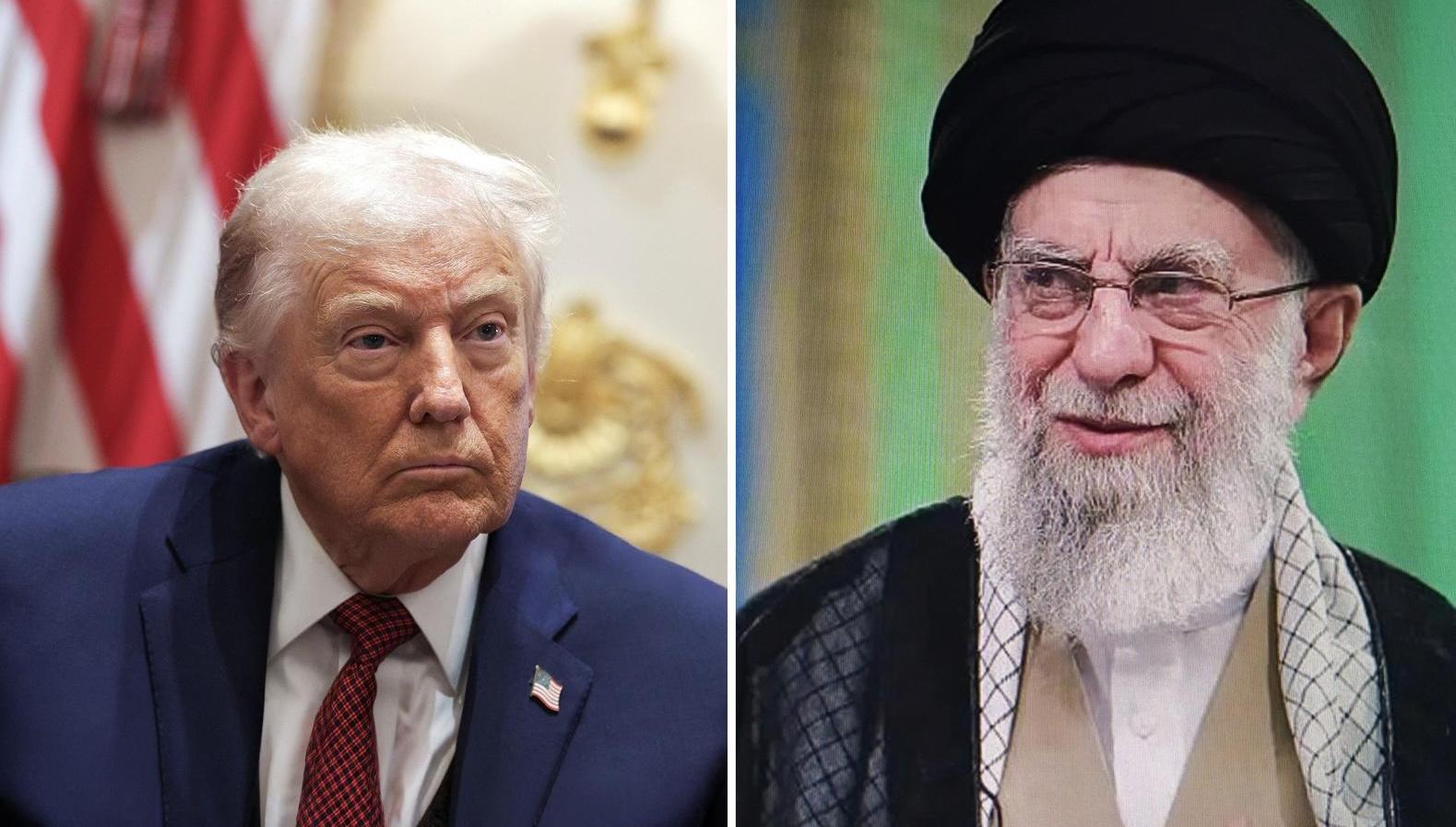
The Wall Street Journal reports that President Donald Trump is considering a small attack to force Iran to agree to his nuclear deal, and if Tehran refuses, escalate the attacks until Iran either agrees or the regime falls.

Here’s why this won’t work.

First of all, the “deal” Trump has put forward entails Tehran completely giving up its nuclear program in return for no new sanctions, but no actual sanctions relief. This is, of course, a non-starter for Iran.

There are hardly any more sanctions the U.S. could impose on Iran. And the current level of sanctions is suffocating the economy. Accepting this deal would not enable Iran to escape its economic dead end, but would only prolong the economic decay while depriving it of the nuclear leverage it believes it needs to free itself from existing sanctions.

Second, according to my sources, Trump recently also floated the idea of a smaller attack, with the Iranians responding symbolically by striking an empty U.S. base. But Tehran refused and made clear that any attack would be responded to forcefully. Trump may hope that with a much larger strike force in the region, Tehran will reconsider its response.

But it is difficult to see why Tehran would, since caving to this military threat likely will only invite further coercive demands, beginning with conventional military options such as its missile capabilities. That is Iran’s last remaining deterrent against Israel. Without it, Israel would be more inclined to attack and cement its subjugation of Iran, or alternatively move to collapse the theocratic regime altogether, Tehran fears.

Thus, capitulating to Trump’s “deal” would not end the confrontation, but only make Tehran more vulnerable to further attacks by Israel or the U.S.

Third, since the U.S. strategy, according to the WSJ, is to escalate until Tehran caves, and since capitulation is a non-option for Iran, the Iranians are incentivized to strike back right away at the U.S. The only exit Tehran sees is to fight back, inflict as much pain as possible on the U.S., and hope that this causes Trump to back off or accept a more equitable deal.

In this calculation, Iran would not need to win the war (militarily, it can’t); it would only have to get close to destroying Trump’s presidency before it loses the war by: 1) closing the Strait of Hormuz and strike oil installations in the region in the hope of driving oil prices to record levels and by that inflation in the U.S.; and 2) strike at U.S. bases, ships, or other regional assets and make Trump choose between compromise or a forever war in the region, rather than the quick glorious victory he is looking for.

This is an extremely risky option for Iran, but one that Tehran sees as less risky than the capitulation “deal” Trump is seeking to force on Iran.

None of this, of course, serves U.S. interest, has been authorized by Congress, enjoys the support of the American people or the support of regional allies (save Israel), is compatible with international law, or answers the crucial question: How does this end?


Top image credit: Lucas Parker and FotoField via shutterstock.com
google cta
QiOSK
As Iran strikes loom, US and UK fight over Indian Ocean base
TOP IMAGE CREDIT: An aerial view of Diego Garcia, the Chagossian Island home to one of the U.S. military's 750 worldwide bases. The UK handed sovereignty of the islands back to Mauritius, with the stipulation that the U.S. must be allowed to continue its base's operation on Diego Garcia for the next 99 years. (Kev1ar82 / Shutterstock.com).

As Iran strikes loom, US and UK fight over Indian Ocean base

QiOSK

As the U.S. surges troops to the Middle East, a battle is brewing over a strategically significant American base in the middle of the Indian Ocean.

President Donald Trump announced Wednesday that he would oppose any effort to return the Chagos Islands to Mauritius, arguing that a U.S. base on the island of Diego Garcia may be necessary to “eradicate a potential attack by a highly unstable and dangerous [Iranian] Regime.” The comment came just a day after the State Department reiterated its support for the U.K.’s decision to give up sovereignty over the islands while maintaining a 99-year lease for the base.

keep readingShow less
Bill White Belgium
Top photo credit: US ambassador to Belgium Bill White talks to the press after a meeting at the offices of the Foreign Affairs department of the Federal Government in Brussels, Tuesday 17 February 2026. BELGA PHOTO MARIUS BURGELMAN

US diplomat accuses Belgian officials of anti-semitism on X

QiOSK

A number of Donald Trump's ambassadors have very questionable experience for the jobs they are doing. That is not unusual — presidents throughout history have given out posts as favors for fundraising or other political or personal supports. The problem with some of these diplomats is they seem to forget they actually have a job to do — and it's not ingratiating the boss by insulting his host country because they think that is what the boss wants to hear.

Case in point: Bill White, who worked for and ran a museum for the USS Intrepid before quitting abruptly amid a pay-for-pay state pension scandal for which he eventually paid a $1 million settlement in 2010. He used to raise money for Democrats. Then he shifted to raising money for Trump in 2016 and was installed as Trump's ambassador to Belgium four months ago. It's not going so well.

keep readingShow less
New US cluster bombs pose ‘severe, foreseeable dangers’
Top image credit: A US soldier carries a 155mm cluster munition

New US cluster bombs pose ‘severe, foreseeable dangers’

Military Industrial Complex

A coalition of human rights organizations, anti-war groups, and Christian churches are urging the U.S. to cancel its $210 million purchase of next-generation cluster munitions from an Israeli state-owned company, citing the “severe, foreseeable dangers” these weapons pose to civilians.

In an open letter shared exclusively with RS, the organizations write that cluster munitions “disperse submunitions across broad areas, making it exceedingly difficult to confine their impact to lawful military targets.” By expanding its cluster munitions stockpiles, the U.S. is putting itself “dramatically out of step with civilian protection practices,” the groups argue.

keep readingShow less
google cta
Want more of our stories on Google?
Click here to make us a Preferred Source.

LATEST

QIOSK

Newsletter

Subscribe now to our weekly round-up and don't miss a beat with your favorite RS contributors and reporters, as well as staff analysis, opinion, and news promoting a positive, non-partisan vision of U.S. foreign policy.