

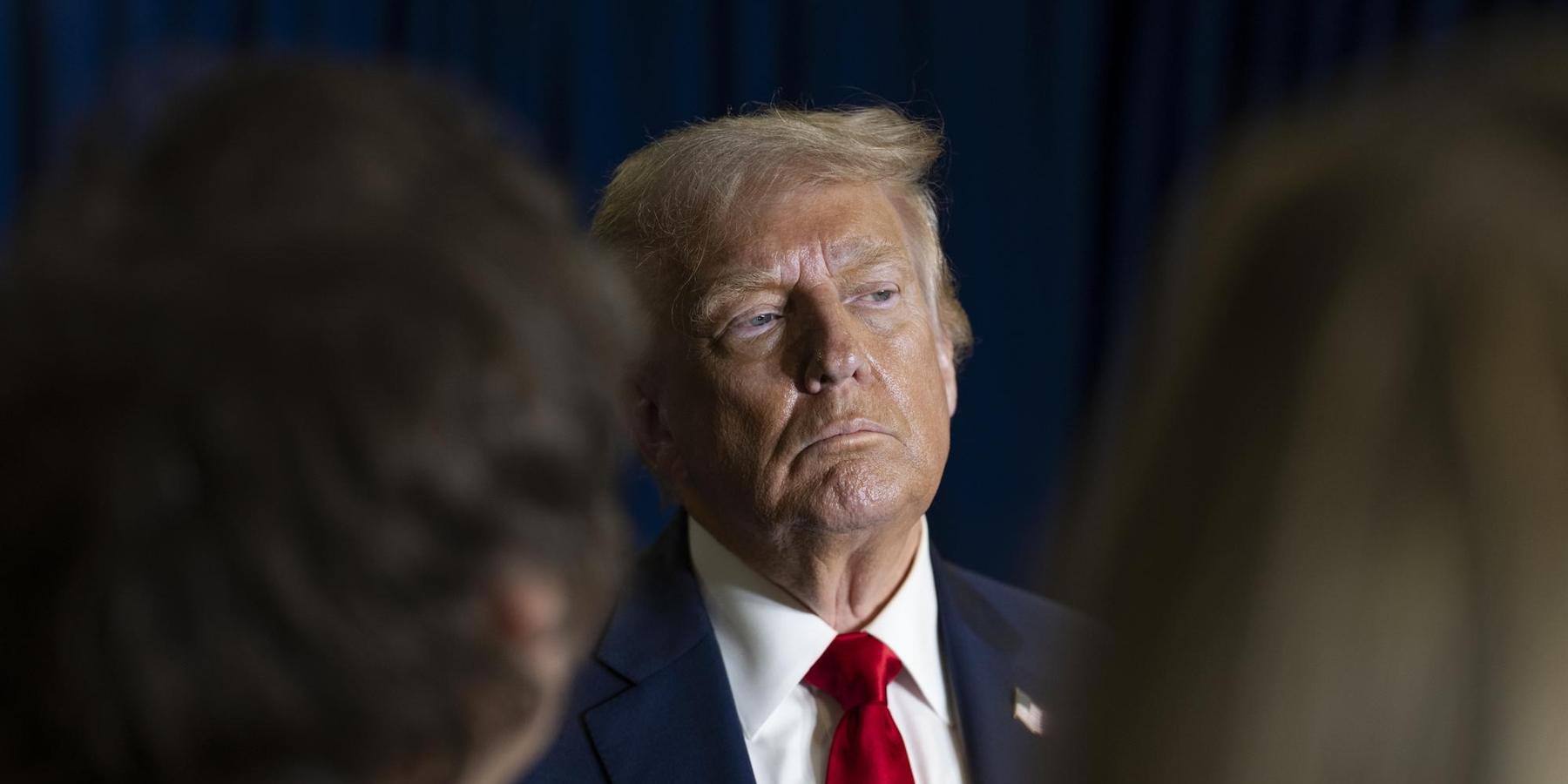
President Donald Trump’s threat against Iran marks a grave political and moral decline. Speaking about a possible expansion of the bombing campaign, he said that “a whole civilization will die tonight, never to be brought back again.”
That sentence does not sound like the language of a president discussing military objectives. It presents the possible result of American action as the destruction of a civilization. Once a president speaks in those terms, accusations of genocidal threat cease to be fanciful or polemical. He has introduced them himself.
The legal point should be stated with care. A court would probably not treat this single statement as dispositive proof of genocidal mens rea. The Genocide Convention sets a high threshold. It requires specific intent to destroy, in whole or in part, a protected group as such.
In practice, courts do not usually infer that intent from one remark, however appalling. They look for a larger pattern: the choice of targets, the scale and repetition of attacks, the treatment of civilians, the presence of eliminationist language over time, and the relation between words and operational conduct. A single statement can be probative but is rarely enough by itself to settle the question.
That caution is important because the law should distinguish between genocide and other forms of state violence, including indiscriminate attack, collective punishment, crimes against humanity, and massive war crimes. It should also distinguish between a threat to destroy a regime and a threat to destroy a people. A court, faced with this statement alone, would likely say that the speaker’s exact object remains uncertain. Was he threatening the physical destruction of Iranians as a national group? Was he threatening devastation so sweeping that the country’s civilizational inheritance would be shattered? Was he using grandiose language to describe regime collapse and national ruin? Those questions would remain open, and a court would want more before drawing the most serious conclusion international law allows.
But none of that rescues the statement. The fact that one sentence would probably not suffice for conviction does not make it legally or morally banal. Trump did not speak of air defenses, command bunkers, missile launchers, or even state institutions. He spoke of a civilization dying and never being brought back again.
“Civilization” is the crucial word. It reaches beyond military defeat and beyond government overthrow, pointing to the destruction of a people understood in historical depth, as bearers of memory, culture, continuity, and collective life. That is why the remark carries genocidal implications even if it does not itself complete the legal case.
For that reason, it is entirely reasonable to say that Trump has opened the door to accusations that he is threatening genocide. One need not assert that the crime has been proved, rather just recognize that, when the president of the United States threatens action in terms that imply the disappearance of an entire civilization, he has moved onto terrain where such accusations arise naturally and without bad faith.
That is a new low for the United States. America has often fallen short of its own principles, sometimes brutally. Even so, it long claimed to stand for restraint, legality, civilian protection, and the idea that power should acknowledge limits.
Trump’s statement casts those claims aside. It places civilizational destruction within the vocabulary of presidential threat. That alone is a disgrace. A country that once presented itself as a beacon of liberal values now speaks, through its president, in language that invites the accusation of genocidal menace.
- 'Humanitarian superstar' Samantha Power admits Gaza is a loss ›
- Trump can't 'clean out' Gaza without destabilizing entire region ›