

Among the many unintended consequences of President Donald Trump’s disastrous decision to launch a war on Iran is the delaying of the so-called Caucasus Corridor, known as the Trump Route for International Peace and Prosperity (TRIPP). The project was supposed to bring peace between Armenia and Azerbaijan, which have been at war on and off for nearly 40 years.
This may turn out to be a blessing in disguise. In a region where Western-backed megaprojects have become major targets for Iranian attacks, abandoning the corridor may have been the best thing that could happen to Armenia.
The project in question — a transportation link through southern Armenia to the Azerbaijani exclave Nakhchevan and Turkey – was hailed as a decisive geopolitical break of the South Caucasus with Russian and Iranian influence. Pundits flattered Trump’s ego by promoting it as a stepping stone for the Nobel Peace Prize for the American president.
There has been reason for skepticism about these claims from the start. Last year, I argued in these pages that “peace requires more than diplomatic theater; it demands difficult compromises that have so far been absent. Until then, the promise of stability remains a mirage.”
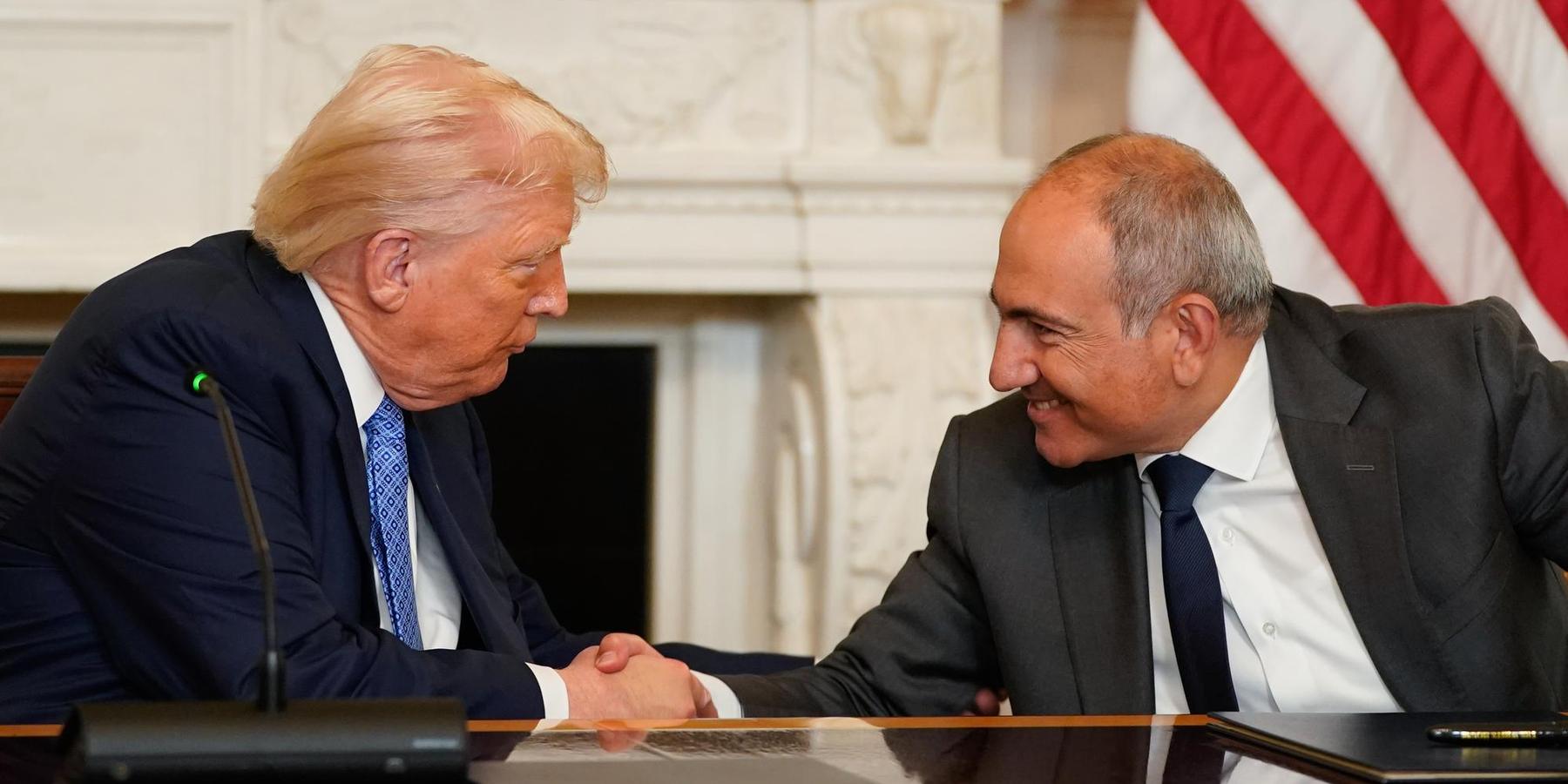
Indeed, reality proved far messier than Trump’s vanity play. The signing ceremony in the White House in August 2025, involving Trump and the leaders of Armenia and Azerbaijan, did not usher in a peace agreement. Talks stalled as Azerbaijan insisted on changes to the Armenian constitution that would formally and permanently forsake Armenia’s claims on Nagorno-Karabakh, a region largely populated by ethnic Armenians prior to an Azerbaijani military campaign in 2023.
The corridor, meanwhile, has increasingly drifted into irrelevance. The agreement stipulated that the corridor would be managed by a joint Armenian-American company based in Armenia. But the company was never established, and the contract was never signed. Consequently, all the other building blocks – funding, security, cross-border and transit modalities – were never put in place.
Now, with the war on Iran consuming the Trump administration's bandwidth, the project languishes. "Obviously, TRIPP isn't a high priority with the U.S. administration, at least today," Armenian Prime Minister Nikol Pashinyan admitted in March. "Unfortunately, there is a high probability that this will affect the time frame."
But here's the rub: the project's unraveling has spared Armenia from becoming entangled in Iran’s expanding definition of legitimate retaliatory targets.
Because when war broke out with Iran, neighboring countries hosting American infrastructure — military bases, substantial business presence — became such targets, as Iran warned they would.
That threat doesn’t just concern the obvious candidates in the Persian Gulf, such as the United Arab Emirates, Bahrain, Kuwait, and Saudi Arabia. In early March, Iranian-launched drones struck targets in Nakhchevan, Azerbaijan, including its airport, wounding four civilians. Tehran has always been highly suspicious of Baku’s close security ties with Israel, even accusing it of permitting Israel to use its air space in attacking Iran.
Moreover, Iran has long suspected Baku of supporting Azeri irredentism in Iran, which has 15 to 20 million residents of Azeri descent. A number of hawkish, U.S.-based think tanks have promoted such a policy. Azerbaijani President Ilham Aliyev himself occasionally seemed to flirt with the idea, positioning himself as the leader of all Azeris in the world, including those in Iran.
This backdrop provides a context for Tehran’s skeptical attitude regarding TRIPP from the outset. Iran has long seen the project as designed to entrench the U.S. presence on its northern border and cut off Iran’s border with Armenia, its only friendly northern neighbor.
The current war, not unexpectedly, has exacerbated Tehran’s fears of encirclement. While the Nakhchevan drone incident was promptly downplayed through diplomatic channels between Baku and Tehran, it highlighted the fragility of a regional architecture based on Iran’s exclusion.
Had TRIPP infrastructure actually been built through Armenia's southern region, it would have been a tempting target for Iran’s formidable missile and drone arsenal. Armenia would have found itself caught between Iranian retaliation and Azerbaijani ambitions – with the Turkish border still closed, and relations with Russia in tatters.
TRIPP’s failure may therefore be Armenia's greatest strategic stroke of luck. From Tehran’s perspective, there was nothing worth attacking – except, perhaps, the U.S. embassy, but Iran has not stepped up the escalation ladder to that point, yet.
One should not conclude that the risk is over, however. Pashinyan is as committed as ever to TRIPP, which he sees as a fundamental pillar of Armenia’s pro-Western pivot. Facing a critical election next month, his hosting last week of the summit of the European Political Community – a loose network of European states whose membership transcends the EU – should boost his standing. Western leaders, including French President Emmanuel Macron and even the Canadian Prime Minister Mark Carney, descended on Yerevan in a show of support for Pashinyan.
While TRIPP is a U.S.-led rather than a European Union-led project, the European leaders endorsed it as a means to anchor Armenia in the “Western camp.” Besides this, they have little more to offer than vague recognition of Armenia’s “European aspirations.” Other nations that have trodden this path — like Ukraine, Moldova and Georgia — have wound up with little to show in terms of real deliverables on what matters, namely, actual membership in the EU, a security umbrella, and economic opportunities.
Pashinyan may be on course to win the elections. However, not everybody in Armenia is convinced of the strategic wisdom of the Western pivot. Narek Karapetyan, an opposition leader, struck a dissenting note this week. Speaking from Meghri, a critical cog in the proposed project, he noted that “the TRIPP route runs 30-40 meters from the Iranian border.”
“Over the past two months, we have seen Iran attack U.S. military bases in various countries,” Karapetyan said. “What will happen in the future if their relations deteriorate and only an American company remains here?”
This may sound alarmist as TRIPP, in theory, has no military or security dimension. But the project’s very vagueness creates a dangerous strategic ambiguity. If attempts to revitalize it are undertaken, an Iranian threat could be used to justify its securitization.
It is true that Armenian leadership was careful to communicate with Tehran on TRIPP, and bilateral relations have been generally friendly, even under Pashinyan. But the war has changed Iran’s calculus. Absent a diplomatic deal with the U.S., Iran, under a much more hardline, Islamic Revolutionary Guard Corps-dominated leadership, will regard any U.S.-led regional architecture as a direct threat to its interests. And with Trump himself declaring the ceasefire between the U.S. and Iran “on life support” and thundering new threats against the Islamic Republic, the resumption of active hostilities cannot be excluded.
TRIPP's failure to launch rendered Armenia invisible. And invisibility, in the shadow of a great power war, is its own kind of salvation.
- Is Trump's Armenia-Azeri peace plan yet another road to nowhere? ›
- VP Vance’s timely TRIPP to the South Caucasus ›
- These were Armenia's most critical elections since independence | Responsible Statecraft ›