

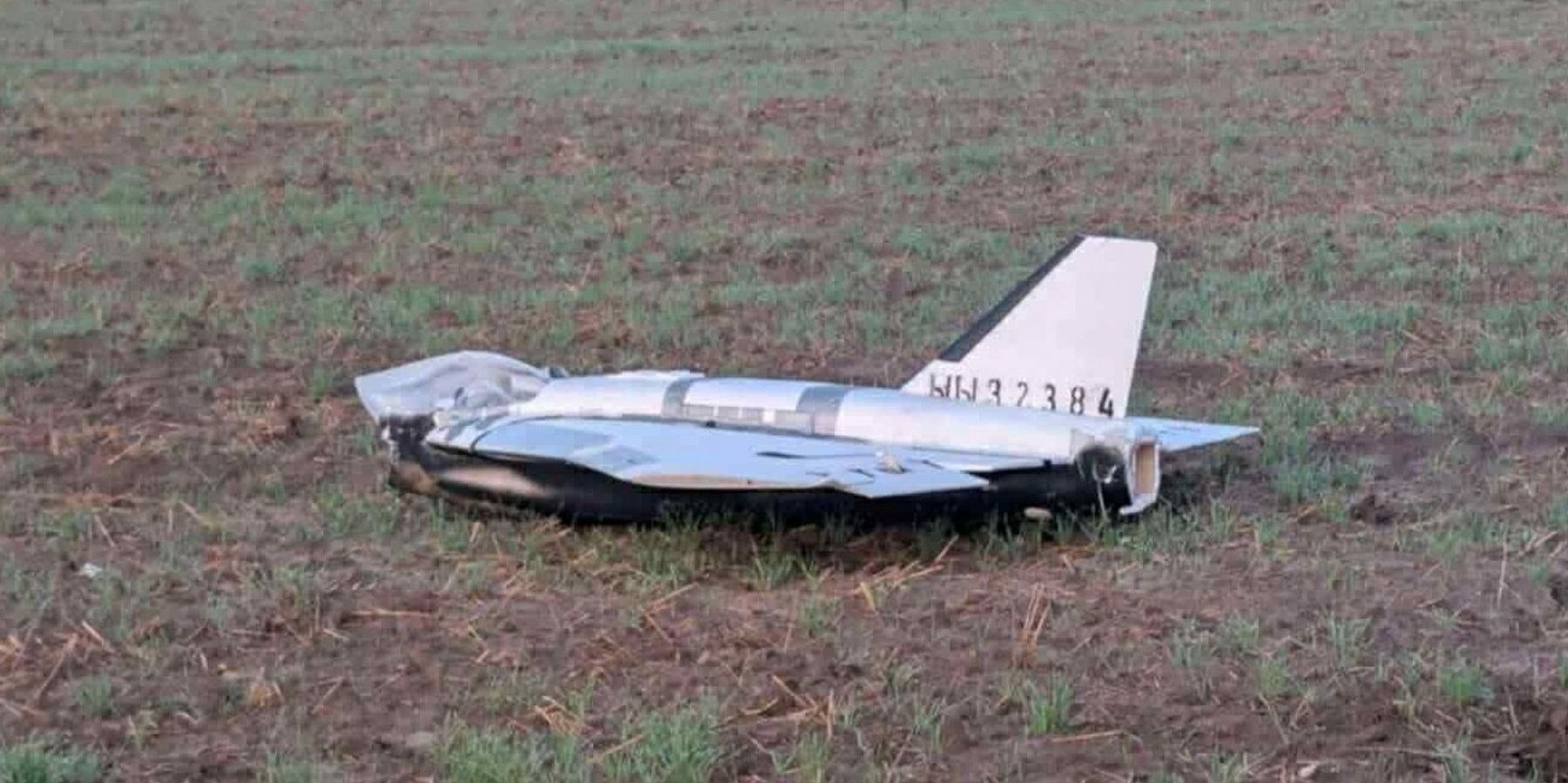
It seems unlikely that the handful of Russian drones that entered Polish air space did so accidentally.
There have been previous incidents, but they involved individual drones very close to the Ukrainian border. Yesterday there were over a dozen, according to reports, with debris landing in several cities, including hitting one house, after NATO was scrambled to shoot them down.
It is appropriate therefore that under Article 4 of the NATO Treaty, NATO members consulted over this and responded.
This was however not an "attack." None of the drones hit a significant target, or seem to have been intended to do so. The Russian move was most likely intended as a warning to the European "coalition of the willing" to abandon its hopes of establishing a "reassurance force" in Ukraine, and add weight to President Putin's statement that such a force would automatically be subject to Russian attack.
It was probably also a warning to the U.S. not to provide air cover or a "backstop" for such a force.
We should remember that during the Cold War, there were a number of far more serious violations of air space by both sides, some of them leading to NATO planes being shot down and American and British airmen killed. These incidents led not to threats of war, but careful attempts to de-escalate tensions and develop ways to avoid such clashes.
There are two ways of looking at this, and they are not mutually exclusive. On the one hand, it was undoubtedly a provocative act by Russia, which has provided the opportunity for more hysterical outbursts by Western hawks about alleged Russian plans to attack NATO, more calls for increased aid to Ukraine, and more allegations that “Russia does not want peace” (it does, but — just like Ukraine — on terms that meet its basic conditions).
On the other hand, the immediate European response is a reminder of the extent of European (though not Polish) military weakness, and that any European force in Ukraine would be utterly dependent on US support and guarantees.
Thus while the British defense secretary John Healey responded by warning of a "new era of threat" and promising to defend Poland, he also revealed that Britain has only 300 troops in Poland; its previous contingent of precisely six Typhoon fighter jets were withdrawn in July, and its Sky Sabre air defense system in Poland was removed last year for maintenance and has not yet returned.
So when Healey told the "E5" group (the UK, France, Germany, Italy and Poland) that he had asked the British armed forces “to look at options to bolster NATO’s air defence over Poland,” those options would seem extremely limited, and would also probably require reducing military supplies to Ukraine.
Amidst wild ravings from Poland and some British commentators (including calls for an “Article 5 response” - i.e. war), former NATO Deputy Commander General Sir Adrian Bradshaw struck a sensible note, which the U.S. and European governments would do well to follow:
“The point of the consultations is to do things which lower the tension and lower the potential for a slide into conflict, which none of us want. And it’s reasonable to assume that even Mr. Putin doesn’t want a conflict between the whole of NATO and Russia, because it would be disastrous for all of us. So we need to bear that in mind, but be seen to act with resolve...[I]f we don’t want to escalate in the military domain, then we must do so in the economic, political and diplomatic domains."
- Why Russia is far outpacing US/Nato in weapons production ›
- A postwar Western stockpile for Ukraine that is amenable to Russia ›