

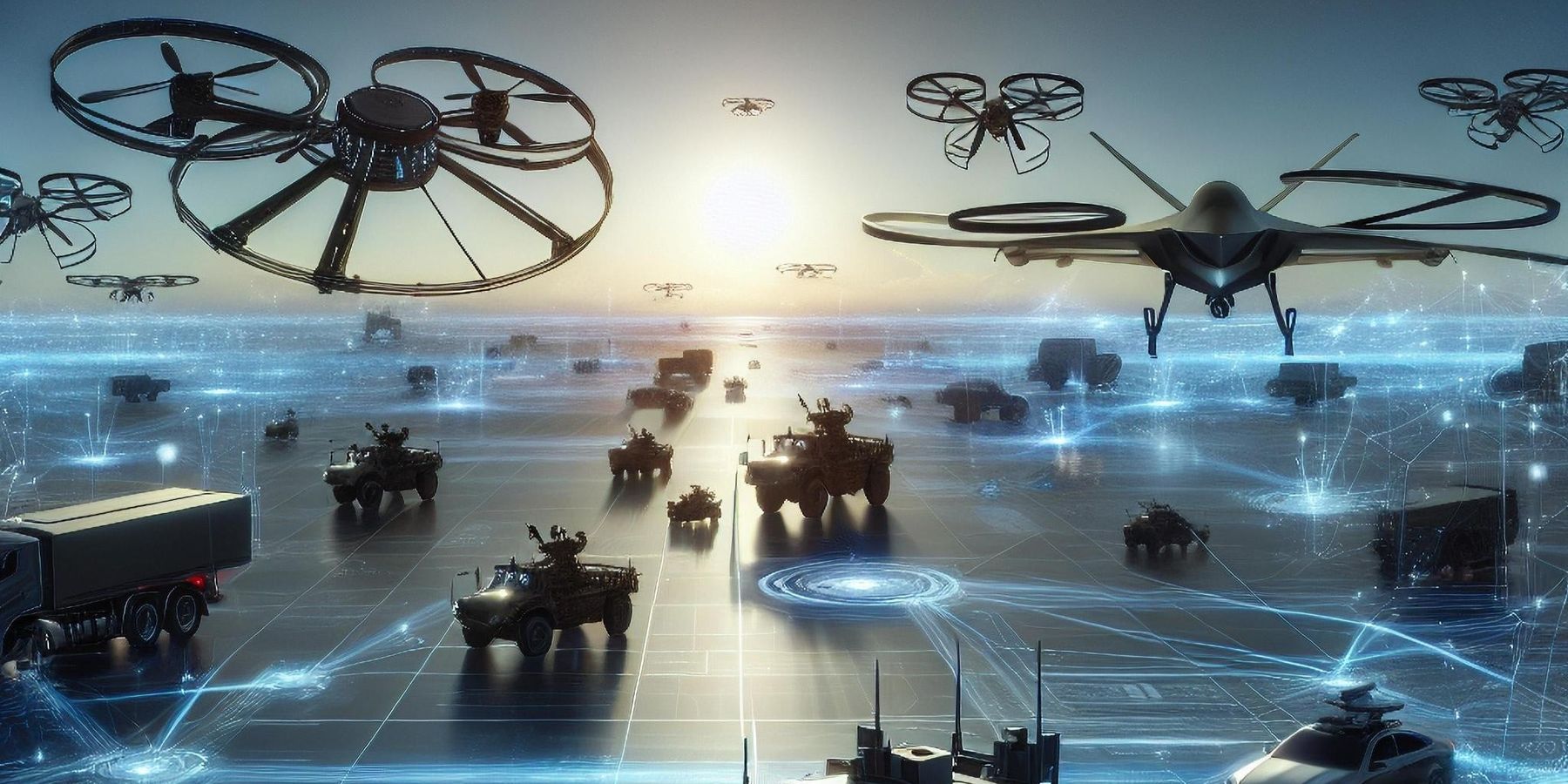
Defense officials consistently tout the Replicator initiative — an ambitious effort to “swarm” thousands of attritable, inexpensive drones at a break-neck pace to counter China — as a great success.
DoD Secretary Pete Hegseth testified in June that the initiative had “made enormous strides towards delivering and fielding multiple thousands of unmanned systems across multiple domains,” with “thousands more planned” through the FY 2026 defense budget. A defense official told DefenseScoop in late August the Pentagon was ensuring a “successful transition” or Replicator capabilities to end-state users. And last August, then Deputy Defense Secretary Kathleen Hicks, who kicked off the initiative in 2023, boasted it was on track for its production goals.
Despite officials' assertions, the Congressional Research Service points out that only “hundreds” rather than “thousands” of these systems materialized by the August 2025 target date. Not only that but critical technical issues procuring the systems persist, and associated costs remain unclear.
Is Replicator flopping?
Replicator’s goal for its first phase was to field thousands of autonomous systems by summer 2025 was a massive undertaking, considering AI’s relatively novel, and controversial, use in military contexts. A second part, Replicator two, which focuses on counter-drone defense, was announced last fall and is underway.
WSJ reporting on the first phase found that persistent technical issues, including systems’ glitches and problems integrating Replicator systems with existing command structures, were slowing down the initiative’s progress, where some systems were “unreliable, or were so expensive or slow to be manufactured they couldn’t be bought in the quantity needed.” It also suffered from a lack of vetting up-front, where some systems were “unfinished or existed only as a concept” when selected for Replicator. Critically, the Pentagon struggled to procure software able to command, and attack with, large numbers of different drones — a capability fundamental to Replicator’s success.
In fact, these challenges have led to the Pentagon’s Defense Innovation Unit (DIUx), which has been overseeing the initiative, to hand Replicator’s reins over to DAWG, Defense Autonomous Warfare Group, a new organization part of United States Special Operations Command (SOCOM), which is supposed to carry out the initiative’s goals within two years.
As William Hartung, a Senior Research Fellow at the Quincy Institute for Responsible Statecraft told RS, the Replicator initiative’s apparent delays are “totally predictable.”
“When [Replicator] was announced, the Pentagon said that it would make progress in major areas within 18 months, something that had not occurred in the history of Pentagon weapons development,” Hartung said. “The real question is not how quickly certain capabilities can be announced, it is how new technologies can be adequately tested before buying them in bulk, and what strategy they will be deployed in service of.”
Meanwhile, Replicator has been marketed as an inexpensive alternative. But the Congressional Research Service (CRS) finds little information is publicly available about its costs, making it difficult for lawmakers and analysts to assess its cost-effectiveness.
Namely, the DoD requested one billion dollars over FY 2024 and 2025 for Replicator. But anticipated costs are complicated by the initiative not having its own budget line — to this end, the DoD submitted a $300 million reprogramming request for the initiative for FY2023, sparking concerns funds for it could be pulled for it from other existing programming.
Meanwhile, many of the systems Replicator has fielding are not exactly cheap. The Switchblade 600 kamikaze drone the initiative pursues, for example, is estimated to cost well over $100,000 per unit; Ukrainian drones procured for the same purpose, meanwhile, can cost as little as $300 each.
Despite the initiative’s financial uncertainties, some lawmakers have called for Replicator to receive billions more in funding.
Can defense tech walk the walk?
The Replicator’s tech-centric flounderings are not isolated, but follow a slate of critical defense-tech mishaps.
Over the summer, an Army memo found an Army communications system modernization effort led by Anduril, Palantir and others to be rife with “fundamental” security issues, calling it “very high risk.” It read: "We cannot control who sees what, we cannot see what users are doing, and we cannot verify that the software itself is secure.”
American drone tests, meanwhile, have met with repeated failures. A test off the California coast this summer resulted in a collision between autonomous drone boats, sparked by a software glitch. As a result, the DIUx paused a nearly $20 million contract with defense contractor L3Harris, a prominent autonomous software provider — which is also contracted to bring similar capacities to Replicator. And drone prototypes frequently failed to launch, missed targets, and even crashed during drone exercises in Alaska the same month.
Zooming out, newer defense tech power-hitters, like Anduril and Palantir have had success in recent years challenging defense primes’ dominance in the weapons industry, in part because they successfully marketed themselves as leaner, faster and more technologically savvy than traditional defense contractors. Companies like these have played a central role in Replicator, which sought out to recruit these Silicon Valley types in pursuit of a faster procurement process — indeed, 75% of Replicator’s participants are non-traditional defense tech companies.
But these recent developments suggest defense tech start-ups’ sales pitches deserve more scrutiny before the DoD commits to them, through initiatives like Replicator.
As Hartung concluded: “war and the prevention of war do not primarily hinge on technologies.”
- How the Pentagon built Silicon Valley ›
- The dystopian future of military AI (VIDEO) ›
- Why Tehran may have time on its side ›