

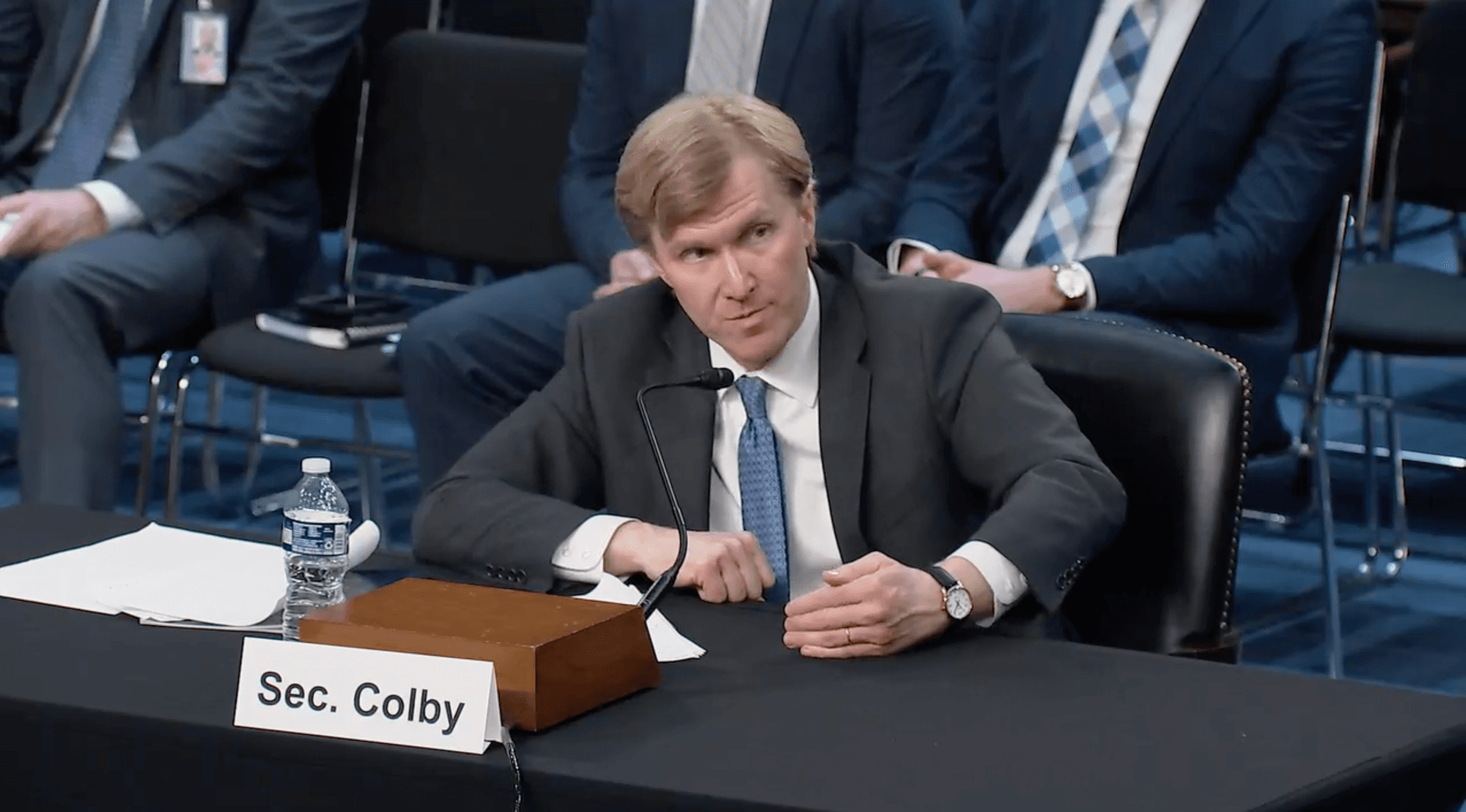
The U.S. is pursuing “scoped and reasonable objectives” in its military campaign against Iran and is not seeking regime change through force, argued Undersecretary of Defense Elbridge Colby in a Tuesday Senate hearing.
When pressed about why the campaign began with the killing of Iranian Supreme Leader Ali Khamenei, Colby declined to comment directly. “I’m talking about the goals of the American military campaign,” he told the Senate Armed Services Committee. “Those are Israeli operations.”
The comments come as the Trump administration is increasingly seeking to place the responsibility on Israel for the growing war with Iran. On Monday, Secretary of State Marco Rubio said the U.S. decided to attack because “we knew that there was going to be an Israeli action” against Iran.
“And we knew that if we didn't preemptively go after them before they launched those attacks, we would suffer higher casualties,” Rubio told reporters. “And then we would all be here answering questions about why we knew that and didn't act.”
Israeli officials have pushed back on these claims, with anonymous sources telling Axios that Israel could only have moved forward with explicit approval from Trump. “If Trump had preferred to keep negotiating, the strike would have been postponed,” Axios reported, citing anonymous Israeli officials.
The back-and-forth puts a spotlight on the Trump administration’s desire to distance itself from the history of regime change wars in the Middle East, which have often led to prolonged civil wars and instability. Sometimes this has led to confusing statements, like the comment from Secretary of Defense Pete Hegseth that “this is not a so-called regime change war, but the regime sure did change.”
Further muddying the picture have been Trump’s exhortations to the Iranian people to “take over your government” as the bombing campaign continues. Asked about these comments, Colby told the Senate that “this is objectively a historic opportunity” for the Iranian people.
“One of the reasons this isn't an example of nation-buildling” is “precisely because it is looking to the Iranian people to take the initiative,” Colby argued, adding that American goals are focused narrowly on taking out Iran’s missile program and navy.
Amid these efforts to shift responsibility for the war’s consequences, it appears that regime change efforts continue apace. On Tuesday, Israel bombed a meeting of the Iranian Supreme Council in which the government’s remaining leaders were deciding who would take over the country after Khamenei’s death.
“Israel struck while they were counting the votes for the appointment of the supreme leader,” an anonymous senior Israeli official told Fox News.
- Why Arab states are terrified of US war with Iran ›
- If Iranian regime collapses or is toppled, 'what's next?' ›
- Want Iran to get the bomb? Try regime change ›
- Trump press conference reveals a man who wants out of war | Responsible Statecraft ›
- Why Hezbollah's 'irrational' gambit against Israel makes sense | Responsible Statecraft ›
- Why Trump's Iran regime change fantasies never stood a chance | Responsible Statecraft ›