

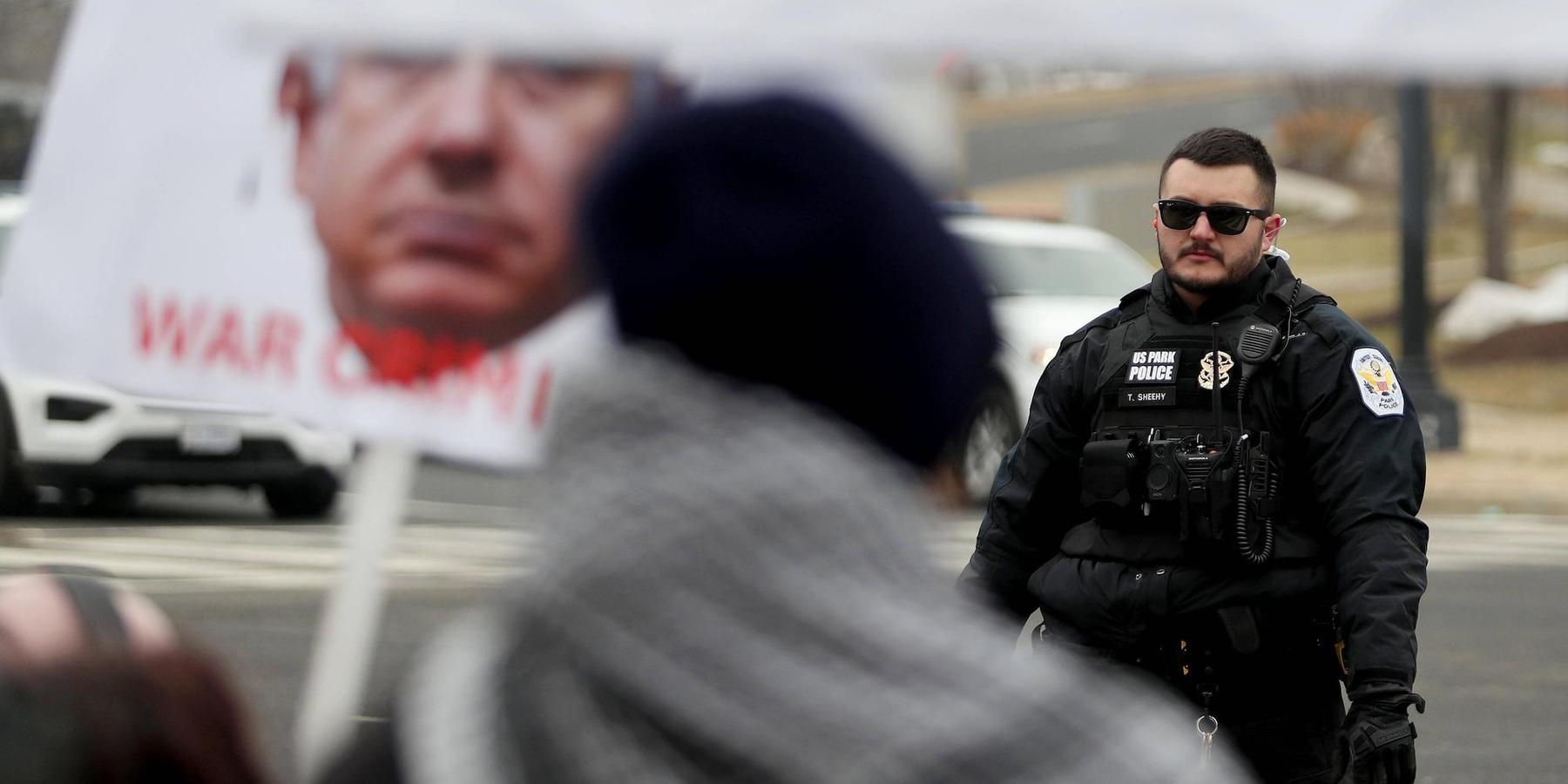
Protesting is terrorism. At least, that is the message that the Trump administration has communicated in a series of recent actions, culminating last week in its designation of the U.K.-based Palestine Action as a terrorist group.
The Trump administration placed Palestine Action and two other European entities on the Specially Designated Global Terrorist (SDGT) list, a category created in the wake of the attacks of September 11, 2001. By designating Palestine Action as an SDGT, the administration has unlocked the authority to impose economic sanctions against the group and all people associated with it, including freezing any of their U.S.-held assets and prohibiting them from financial transactions with any U.S. actors.
Separately from financial transactions, it also means that all U.S. persons are prohibited from vaguely-defined interactions with the group that amount to “material support” or “services.” Anyone violating this prohibition could be subjected to civil or criminal penalties, or could themselves be placed on the SDGT list.
The question of exactly what illegal “support” for Palestine Action could now mean is a troubling one. The group, which carries out so-called “direct action” protests that often include vandalism, says it is working to end “global participation in Israel’s genocidal and apartheid regime.” The U.K. “proscribed” Palestine Action as a terrorist organization last year, citing in particular a 2024 incident in which members broke into a military base and sprayed red paint on a pair of aircraft. Since the ban came into effect, hundreds of people in the U.K. have been arrested simply for holding signs in support of the group.
In theory, U.S. law has an important feature not found in the U.K. system: the First Amendment’s protection of free speech and association. In its announcement designating Palestine Action as “terrorist,” the Trump administration reiterated that “constitutionally protected activities” would not result in sanction.
But this is cold comfort for anyone paying attention to how the U.S. government has long chipped away at the First Amendment’s reach in the name of countering “terrorism.” Our Supreme Court has held that assisting a designated group with peacefully resolving its grievances amounts to criminal “support” for terrorism; our Treasury Department once suggested that hosting leaders of a designated group for peaceful dialogue could amount to prohibited “support” for terrorism; and, under the Trump administration, noncitizen students and scholars like Mahmoud Khalil have faced detention and threats of deportation for peaceful protest and expressions of opinion that the administration described as bolstering terrorism.
At this point, we must ask the question: what even is “terrorism”? The Trump administration describes Palestine Action as part of a “violent far-left terrorist network,” yet criminal charges against members of the group primarily pertain to vandalizing property, namely, that of weapons manufacturers complicit in Israel’s military campaign in Gaza, which rights groups like Amnesty International and B’Tselem have deemed a genocide. (One protester was convicted of injuring a law enforcement official.)
The designation calls to mind the Department of Justice’s recent prosecution of a group of protestors in Texas for setting off fireworks and vandalizing cars outside the Prairieland ICE detention center. One protester also exchanged gunfire with and injured a law enforcement officer during the incident, but the DOJ pursued “material support for terrorism” charges against 15 protestors and secured prison sentences totaling hundreds of years between them.
What makes the actions of Palestine Action or the Prairieland protestors “terrorism” as opposed to mere crimes? Federal prosecutors insisted that the Texas protestors were part of an “antifa cell” plotting terrorism, pointing to evidence like their black clothing and possession of anti-fascist reading material to justify decades of prison time, even for protestors who were not involved in any violence.
This eye-popping “terrorism” prosecution is consistent with the Trump administration’s National Security Presidential Memorandum (NSPM-7), entitled “Countering Domestic Terrorism and Organized Political Violence.” The memo pledges a crackdown on the forces of “anti-fascism,” as well as supporters of “anti-Americanism” and various forms of “extremism” and “hostility toward those who hold traditional American views on family, religion, and morality.” The administration has also insisted a protestor killed by ICE was a “domestic terrorist”; deemed “antifa” a “domestic terrorist organization” (despite the fact that this designation does not exist); and issued a bizarre report alleging a vast Cuba-led conspiracy propping up “powerful leftist nonprofits, anti-ICE collectives, socialist groups, and Marxist militant organizations across the United States.”
What will this all mean for those who express disagreement with the U.S. government’s foreign policy regarding Israel or Cuba? What about those who “support” Palestine Action by asserting they have been improperly designated? What about nonprofits that fund and organize activism? What about those peacefully attending a law-abiding protest where others take rogue actions?
It all comes back to the core question: “what is terrorism?” The clear answer is that those in power get to decide. In the post-9/11 era, the public became accustomed to the president, prosecutors, immigration enforcement agents and other national security officials wielding unchecked powers to target those they deemed “terrorists.” The folly in this foundational premise is now clearer than ever, as the term continues to be weaponized and politicized against disfavored populations.
But, of course, it has always been a faulty system. Treating “terrorism” as something different from mere crime, considering crimes to be acts of war, framing protest as treason, and accepting that “terrorism” requires extraordinary extra-legal mechanisms to counter it — these are the load-bearing columns that have supported the War on Terror for nearly 25 years.
- 'Terrorism'? Israel has weaponized the charge for decades ›
- Inside the growing religious revolt against Christian Zionism ›