

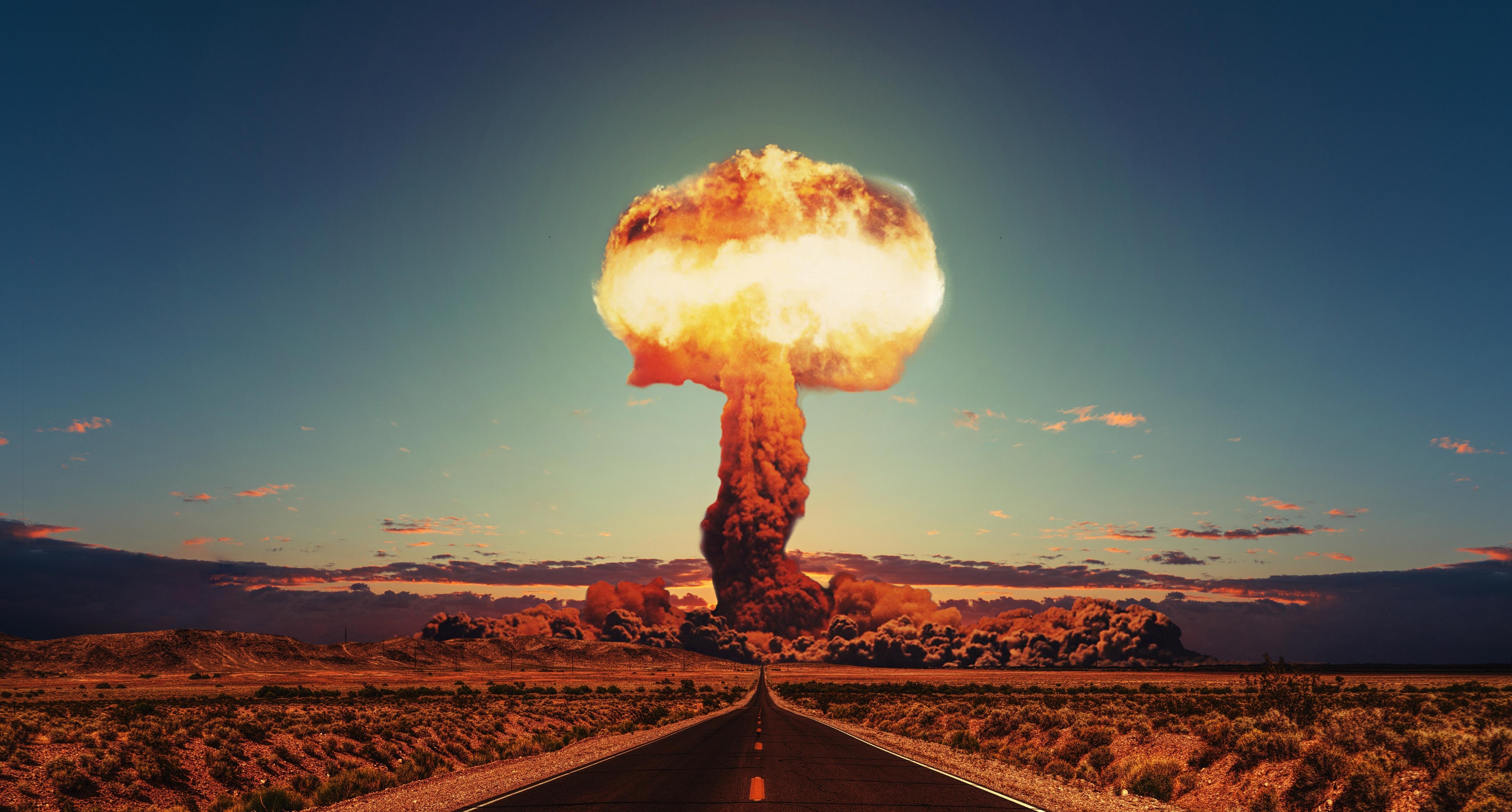
On March 14, Newt Gingrich, former Speaker of the House and foundational Republican thought-leader of American neoliberalism, suggested unclogging the Strait of Hormuz by bombing parts of "friendly territory" — presumably the UAE and Oman — with nukes. He did this by uncritically sharing a shitpost on X.
We’re less than a month into the war in Iran, but I think it’s safe to say that the era of frictionless global trade, the foundation of the international “rules-based” order, is over.
For decades, the bedrock assumption of the global economy has been that the U.S. Navy will keep shipping lanes open. But Iran has turned out to be adept at asymmetrical warfare, signing bilateral agreements with non-aligned countries to negotiate safe passage while allowing non-dollarized oil to pass through the strait. Within weeks, we could see European and Asian perception shift from: “Iranian blockade” to “American blockade.” If that happens, it would invert the value proposition of the U.S. security umbrella worldwide.
Understood in this light, the proposal to carve a new Panama Canal through the Omani desert using nuclear weapons is a rational, if outlandish and impractical, one for an empire in retreat that’s weighing its options. It would be American capital’s final, desperate move: a world-changing attempt at re-routing geography to create new flows for capital, while simultaneously demonstrating America’s raw military power.
But Dr. Strangelove’s canal wouldn’t actually save the old economic order. More likely, it would serve as a radioactive monument to its violent end. Rather than preserving American hegemony in the Middle East, an act this grave would virtually guarantee the end of globalism, hastening the emergence of the spheres of influence that are already beginning to take shape.
The underlying contradictions
Trade doesn’t flow like a gas, expanding uniformly across the globe. It moves more like a liquid, forced through specific, often vulnerable, geographic bottlenecks. The Strait of Hormuz, where 38% of the world’s traded crude oil passes, is the most critical chokepoint on Earth for the energy sector. When a bottleneck like Hormuz is threatened, capital panics, and a price premium is placed on gas. The resulting windfalls should (theoretically) be invested in developing redundancy.
In the past, the energy sector has resolved these crises by building new infrastructure, opening new markets, or geographically reorganizing their production to keep commodities flowing. But bypassing the Persian Gulf isn’t as simple as dredging a harbor or building a pipeline. Decades of destabilizing U.S.-led wars in the Gulf to “secure” the region for investors has instead left them feeling skittish. The nearest alternative trade route is the Red Sea, through the chokepoints of the Suez Canal and the Strait of Mandeb, where Iranian proxies operate.
These basic geographic and political facts led to frequent disruptions that the globalist post-World War II order tried to solve through the Carter Doctrine, under which the U.S. pledged to use military force to prevent any country from dominating the Persian Gulf. For over four decades, this strategy succeeded in ensuring that these three chokepoints remained open most of the time. But neither force nor feats of engineering could erase the fact that Gulf oil exports are highly vulnerable to military attack.
The winners of a broken strait
If the Strait of Hormuz was “replaced” by a big trench in Oman, I don’t think it's an exaggeration to say that the world would fracture into four fiercely competitive blocs. The resulting shockwaves would also create some massive, immediate winners among the four.
We are already witnessing the recapitalization of Russia’s oil sector. Since Russia’s full-scale invasion of Ukraine, European and American sanctions have forced Moscow to sell its abundant energy resources on the cheaper Chinese, Indian, and Turkish markets. But every penny of a price premium on Brent crude increases the benchmark value of Ural crude as well. Russia has suddenly found its oil and gas exports indispensable, weakening Europe’s bargaining position to end the war in Ukraine by providing the Russian state with a massive influx of capital.
That same Europe is currently staring down two looming economic crises. It needs to start seeing returns on its defense sector investments, and it needs cheap energy again. Joining the U.S.-led war in Iran would be one short-term way to “fix” these problems, which is likely alluring to some political leaders there.
Alternatively, if the U.S. nuked the Persian Gulf, calls for European “strategic autonomy” would reach a fever pitch. Political leaders would accelerate their military build-ups and aggressively build out their existing green infrastructure to secure energy sovereignty. If a militarizing Europe struggled to rapidly secure the materials (metals, minerals, and oil) necessary to complete these transitions, the temptation to repeat America’s mistakes in the Middle East and Africa would likely be enormous.
Then there is China, which is comparatively well-prepared to weather this kind of extreme volatility. Beijing has already invested heavily in green energy infrastructure, and its state-capitalist planning model is adept at pivoting its manufacturing to absorb global supply chain shocks. In fact, all China would have to do to succeed in the context of a prolonged, U.S.-led war in Iran is to keep doing exactly what it’s already doing.
As the US retreats to build its autarkic “Shield of the Americas,” Beijing will likely retreat from Latin America, reducing its Belt and Road footprint there and instead pivoting its massive capital investment and infrastructure capacities towards Africa — setting up intense competition with European powers for spheres of influence on the continent.
The Shield of the Americas
What’s ironic about Gingrich’s plan to extend the neoliberal era with nukes is that the fallout from such an act would likely force the U.S. to abandon the Middle East and turn inward. Faced with a Eurasian landmass consumed by proxy wars and trade disruption in the Indian Ocean, Washington would seek to ensure its survival through a massive, hemispheric retrenchment.
Rather than acting as the global guarantor of free trade, the U.S. would consolidate a fortified, autarkic bloc in the Western Hemisphere. Under the Donroe Doctrine, we are already witnessing an aggressive U.S. foreign policy towards Latin America that is increasingly justified by economic realities rather than the ideological “nation-building” of the neoliberal era. The U.S. is poised to abandon its role as global policeman to become a commodity cartel instead.
Sure, unleashing nuclear hellfire on the Omani desert is not a serious policy that is likely to be pursued. But it’s a telling Freudian slip by one of America’s most well-known political figures. It reveals an unspoken (or perhaps subconsciousness) awareness among the foreign policy establishment that the neoliberal era, which promised a frictionless globe bound by free trade and policed by American aircraft carriers and hundreds of overseas bases, is broken beyond repair. If Gingrich’s best outside-the-box solution to maintain the status quo is to reroute the Persian Gulf with nukes, then the status quo is probably reaching its end.
What awaits us on the other side of today’s crisis in the Strait of Hormuz is not a renewed Pax Americana, but likely a more overt return to spheres of influence. As Russia recapitalizes its oil sector, Europe retreats into militarism, and China continues its autarkic green transition, the U.S. will have no choice but to abandon its war in Iran and build a “Fortress America” with outposts in Venezuela, Ecuador, Panama, Peru, Bolivia, Chile, and Argentina.
In fact, the emergence of such a world order may well be Trump’s preferred outcome to this war.