

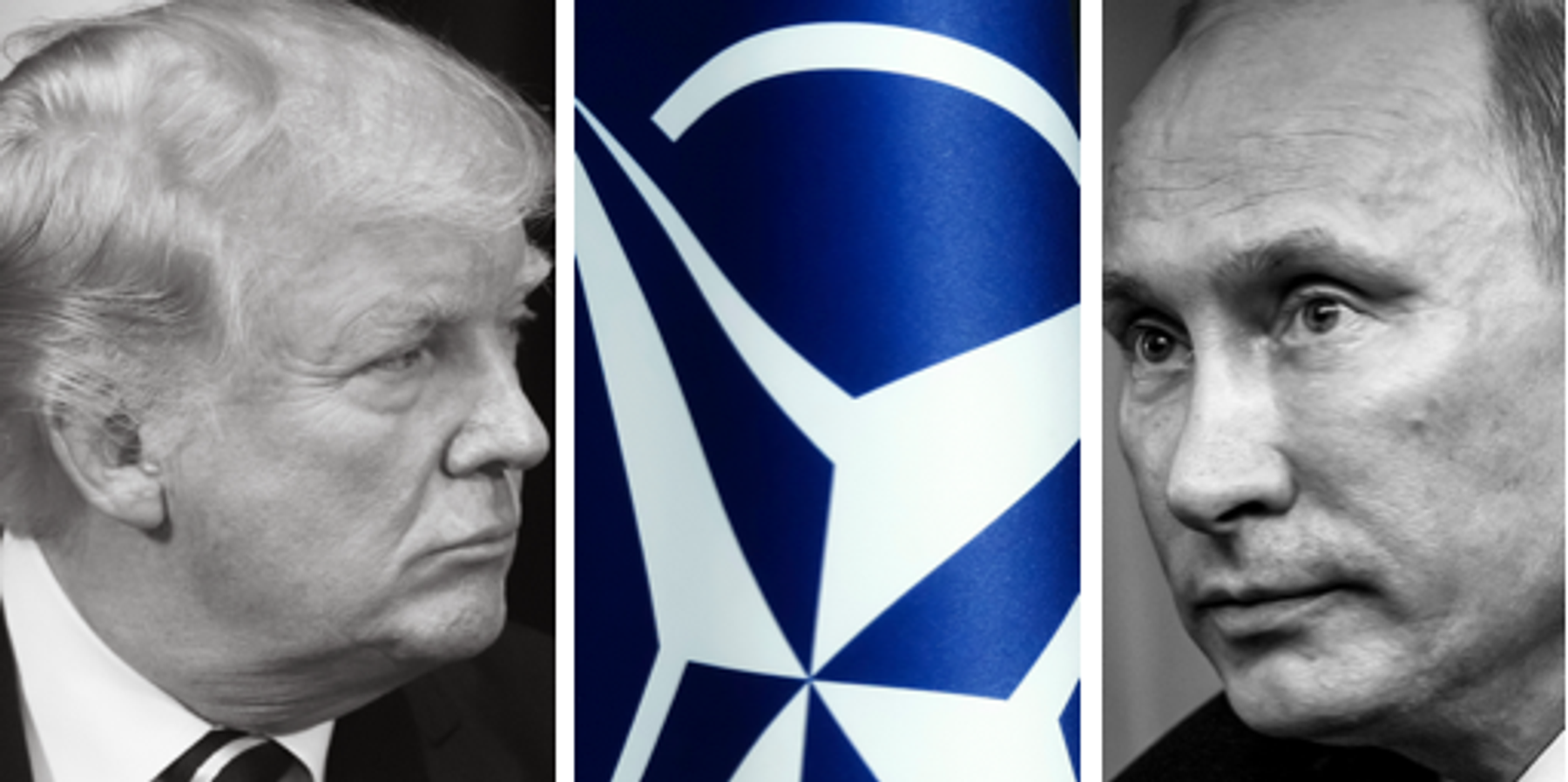
Bringing peace to Ukraine has obviously proved more difficult than President Trump imagined when he pledged to end the conflict in a day. Some six months into his term, a settlement seems far from imminent.
Visibly frustrated, Trump has openly criticized Russian President Putin, revived military support for Ukraine, and threatened to intensify economic pressure on Russia.
While many have cheered his toughened approach, Trump’s instinct to find a diplomatic end to the war is still correct. Ukraine cannot generate enough manpower — and the West cannot produce enough weapons — for victory in what has become a war of attrition to be realistic. And although Russia cannot conquer and govern all of Ukraine, the war threatens to leave in its wake not only millions of dead and wounded combatants, but an unreconstructed and dysfunctional Ukrainian rump state that could radiate instability into the broader region for years to come and dangerously stoke tension between Russia and the West.
Trump’s progress toward peace has stalled, however, largely because his negotiators have insisted on an unconditional ceasefire before settling the key geopolitical issues underlying the war. That insistence has flowed from the time pressure Trump imposed on himself by promising an early end to the fighting. Since a full-fledged peace treaty would necessarily require grappling with difficult technical issues and negotiating a host of painful compromises, the Trump team has viewed a ceasefire as the fastest path to something it can call a success.
But Russia has little interest in an early ceasefire, and it almost certainly views Trump’s threat to impose tariffs on China, India, and others that purchase Russian energy as mostly empty. It has every incentive to continue fighting – its primary source of negotiating leverage – until it gets assurances that its core interests have been addressed.
What are those interests? For years, Russian officials have insisted that their biggest concerns involve the prospect that Ukraine could join NATO or otherwise host Western military forces on its territory. The draft treaties Russia proposed to the United States and NATO prior to the invasion were focused on getting legally binding guarantees precluding such perceived threats.
Nonetheless, Trump’s team has focused more on addressing Russia’s territorial claims than it has on offering such security guarantees, treating the conflict more as a dispute over where the Ukrainian border should lie than as a broader geopolitical conflict between Russia and the West.
This focus doomed the draft plan that special envoy Witkoff presented to Russia in April, which reportedly offered formal U.S. recognition of Crimea as Russian territory, coupled with sanctions relief and de facto recognition of Russia’s holdings in the Donbass. But the plan’s provision for European peacekeepers in Ukraine crossed a clear Russian red line, undermining the plan’s pledge that Ukraine would not join NATO.
Trump’s path to diplomatic success lies in refocusing on the geopolitical conflict underlying the war, while continuing to enable Ukraine’s defense during negotiations. One element must include concrete assurances that Ukraine will not be in NATO and NATO-member forces will not be in Ukraine. In return for this assurance, Trump should insist that Russia codify its support for Ukraine’s membership in the European Union.
Such a reciprocal compromise would leave Ukraine militarily neutral, but politically and economically anchored in the West — an outcome that would allow Ukraine’s reconstruction and facilitate the repatriation of millions of refugees who otherwise would never return to their homeland. Such renewed strength will be essential to deterring future Russian aggression.
It would also provide an elegant solution to a thorny problem: Russia’s insistence on Ukraine’s “de-nazification,” new elections, and legal protections for linguistic and religious minorities as conditions for a peace settlement. Negotiating with Russia on such issues would be an affront to Ukraine’s domestic sovereignty; addressing them as a requirement of the EU accession process would be far more palatable in Kyiv.
Pursuing such a compromise is Trump’s best hope for moving the conflict in Ukraine from the battlefield into the negotiating room. The West lacks sufficient leverage to force Russia into an immediate ceasefire. But a binding framework agreement that swaps Ukraine’s military neutrality for a path into the European Union, while laying out a roadmap for a larger set of negotiations may still be possible, perhaps even before we hit Trump’s 50-day window on September 1.
Such an agreement could, in turn, facilitate the ceasefire that has thus far evaded Trump’s grasp.
That would not mean victory in this war. But it would be a win.
- I was there: NATO and the origins of the Ukraine crisis ›
- Hegseth finally pops bubble of illusion: 'No NATO for Ukraine' ›