

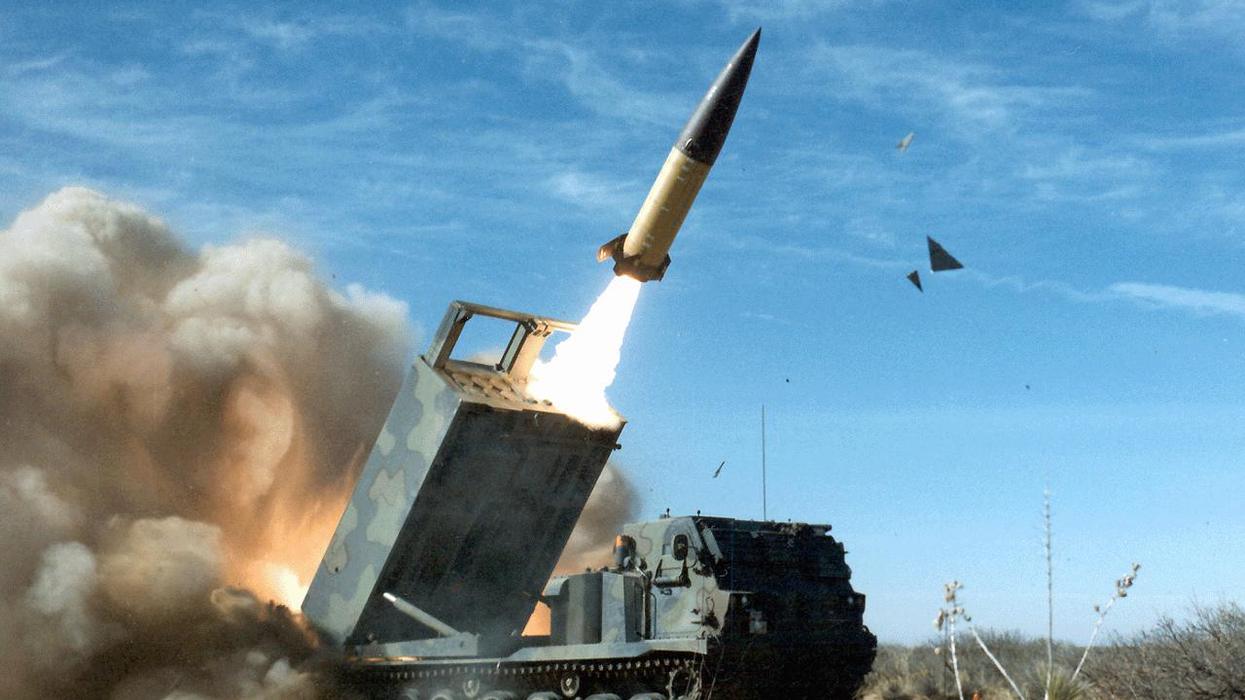
Reuters reported this morning that the U.S. has used “virtually all” its long-range precision strike missiles during its war on Iran.
Reuters’ sources would not say exactly how many of these surface to surface weapons, known as Army Tactical Missile Systems (ATACMS) and Precision Strike Missiles (PrSM), the U.S. military has left.
This comes amid news that the U.S. has burned through other key weapons systems since war with Iran began. Last week, the Center for Strategic and International Studies (CSIS) estimated the U.S. has fewer than 827 Patriot missiles, and fewer than 278 THAAD ballistic missile interceptors, in its stockpiles.
But the depletion began long ago with the Ukraine war. Since 2022, the U.S. gave weapons to Kyiv at rates faster than it could replace them, including Patriot missile interceptors and an unspecified number of ATACMS.
Despite the growing body of evidence, President Donald Trump, Defense Secretary Pete Hegseth and UN Ambassador Mike Waltz have repeatedly denied the U.S. is running low on critical munitions.
Not surprisingly, the U.S. has taken great strides to procure munitions in recent months, including repeatedly floating major spending packages to replenish depleted stockpiles. The latest: a $18.2 billion request for more money for the Pentagon budget.
Earlier this spring, the Pentagon awarded RTX a $441 million contract for PAC-2 missiles — older Patriot missiles, which the U.S. has not ordered in decades. The Pentagon has also asked civilian companies, such as Ford, GM, and Oshkosh, to consider making weapons.
Last month, a U.S. official told the Washington Post that there weren't enough munitions to sustain military operations in the Middle East. "I don't think the White House is aware of that,” the official said.
Munitions are expensive and often take years to build.