

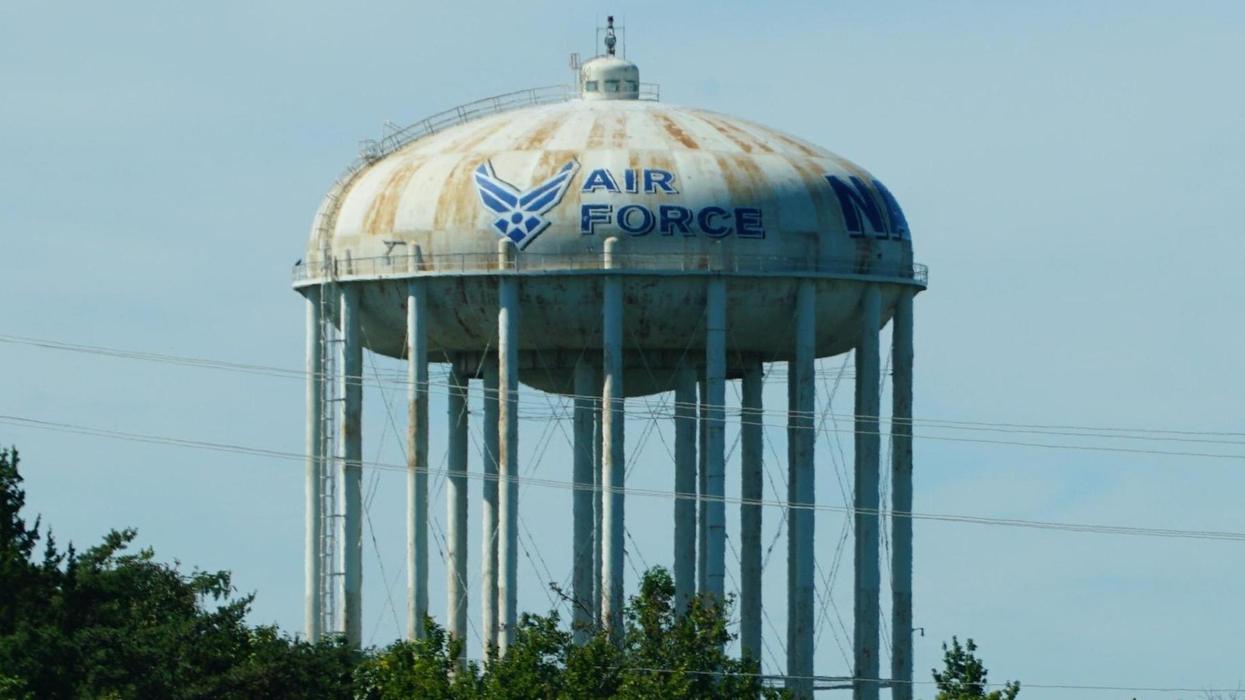
The Pentagon knew that Joint Base Andrews, an Air Force base just 10 miles southeast of Washington D.C., was leaking jet fuel as early as December, when the base’s fuel system failed a leak safety test. But Pentagon officials didn't tell Maryland that the base was leaking jet fuel until late March when someone on base saw oil in a nearby freshwater creek, reports NOTUS.
Even after the initial call, the Pentagon withheld information about a second leak until two weeks later. “The base failed to promptly disclose leaks as required by its state oil permit and did not report the full extent of the discharge until April 8, 2026,” said the Maryland Department of the Environment.
Altogether, Joint Base Andrews has lost at least 32,000 gallons in jet fuel, with an unknown amount spilling into Piscataway Creek, a tributary of the Potomac River. State officials say that jet fuel is no longer leaking into the creek, though the environmental risks are not yet clear as they do not know the precise location of all the leaked fuel.
The incident is among the most significant leaks of jet fuel from a U.S. military base in recent years. It fits into a pattern of slow responses from the Pentagon, which has on several occasions failed to notify the public of environmental issues on bases.
Lawmakers are demanding answers. A letter from Maryland legislators to Air Force Secretary Troy Meink asked for a complete timeline from the Pentagon, expressing concern over the “notable delay between when Joint Base Andrews discovered the fuel leak and when the State of Maryland received full information about the complete spill volume.”
The lawmakers also noted that legacy pollution from Joint Base Andrews has already caused contamination of PFAS, a synthetic “forever chemical” linked to weakened immunity and other health risks, in the surrounding area. Joint Base Andrews has not yet provided details about any PFAS cleanup.
The episode has drawn comparison to a jet fuel leak at Red Hill Bulk Fuel Facility, a fuel depot precariously located just 100 feet above state-designated drinking water near Joint Base Pearl Harbor-Hickam in Hawaii. In 2021, 19,000 gallons of jet fuel leaked from Red Hill, contaminating the drinking water of 93,000 people. Residents reported a wide range of symptoms, including gastrointestinal and neurological damage. A woman who worked at a local daycare said the babies’ skin was “as red as our flag’s.”
The Navy maintained that the water at Pearl Harbor-Hickam was safe to drink, despite the strong smell of jet fuel. Nine full days after the leak, they finally shut off the pump. Pentagon Inspector General reports later confirmed that the Navy was publicly insisting that the water was safe despite never “conducting any laboratory analysis to confirm that was the case.” The report also confirmed that several Navy personnel “knew within a short time…that the spill was all or mostly fuel.”
A ProPublica investigation estimates the cost of cleaning up military sites with toxic waste at $28 billion. The federal government’s estimate of PFAS contamination cleanup in military communities is $7 billion a year. Even as the Trump administration is proposing a $500 billion increase to the Pentagon budget, it has been delaying and cutting budgets for environmental cleanup at federal sites.
The latest episode at Joint Base Andrews serves as a reminder of the Pentagon’s long history of denying environmental contamination, downplaying its effects, and failing to take action to remediate the contamination. The question isn't whether it will happen again; it's who will be downstream when it does.
- Mapping toxic exposure on US military bases. Hint: There's a lot. ›
- Jet fuel in Hawaii's drinking water the latest example of military's negligence ›