

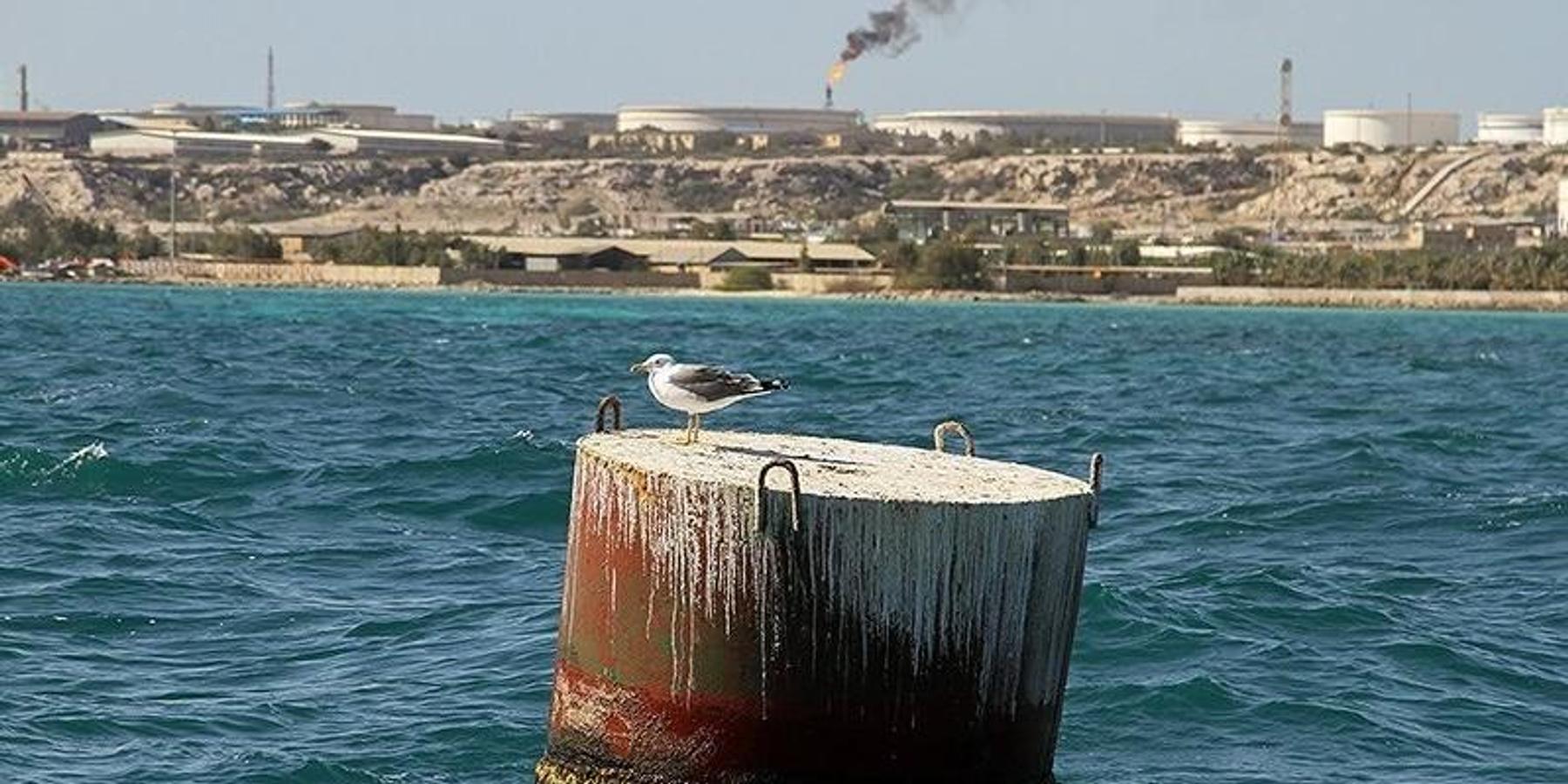
President Donald Trump is reportedly considering seizing Iran’s Kharg Island, which he calls Iran’s “crown jewel” because it houses a terminal that processes about 90% of Iran’s oil exports.
After the U.S. bombed Kharg last week but spared its oil facilities, leading Iran hawks urged Trump to finish the job. “Mr. President: Take Kharg Island [and] this war is over!” exhorted Sen. Lindsey Graham (R-S.C.). Rep. Pete Sessions (R-Texas), for his part, floated the idea that seizing the island is the perfect mission for the Marine Expeditionary Unit (MEU) now sailing toward the region.
So why is capturing this once-obscure island suddenly on the tip of every Iran hawk’s tongue? And what happens if they get their way?
Kharg Island has been on the map for Pentagon planners for decades. President Jimmy Carter weighed bombing it or seizing it during the 1979 Iran Hostage Crisis but demurred. Incredibly, in 1988, Donald Trump himself suggested seizing Kharg during his "Art of the Deal" book tour.
Today, Kharg appears to be back in the headlines thanks to Michael Rubin, an American Enterprise Institute scholar and former Iraq Coalition Provisional Authority official who says taking Kharg is a “no-brainer” and has pitched the operation to White House officials.
If we apply some basic military planning to Rubin’s pitch, it would go like this: U.S. troops take over the Island via airborne or heliborne insertion, or even amphibious assault. With the Iranian regime’s oil held hostage by Trump and its military “unable to make payroll,” it will have no choice but to come to the table to negotiate its capitulation.
Kharg is a pitch tailor-made for Trump: A daring made-for TV assault to “take the oil” combines Trump’s penchants for military spectacle and seizing natural resources, most recently on display in Venezuela. Most importantly, unlike other proposals including raiding nuclear sites, Kharg supposedly promises the total victory Trump expected when he started this war. All he has to do is take an island smaller than Manhattan south of Trump Tower.
It won’t work.
On a strategic level, blocking oil sales is feeble leverage after Trump and Netanyahu already thrust Iran’s leaders into an existential war for survival. The U.S. and Israel have assassinated dozens of top politicians and commanders, and Iranian leaders understand Netanyahu is less interested in regime change than creating a collapsed state. Saudi Arabia, Israel, and Trump himself have all more or less threatened to bomb Kharg already. Which Iranian leader would surrender and trade Iran’s sovereignty for an oil terminal he expected to be blown up anyway, to restore oil revenue that a Trump puppet regime would control?
A plan to end the war by cutting troops’ pay is also wishful thinking. Iranian troops whose families are being bombed won’t abandon their posts just because they missed a paycheck. Losing oil revenue will punish Iran’s already hobbled economy, but years of U.S. sanctions forced Iran to develop a nearly self-sufficient defense industry. The Chinese government, anxious about losing access to discounted Iranian oil, will likely continue supplying Tehran the components it can’t manufacture itself.
The tactical picture is even worse. For the troops unlucky enough to receive orders to take Kharg, the operation would land somewhere between a suicide mission and a self-imposed hostage crisis.
Given the size of the objective (five miles long), the substantial civilian population there, the need to hold it indefinitely, and the lack of surprise, the U.S. would need thousands of troops for the mission. Available units include the incoming MEU’s 1,200-strong Marine battalion landing team, the 82nd Airborne’s “ready brigade” (the 82nd just cancelled scheduled maneuvers, fueling speculation that it could be headed to the Middle East), the 75th Ranger Regiment, and other quick-to mobilize units, or even regular Army battalions already deployed to Kuwait. In theory, Trump has over 10,000 troops at his disposal in coming weeks, though there’s been no public discussion of sending that large a force (yet).
Insertion options, from least to most survivable, are: amphibious assault, heliborne (air assault), and airborne.
Kharg is 500 miles beyond the Strait of Hormuz and just 15 miles off Iran’s coast. Storming the beach would require making it past the maritime chokepoint currently considered too dangerous for the U.S. Navy. With amphibious assault ships heading their way, Iranian forces could mine the strait and the waters around Kharg itself, while attacking with shore-based antiship missiles, aerial drones, and drone boats. Any landing would also be in range of rockets and artillery that Iranian crews have not yet had the opportunity to employ in this war.
A helicopter assault avoids anti-ship weapons, but any aircraft that touches down would be an easy target for drones, missiles, and artillery, as well as shorter-range air defenses. The MEU’s complement of V-22 Ospreys and helicopters would need at least three trips to insert its marines, giving Iranian troops plenty of opportunities to calibrate their sights.
An airborne jump would be the surest path, but still perilous. Planes are safe from drones, and fighter escorts could suppress or soak up surviving Iranian air defenses. Paratroopers land widely dispersed, preventing a single drone from taking out an entire platoon. But laden paratroopers blown off course — a common occurrence — could drown or land alone amidst an unfriendly population.
It's unclear how many Iranian troops remain on the island; Trump claims he destroyed all military targets there, though that doesn’t preclude underground bunkers, or reinforcements arriving by boat. But that’s really beside the point. What is certain is that 20,000 Iranian people live there, who are sure to consider U.S. troops an unwelcome presence, raising the odds of another horrific civilian casualty incident and compounding the challenges for the invasion force. Are the Marines now en route trained and manned for a counterinsurgency mission on top of everything else?
Let’s say U.S. troops clear the island and seize the oil facilities. Mission accomplished, right? Except that now, they would be trapped in a five-mile kill zone where evacuation would look like the worst scenes of "Black Hawk Down" or "Dunkirk."
Iran’s leaders are fighting for the survival of the Islamic Republic, not to protect oil infrastructure. The opportunity to inflict a mass casualty event that could sap limited U.S. public support for the war, or to hold entire battalions as de facto hostages, may well appear more valuable to Tehran than oil revenue. Iranian commanders could even let U.S. troops land unopposed, stewarding the capabilities described above to instead repeal any rescue attempts and keep U.S. forces trapped on Kharg.
If this analysis overestimates Iranian capabilities or underestimates U.S. air power, blame the example set by more modestly equipped and organized Houthis, who have pushed U.S. Navy ships and fighters to their limits over the past two years.
We should not assume Trump would be too casualty-averse for an operation this big if he thought it promised victory; he’s so far appeared untroubled by troop deaths from his war, saying, “that's the way it is.”
Still, the White House should understand any attempt to seize the island is a recipe for mission creep. U.S. troops in distress on Kharg could be used to justify landing additional troops on the Iranian mainland to take out the Iranian forces obstructing evacuation. Then those troops need to be protected, resupplied, reinforced and avenged, too, and from there the self-fulfilling logic of intervention pulls U.S. forces closer to Tehran.
With Kharg in the crosshairs, a catastrophic U.S. invasion of Iran is no longer unthinkable. That fact alone should animate us to stop this war immediately. Yet the Trump administration is already planning to ask Congress for supplemental funding that could equip this war for years to come.
Lawmakers will soon face a career-defining choice. If they are committed to the quixotic and increasingly ill-defined goal of regime change in Iran by any means necessary, they can throw more of our money at this war. But if their goal is to prevent a grotesque sequel to the invasion of Iraq, they should refuse to give a single additional taxpayer dollar to this spiraling catastrophe.
- Vast number of Trump voters want him to declare victory and get out ›
- Dems: We will not approve one more cent for this war ›