

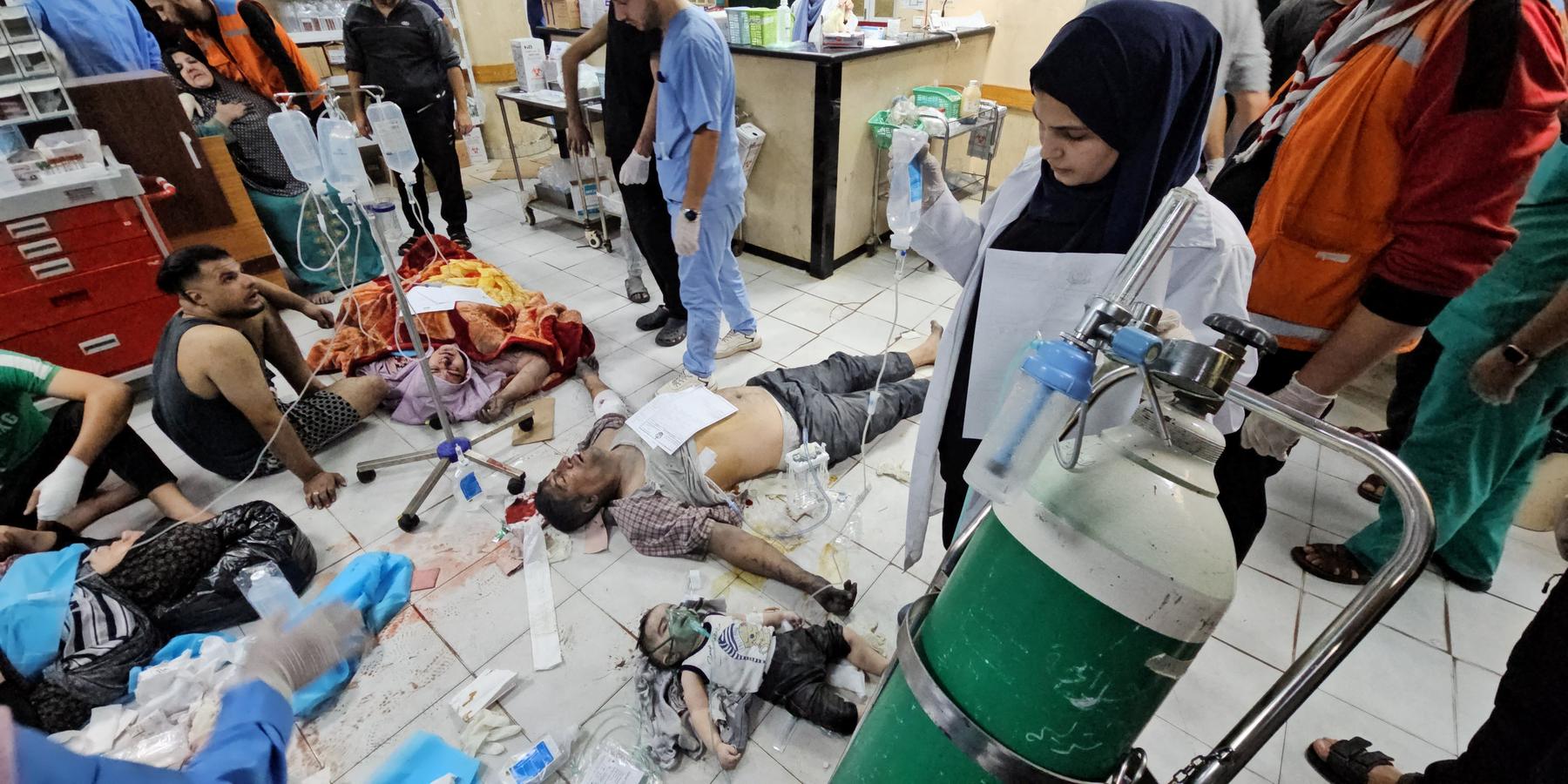
The most explosive allegation against Israel is also the most emotionally painful one. A state founded in 1948 as a refuge for Jewish survivors of Adolf Hitler’s terror is committing genocide today, contend a range of historians, including Holocaust scholars, human rights groups, and an independent U.N. commission.
Genocide is narrowly defined as the intent to destroy, in whole or in part, a national, ethnic, racial, or religious group, “as such.” It is known as “the crime of crimes,” so applying it to Israel's conduct is often cast as insensitive and even libelous, given the deep historical traumas evoked.
In his 2021 book, The Problems of Genocide, historian Dirk Moses created a new analytical term to explain why states perpetrate civilian destruction while claiming adherence to international legal norms in the name of self-defense. Genocide may or may not be an outcome.
“Permanent security,” Moses argues, is a policy aspiration with sinister implications: to eliminate any potential or future threats, real or imaginary, internal or external. Doing so is usually impossible. Seeking such security requires the use of excessive force, blurring or outright canceling the distinction between combatants and civilians. Over time, this approach morphs into a recipe for endless war as new enemies emerge from the turbulent frontier.
In the immediate aftermath of the Hamas atrocities of Oct. 7, 2023, Israeli Prime Minister Benjamin Netanyahu framed Israel’s military goals in permanent security logic. “Hamas will be demilitarized; there will be no further threat from the Gaza Strip on Israel, and to ensure that, for as long as necessary, the IDF will control Gaza security to prevent terror from there.”
Then-Defense Minister Yoav Gallant, who, like Netanyahu, has been indicted by the International Criminal Court on war crimes charges, ordered a complete siege of Gaza, saying of Hamas, “We are fighting human animals, and we are acting accordingly.”
Yet it was not enough to kill enemy guerrillas and destroy their bases. Food and medicine were to be denied. The land itself was to be made unlivable.
In an era of brutal conflicts, Moses’ framework is gaining traction among scholars, analysts, and journalists. Yagil Levy, an expert on military-society relations at the Open University of Israel, explains how permanent security logic can warp states’ thinking.
“Entire populations may be reified as potential threats and assigned collective guilt,” Levy told RS. “The logic of preemption may lead states to target groups not for what their members have done, but for what some of them might do in the future.”
“Once adopted in Gaza,” Levy continued, “the same logic of permanent security extended to other arenas and was reflected in three policy principles. First, Israel no longer confines itself to established borders but has sought to expand them de facto in Gaza, the West Bank, Lebanon, and Syria. Second, within these expanded areas, Israel has sought to establish buffer zones separating Israeli civilian communities from potential hostile forces in Gaza and Lebanon. Third, where displacement is not possible, Israel demands complete demilitarization of areas perceived as threats.”
Dirk Moses tells RS that Israel's conduct exemplifies a drive for permanent security. He points to grossly disproportionate civilian casualties, including the deaths of thousands of children, widespread demolition of homes, and mass displacement. The sheer scale undermines the notion of military necessity: “Israel decided to respond to October 7 by dealing with Hamas once and for all, which is permanent security thinking. That's why Gaza was destroyed.”
As he told the Dutch newspaper NRC in March: “While the strategic goal of security is long-standing, the current Israeli government has taken this to a further, more intense level. The current approach aims not just for defense, but to actively reshape the Middle East, moving beyond earlier, more limited security aims… The terrible thing about this is that it makes perfect sense to security officials.”
+972 Magazine, an Israeli outlet, interviewed Israeli commanders who were ordered to bulldoze entire neighborhoods to ensure that “the return of people to these spaces is not something that will happen.” The same report cited the systematic destruction of all buildings near the security fence, even if not identified as “terrorist infrastructure.” Drone footage from the Associated Press revealed the magnitude of the devastation.
Some extremist figures in Israel have made statements describing Palestinian children as future terrorists who should be eliminated. It’s unclear how widespread these views have become in Israeli society. But there is little doubt that, today, most Israelis support what can only be described as collective punishment. A poll published by Haaretz found that 82% of Israeli Jews wanted to expel all Gazans, and 47% supported killing all Palestinians in “a conquered enemy city.”
According to UNICEF, more than 50,000 children have been killed or wounded in Gaza. Surgeons have testified that Israeli drones targeted children. Yair Golan, an opposition politician and former deputy chief of the Israel Defense Forces, said his country was killing babies “as a hobby,” before walking back his remark.
Now Israel is seeking to wipe out “emerging threats” in southern Lebanon by obliterating villages, the alleged base of Hezbollah’s support, where thousands of Shia Lebanese may never be allowed to return. Defense Minister Israel Katz said this practice follows “the Rafah and Beit Hanoun model in Gaza.”
Unintended consequences from Israel’s past invasions, undertaken to deal with cross-border attacks in the name of self-defense, continue to ripple, according to Mark LeVine, a historian of the modern Middle East at UC Irvine.
“Hezbollah didn’t exist until an illegal Israeli invasion and occupation of southern Lebanon in 1982, which was brutal, murderous, and entailed ethnic cleansing,” LeVine tells RS. “It created a brutal resistance movement in response, which was then used to justify Israel’s occupation for 18 years.”
This points to the fundamental contradiction in the permanent security approach: the pursuit of perfect security will all but inevitably create new enemies. The IDF routed Palestine Liberation Organization bases in the 1982 war, only to create the conditions for an even more implacable enemy to emerge. Since the Israeli withdrawal in 2000, Hezbollah has repeatedly rearmed and attacked. During the latest round of wars, thousands of Israeli civilians had to be evacuated near the northern border with Lebanon, which is why the IDF is now trying to create a larger depopulated “buffer zone” on the other side.
Just as the practice of torture brutalizes the torturer as well as his victims, the tragedy of permanent security is that it leaves everyone less safe and more traumatized — and the international order is made a shambles. Indeed, permanent security means permanent war. This is why Israel’s peace movement advocates for neither eliminating nor managing threats, but resolving long-standing conflicts diplomatically.