

Earlier this month, the United States, citing heightened risk of terror attacks, pulled all non-essential staff and their families from its embassy in Nigeria’s political capital, Abuja.
Nigeria responded in a typical fashion, issuing a statement acknowledging that American concerns are well intentioned but do “not reflect the overall security situation” in the country. Yet within days, a confidential memo emerged from Nigeria’s border security which has proven Washington’s assessment to be true.
According to the leaked memo, sleeper cells linked to Islamic State West Africa Province (ISWAP) and Boko Haram are planning coordinated attacks targeting key facilities in the country’s capital. The list of targets reportedly includes a prison, a military detention centre and the Nnamdi Azikiwe International Airport. Caught flat-footed, Nigeria has neither confirmed nor denied the alert, but there are now noticeable security deployments and heavy fortifications at the respective target areas.
The significance of a possible terrorist attack on Abuja cannot be overstated. Apart from being the seat of government, Abuja is home to several diplomatic missions and corporate headquarters. As a result, it has a significant population of foreigners and members of the diplomatic community.
In 2011, Boko Haram detonated a car bomb at the office of the United Nations in Abuja, killing at least 18 people. Another suicide bombing at the headquarters of the Nigerian Police Force in June of the same year killed at least six people. Similar attacks continued in succeeding years, causing sustained anxiety within the diplomatic community even as foreign missions intensified security measures to protect staff and buildings. Indeed, the U.S. ordered a similar evacuation in October 2022 due to heightened risk of terror attacks on the capital.
Since 2009, Nigeria, Africa’s most populous country, has been battling a complex and overlapping security crisis characterized by widespread kidnappings, banditry, and terrorist attacks across the country’s north. The crisis caught the attention of President Donald Trump last year, prompting him to redesignate Nigeria a Country of Particular Concern (CPC) for tolerating the slaughter of Christians — an accusation Nigeria fervently rejected.
Trump also threatened military action if Nigeria’s government failed to act to protect Christians. On Christmas Day last year, he followed up on the threat by authorizing an airstrike against ISIS-affiliated targets in North Western Sokoto state.
The diplomatic row that ensued prompted Nigeria to launch a desperate public relations effort and hire Washington-based DCI Group for $9 million to manage its image on Capitol Hill. Also hired was Valcour Global Public Strategy, a Washington-based lobbying firm, for the “purpose of strengthening the bilateral relationship” between Nigeria and the U.S.
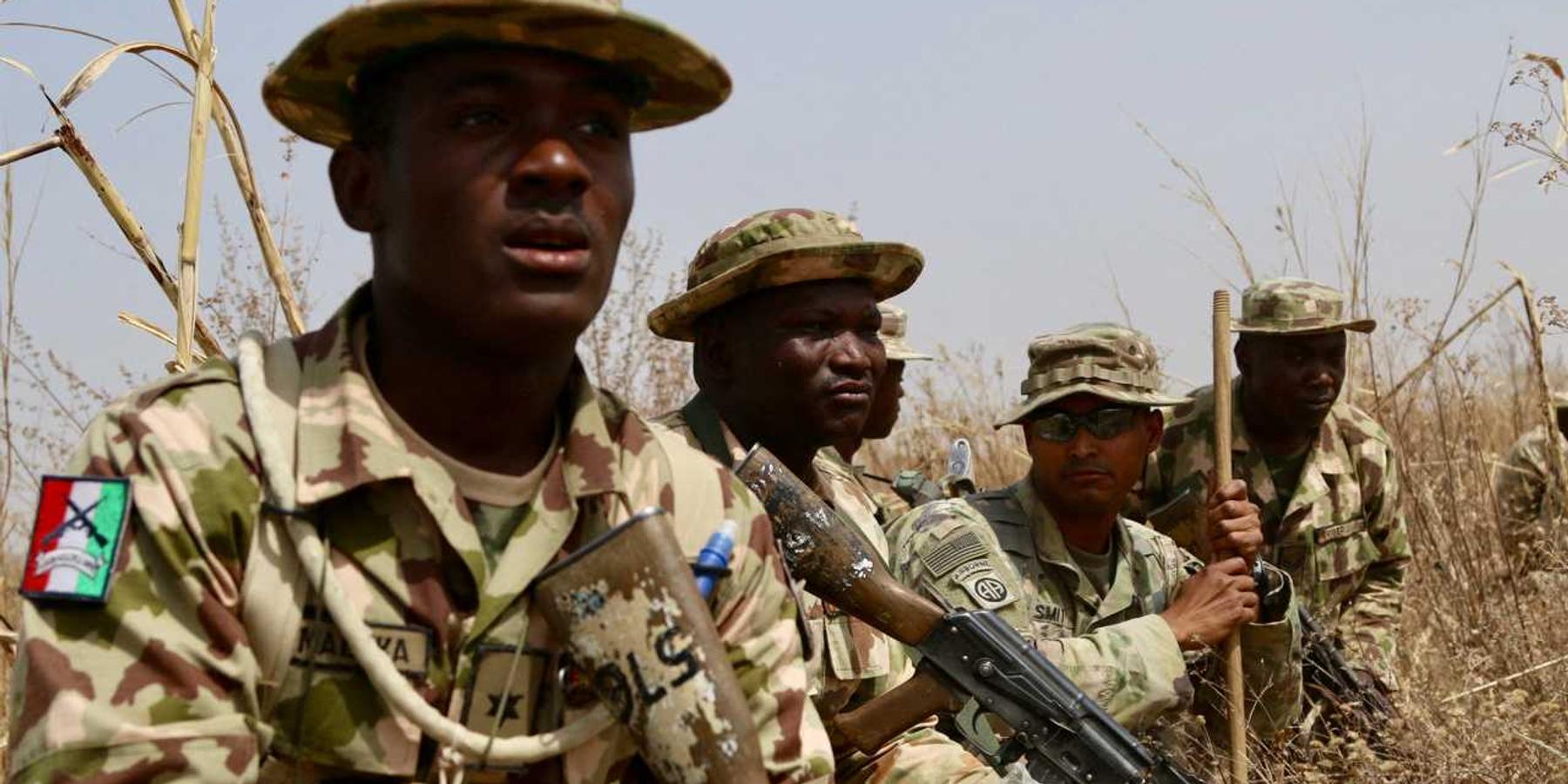
Tensions cooled in January when Washington began to tone down its harsh criticism, preferring instead to work jointly with Nigeria’s government to tackle the crisis. In February, Washington deployed 200 troops alongside multiple MQ-9 reaper drones to assist the country with training and intelligence gathering.
But neither the increased U.S. support nor the extensive PR on Capitol hill has stopped the killings — be it of Christians or Muslims. In early February, gunmen suspected to be members of Boko Haram or the ISIS-affiliated Lakurawa group attacked Woro and Nuku, two Muslim-majority villages in Kwara state, killing between 170 and 200 people.
Survivors reported that the community was targeted because residents refused to join the jihadists or accept their extremist interpretation of Islam. Attackers reportedly bound victims' hands and executed them, while others were trapped and burned alive inside shops. Likewise on Palm Sunday, March 29, at least 20 people were killed during an attack by the Fulani militia on Angwan Rukuba, a Christian community in Nigeria’s North Central state of Plateau.
Nigeria’s President, Bola Ahmed Tinubu, promised grieving Nigerians in Jos, Plateau state, that “this experience will not repeat itself,” but in the meantime more than five other states notably Nasarawa, Zamfara, Borno, Benue and Kaduna have recorded fresh massacres of Christians, signaling a breakdown of public order.
At the same time, large-scale abductions are gradually becoming normalized across the country, with Amnesty International estimating over 1,100 people kidnapped between January and April this year. According to UNHCR, over 3.7 million Nigerians are internally displaced as of early 2026 because of the expanding violence.
The resurgence of jihadist operations in Nigeria fits into a regional pattern where groups such as Jama’at Nusrat al-Islam wal Muslimeen (JNIM) and the Islamic State in the Greater Sahara (ISGS) have carried out mass fatality attacks and laid siege on cities and towns across the Sahel, especially in Mali and Burkina Faso.
Indeed, the planned Jihadist attack in Abuja mimics a dramatic operation by the Islamic State Sahel Province earlier in January in neighboring Niger Republic. During that incident on January 30, militants armed with explosives launched a major attack on Diori Hamani International Airport and the adjacent Base 101 in Niamey injuring four soldiers while several passenger planes and military hangars were destroyed.
A similar attack on the Nnamdi Azikiwe International Airport, the only airport in Nigeria’s capital catering for between 3 and 5 million passengers annually, could be catastrophic.
But thwarting one single attack is not the same as decisively winning the war on terror. While the U.S. has poured about $1.8 billion in weapons sales into Nigeria over the last decade, the operational challenges of an overstretched army deployed across a region that is far larger than France remain unresolved. The immediate consequence is that, even when troops dislodge fighters and retake territory, they are often unable to hold it long enough to guarantee long-term success.
Meanwhile the fast-moving security crisis continues to deteriorate and expand rapidly, leaving the current counter-terrorism approach dangerously lagging behind. According to the Institute of Security Studies, the resilience of jihadist groups in Nigeria derives partly from the existence of vast ungoverned spaces that serve as ecosystems for them to regroup and re-arm.
For Nigeria to win the war on terror, military force must be combined with urgent governance reforms to expand state presence to every nook and cranny of the country through services and accountability. Only this can enhance local resilience and deny terrorists the vacuum they exploit for recruitment and control.
- US arming Nigeria is becoming a crime against humanity ›
- Trump's Christmas Day strikes on Nigeria beg question: Why Sokoto? ›