
Follow us on social

google cta
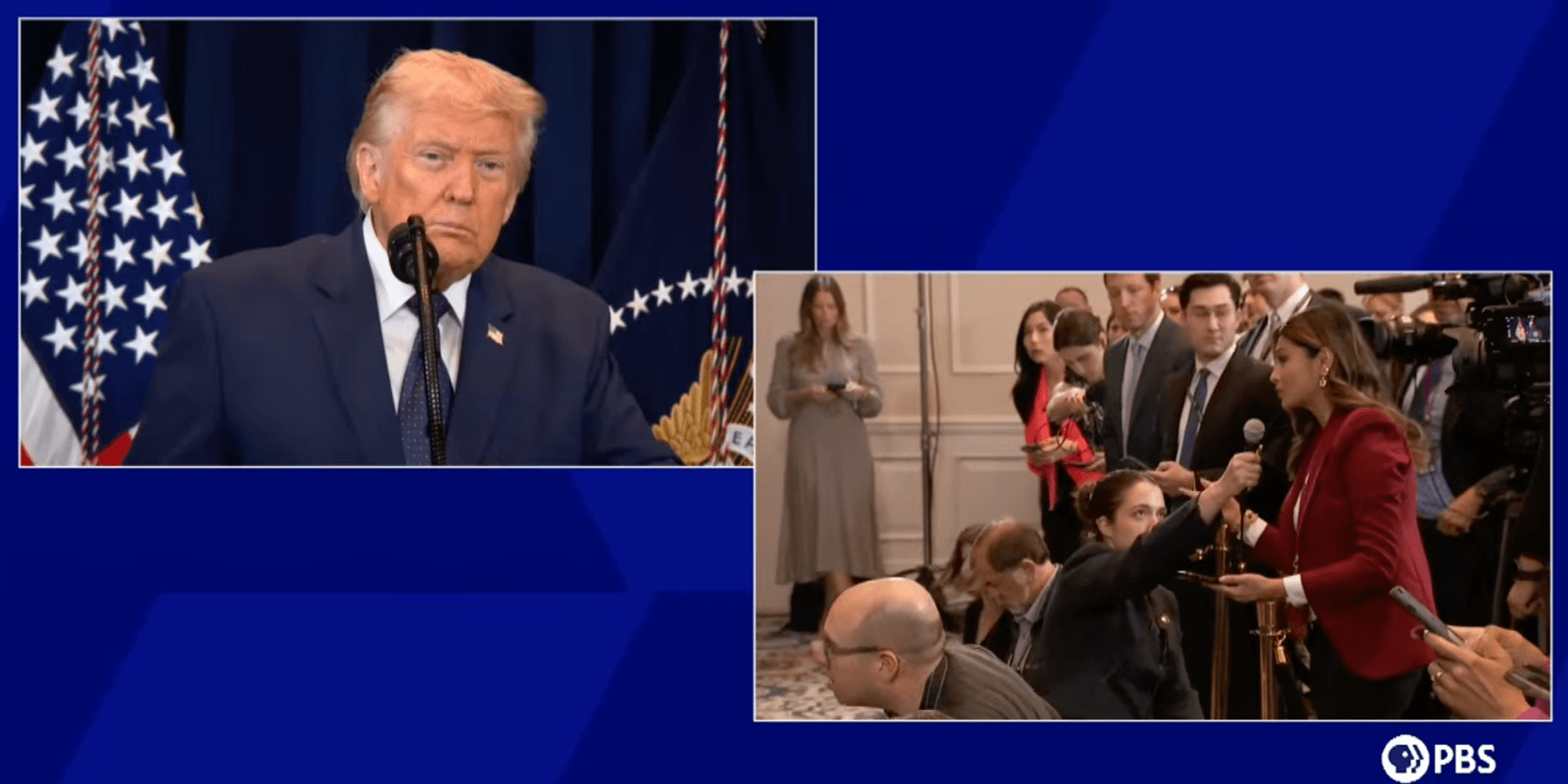
Trump miami press conference iran

Trump press conference reveals a man who wants out of war

He may be preparing the ground for a face saving declaration of victory, but don't think Iran is going to concede that easily without something in return

Analysis | QiOSK
google cta
google cta

Trump’s “all over the place” press conference at his Miami resort on Monday appears to have had two key objectives: a) Calm the markets by signalling the conflict may soon be over because it has been so "successful,” and b) Prepare the ground for Trump ending the war through a unilateral declaration of victory.

Though ending a war that never should have been started in the first place — rather than fighting it endlessly in the pursuit of an illusory victory as the U.S. did in Afghanistan — is the right move, it won’t be as easy as Trump appears to think.

Tehran also has a vote — and there is little to suggest that it will agree that the war is over.

Tehran objects to what it would consider a premature ceasefire out of fear that it would only give the U.S. and Israel time to regroup, rearm, and then re-attack Iran. For the conflict to be ripe for a ceasefire, Tehran believes that enough cost must have been inflicted on the U.S., regional states, Israel, and on the global economy that all states conclude that starting the war was a mistake — and as a result, no state will seek to restart it.

Moreover, if the war ends now, Iran will be in a worse situation than it was before the start of the war. Much of its infrastructure has been destroyed, its missile capabilities have taken hits, its ability to export oil has been damaged, and most crucially, its prospects for sanctions relief have been obliterated. Indeed, who will and can help rebuild Iran under these circumstances?

This would leave Iran not only in a weakened position but also in a continuously weakening state. Which, in turn, would make another war of aggression by the U.S. and Israel more, not less, likely, since it is Iran’s perceived weakness that prompted Trump and Israel to see an opportunity for war.

As such, it appears likely that Iran will continue to target Israel, even if the U.S. declares victory and withdraws its military. Even GCC states may continue to be targeted. And Tehran will very likely try to keep the Straits of Hormuz shut. (At least for now, there are no signs that Tehran has lost its ability to do these things).

This will create a dilemma for Trump. It will be difficult for him to stay out while Iran and Israel continue to go at each other. But if he reenters the war, the hollowness of his declared victory will have been revealed. Markets will react negatively, and all the costs Trump is currently trying to avoid will likely intensify dramatically.

Iran, of course, does not want, nor can it afford, an endless war. But it will likely demand some significant steps in order to accept a ceasefire. This may include a commitment from Trump not to restart the war (though I don’t understand the value of such a commitment). But more importantly, it will likely require sanctions relief and release of its frozen funds abroad.

Trump will, of course, bark, but if the outcome is continued war, that will put a lot of pressure on him. Here, the role of some GCC states may prove crucial due to their willingness and ability to find an arrangement that could leave both Trump and Iran feeling that they “won.”

Whether Israel will allow that to happen, of course, is a different matter.


Top photo credit: Trump press conference on Iran, Miami, 3/9/26 (PBS screengrab)
google cta
Analysis | QiOSK
Mbs-mbz-scaled
UAE President Sheikh Mohammed bin Zayed al-Nahyan receives Saudi Crown Prince Mohammed bin Salman at the Presidential Airport in Abu Dhabi, United Arab Emirates November 27, 2019. WAM/Handout via REUTERS

Is the US goading Arab states to join war against Iran?

QiOSK

On Sunday, U.S. Ambassador to the U.N. Mike Waltz told ABC News that Arab Gulf states may soon step up their involvement in the U.S.-Israeli war on Iran. “I expect that you'll see additional diplomatic and possibly military action from them in the coming days and weeks,” Waltz said.

Then, on Monday morning, Sen. Lindsey Graham (R-S.C.) slammed Saudi Arabia for staying out of the war even as “Americans are dying and the U.S. is spending billions” of dollars to conduct regime change in Iran. “If you are not willing to use your military now, when are you willing to use it?” Graham asked. “Hopefully this changes soon. If not, consequences will follow.”

keep readingShow less
Why Tehran may have time on its side
Top image credit: Iranian army military personnel stand at attention under a banner featuring an image of an Iranian-made unmanned aerial vehicle (UAV) during a military parade commemorating the anniversary of Army Day outside the Shrine of Iran's late leader Ayatollah Ruhollah Khomeini in the south of Tehran, Iran, on April 18, 2025. (Photo by Morteza Nikoubazl/NurPhoto)

Why Tehran may have time on its side

QiOSK

A provocative calculus by Anusar Farrouqui (“policytensor”) has been circulating on X and in more exhaustive form on the author’s Substack. It purports to demonstrate a sobering reality: in a high-intensity U.S.-Iran conflict, the United States may be unable to suppress Iranian drone production quickly enough to prevent a strategically consequential period of regional devastation.

The argument is framed through a quantitative lens, carrying the seductive appeal of mathematical precision. It arranges variables—such as U.S. sortie rates and degradation efficiency against Iranian repair cycles and rebuild speeds—to suggest a "sustainable firing rate." The implication is that Iran could maintain a persistent strike capability long enough to exhaust American political patience, forcing Washington toward a premature declaration of success or an unfavorable ceasefire.

keep readingShow less
Kurds YPG Syria
Top photo credit: Kurdish YPG (The People's Defense Units) fighters in Syria in 2018 (Flickr/KurdishStruggle/Creative commons).

Won't get fooled again: Kurds have lent arms to US before, at their peril

Middle East

On March 4, Donald Trump spoke with Mustafa Hijri, president of the Democratic Party of Iranian Kurdistan, as well as leaders of the two main Kurdish parties in Iraq. He urged Iranian Kurdish groups to launch attacks inside Iran while warning Iraqi Kurdish leaders not to stand in the way of Washington's plans.

Moreover, reports indicate that the CIA has armed and trained Iranian Kurdish opposition groups as part of a broader U.S.-Israeli war plan to engineer the collapse of the Iranian regime alongside an aerial campaign.The administration has denied any of it.

keep readingShow less
google cta
Want more of our stories on Google?
Click here to make us a Preferred Source.

LATEST

QIOSK

Newsletter

Subscribe now to our weekly round-up and don't miss a beat with your favorite RS contributors and reporters, as well as staff analysis, opinion, and news promoting a positive, non-partisan vision of U.S. foreign policy.