

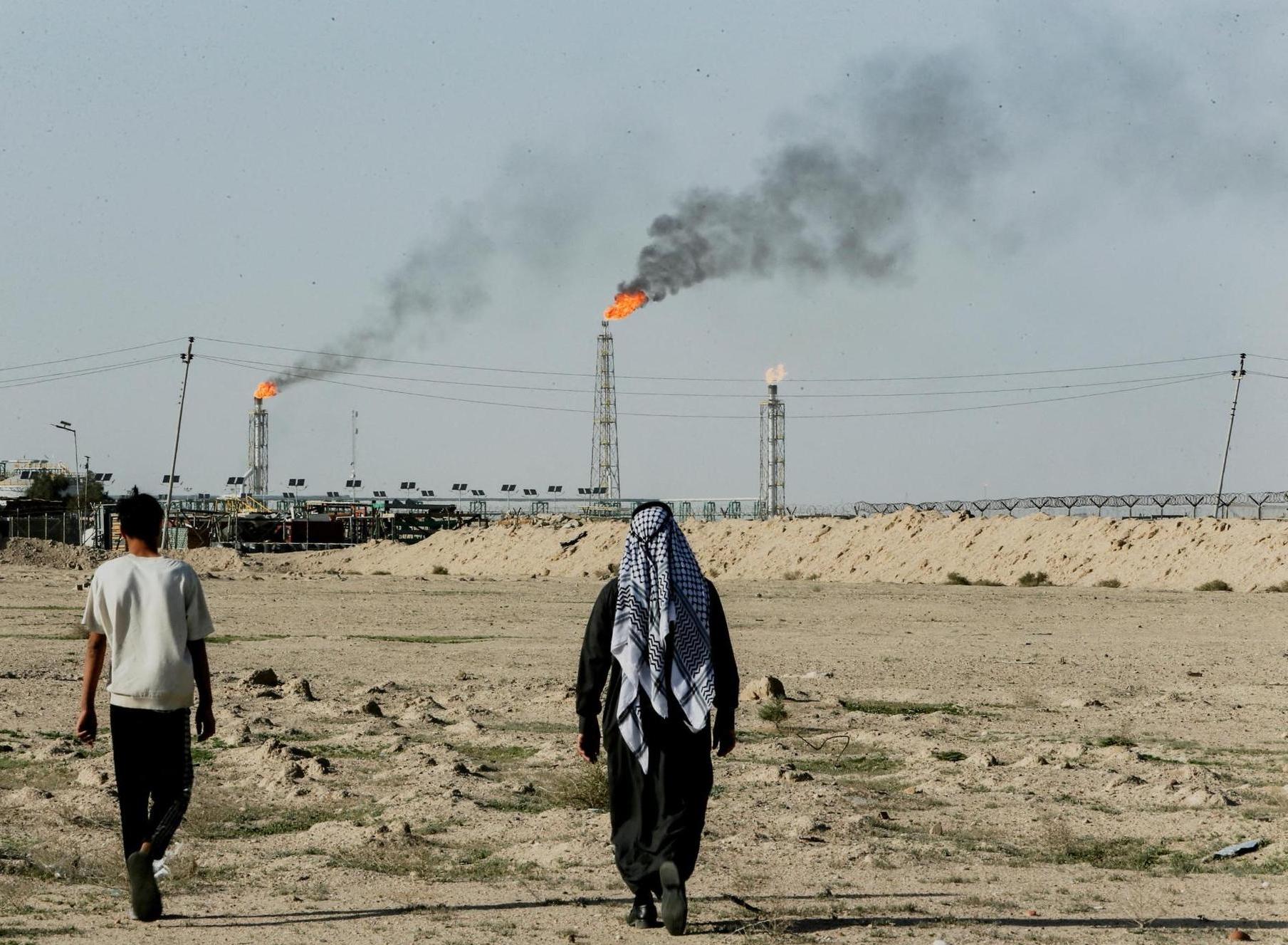
The US-Israel-Iran war has led to extraordinary volatility in global energy markets this week, and there is little reason to think that it will abate any time soon.
Benchmark Brent crude, which traded below $60 per barrel early this year, jumped to $80 last Thursday. It then bounced to $120 in thin weekend markets and, as of this writing, has settled in around $92. In other words, the range of the recent oil price has been 50% of where it was a mere five days ago.
Needless to say, this is not normal behavior for what still remains the modern world’s most important industrial commodity. A similar (but slower) move from $70 to $120 per barrel was seen in late 2021 and early 2022 around the Russian invasion of Ukraine, but, as the investment bank Goldman Sachs has noted, the physical disruption of oil supply due to the war in the Persian Gulf is 15 times as severe as that of the Ukraine crisis. One respected (and usually non-alarmist) oil commentator has suggested that the price could jump to over $200 per barrel if the situation in the Strait of Hormuz is not resolved.
This morning the International Energy Agency (which primarily includes the advanced industrial economies that are U.S. allies) announced that member countries would release 400 million barrels of oil from storage, starting with Japan. However, the impact of the announcement has been quite muted.A release that amounts to four days of global consumption and roughly 20 days of oil and products transiting through the Strait of Hormuz has had little impact on an oil market that is grappling not just with multiple uncertainties but also wildly inconsistent official messaging.
For one thing, there is a fundamental diplomatic uncertainty. It is unclear what U.S. and Israeli aims are in this war. At various moments, the White House has called for Iran’s “Unconditional Surrender,” and then modified this to reflect that the administration will determine what constitutes such an outcome, “whether they themselves [Iran] say it or not.”
Yet other officials have called for the equivalent of a Morgenthau Plan that leads to the comprehensive deindustrialization of Iran. And even if President Trump does decide that he has had enough and wishes to end the war, it is far from clear that Iran would agree to what might seem a “premature ceasefire” from its own point of view, where it was still left substantially weaker against future attacks and had not imposed enough costs to restore deterrence.
Against this backdrop, it is hard for the oil market to judge both U.S. and Israeli intentions and the potential scale of Iranian retaliation against all the oil infrastructure in the Persian Gulf — a region that accounts for about 20% of all global production of crude petroleum and products.
The diplomatic uncertainty has been compounded by two basic questions that reflect the military uncertainties: what can Iran do to harm shipping? And can the U.S. Navy escort ships safely through the straits? As to the first, three vessels were reportedly struck yesterday in the Strait, indicating that Iran is ready and able to use force to stop ships.
The answer to the second question is more ambiguous. Yesterday, the U.S. appended a farcical element to the tragedies unfolding in the Gulf, as Energy Secretary Chris Wright first posted, then deleted, a tweet saying the Navy had successfully escorted a tanker through Hormuz. Greater clarity from the U.S. on this question does not appear to be forthcoming.
The broader point is that Iran’s offensive capabilities against civilian shipping have been described as cheap and plentiful, a reflection of the revolution in drone warfare. It is perhaps this capacity that has led the navy to tell the shipping industry that it is simply not possible to escort ships right now.
The scale of the war and the fact that the U.S. is a primary and declared belligerent in the conflict also undermines financial tools like the reinsurance coverage (insuring private insurers against loss) that has been proposed by the Development Finance Corporation. This makes for a different situation than the convoy/insurance combination provided by the U.S. to Gulf shipping during the Iran-Iraq war in the 1980s.
Iran knows very well that the price of gasoline remains a key factor in U.S. domestic politics. This fact suggests that Hormuz and the global oil markets will remain a key point of pressure in this war. And solutions to the diplomatic, military, and financial uncertainties described above still seem very far away.
- 'Zero enrichment' fantasies will lead us to war ›
- On energy, China can sit this crisis out. Here's why. | Responsible Statecraft ›