

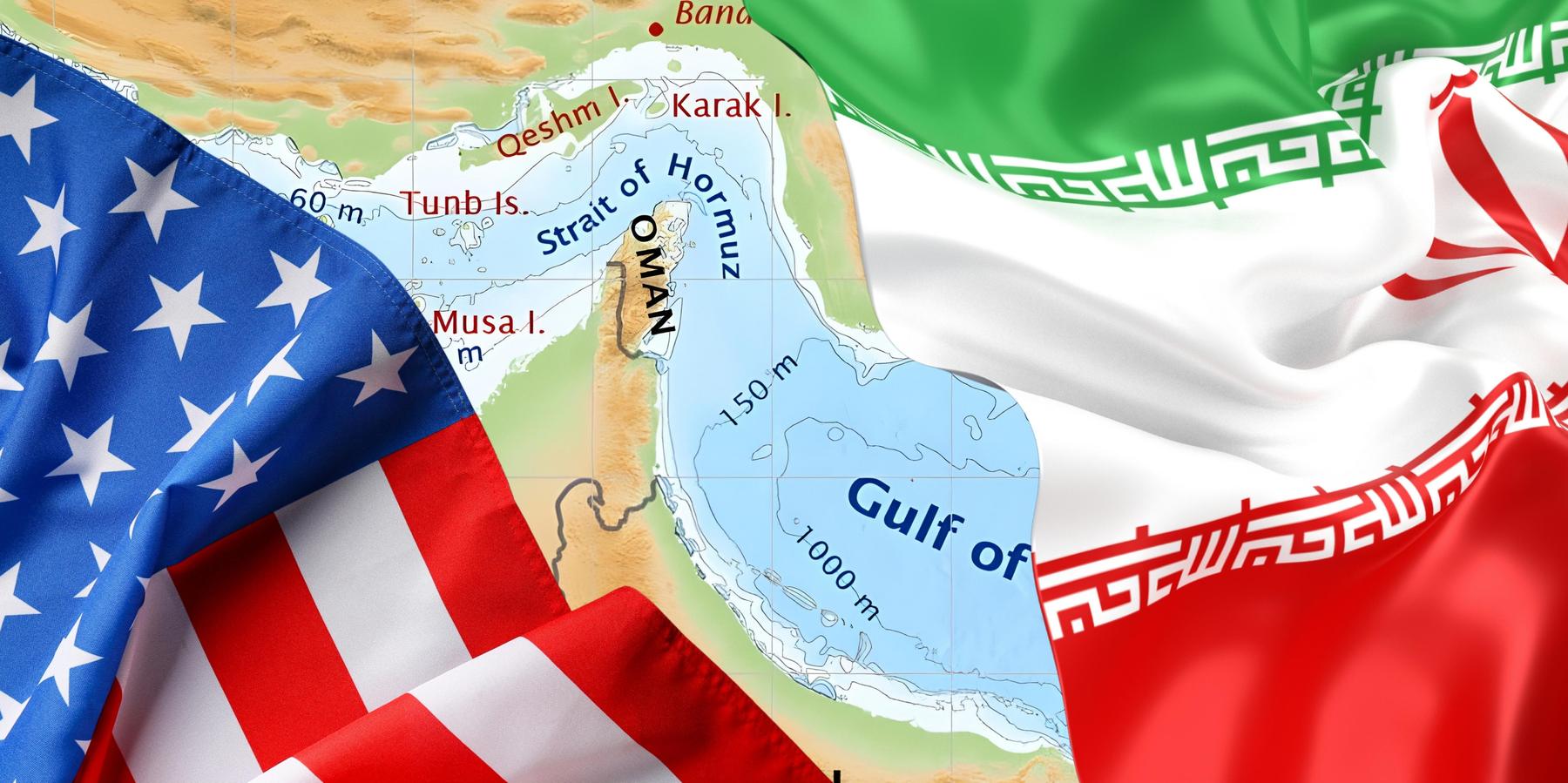
After Vice President JD Vance left Pakistan empty handed at the end of a long day of talks on Saturday, Trump lashed out on his Truth Social platform Sunday morning, saying the United States Navy will now block the Strait of Hormuz, an exclamation that will likely send world markets into another dangerous tailspin at the start of the week.
So, there you have it, the meeting went well, most points were agreed to, but the only point that really mattered, NUCLEAR, was not. Effective immediately, the United States Navy, the Finest in the World, will begin the process of BLOCKADING any and all Ships trying to enter, or leave, the Strait of Hormuz. At some point, we will reach an “ALL BEING ALLOWED TO GO IN, ALL BEING ALLOWED TO GO OUT” basis, but Iran has not allowed that to happen by merely saying, “There may be a mine out there somewhere,” that nobody knows about but them. THIS IS WORLD EXTORTION, and Leaders of Countries, especially the United States of America, will never be extorted. I have also instructed our Navy to seek and interdict every vessel in International Waters that has paid a toll to Iran. No one who pays an illegal toll will have safe passage on the high seas. We will also begin destroying the mines the Iranians laid in the Straits. Any Iranian who fires at us, or at peaceful vessels, will be BLOWN TO HELL!
Experts note how counterproductive if not destructive this move would be. "This is another step toward a might-makes-right world. Illegalities are being heaped on top of illegalities. The attack on Iran that started this war was compounded by Tehran's seizure of the Strait of Hormuz. Washington's blockade of the strait has further upped the ante," charged Sarang Shidore, director of the Quincy Institute's Global South program.
The ships that have been allowed to pass the strait in the wake of U.S.-Israeli attack last month include vessels from China, Russia, India, Pakistan, Iraq, Bangladesh, Thailand, the Philippines, and Malaysia, according to reports. It is not clear what kind of tolls they are paying if any, though Iran suggested this week that it wanted to institute a system of tolls to be paid in its own Rial-based currency.
Iran has not allowed U.S.-Israeli partners and allies pass through the strait since Feb. 28; but now the U.S. would be blocking major allies too. The Philippines is a treaty ally and gets 98% of its energy resources through the strait. A Japanese vessel carrying liquified natural gas reportedly passed through the strait two weeks ago. Pakistan is hosting the talks. "There were small amounts of oil and Liquid Petroleum Gas especially that were getting through. This puts a stop to that," noted Karthik Sankaran, senior fellow in geoeconomics at the Quincy Institute.
China accounts for the vast majority of Iran's oil exports — some 90%. Some Chinese vessels have reportedly gotten through under Iranian's blockage. So thwarting any of it now, along with other shipping linked to China, would likely put a bit of an awkward strain on Trump's upcoming trip to Beijing in May.
"The vicious U.S/Israel-Iran rivalry that is at the root of this war is slowly turning into a U.S-China proxy conflict," said Shidore.
"(This) gives China the perverse incentive of digging in and further aiding Iran in terms of security. That is not good for the United States."
World markets have plunged since Iran first blocked the strait, as one-fifth of oil and LNG deliveries passes through under regular circumstances, plus major imports of fertilizer and industrial components in global supply chains. Gas prices are up at least a dollar already in the U.S. and American farmers are already concerned about the fate of planting season. "A (full) blockade will have a big impact not just on the supply of oil but that of fertilizer, sulfur, helium and other key products. Uncertainty about the course of war and diplomacy is likely to make things worse," said Sankaran.
According to experts even the components that the U.S. relies on for its own weapons systems would be caught up in the blockage of shipping. In other words, this was already an international crisis, what Trump is talking about would blow it up even further.
"The burden of this blockade will fall most heavily on Asia in terms of a supply crunch of energy and other key economic goods. But everyone, including the United States, will bear greater economic pain," added Shidore. "No one will come out a winner in this deadly race to the bottom."
Trita Parsi, Executive VP of the Quincy Institute, said a blockade, if it does go forward (which isn't guaranteed) might spur the Houthis to start their own attacks on shipping in the Red Sea, which "would take another 12% of global oil flow off the market. We would now be looking at oil around $200 per barrel."
"It wouldn't be surprising if these threats are walked back soon (perhaps before markets open on Monday) and a new round is announced," he posted on X. However, if the nuclear issue is really at the heart of this, then don't expect a breakthrough. While it denounced nuclear weapons even before the last February talks blew up, Iran is dug in on the ability to enrich and hold uranium for its own nuclear power program, Parsi added.
"Still, I don't think that necessarily will lead to a return to war," he added. "A more likely scenario is a new non-negotiated status quo in which Tehran retains control over the Straits but doesn't get any sanctions relief, while the U.S. pulls out of the war, and the question becomes whether Israel will continue the war on its own."
Story will be updated as story develops
- As US-Iran talks resume, will Israel play spoiler (again)? ›
- Are US-Iran ceasefire talks in Pakistan doomed to fail? ›