

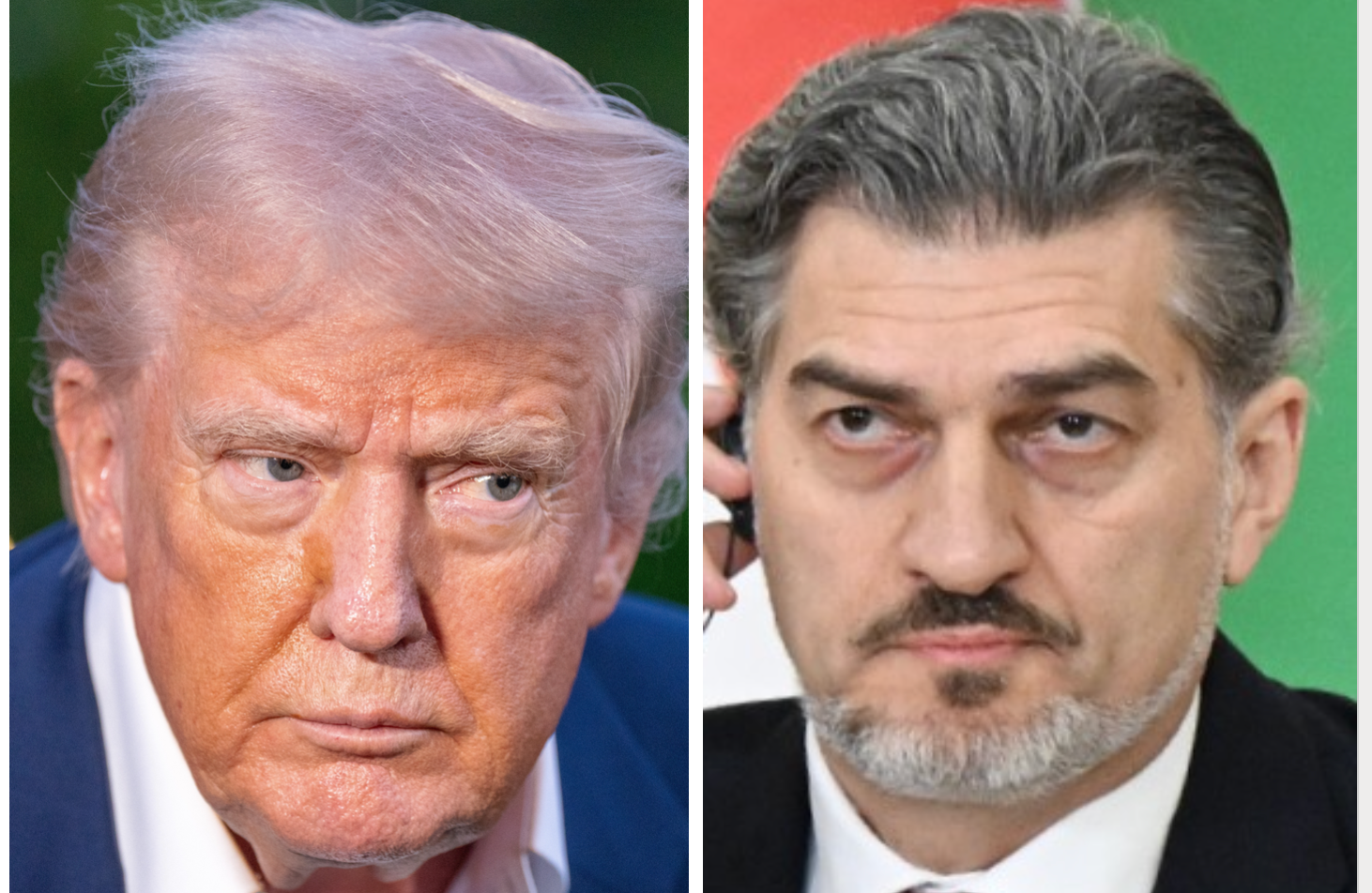
For economic reasons but also for self-preservation, Georgia does not want to be dragged into picking sides in its relations with larger powers. Its president’s open letter to Donald Trump may be an effort to balance growing Chinese influence.
President Mikheil Kavelashvili’s letter to Trump urges a restoration of strategic ties with Washington. It struck the tone of a forsaken friend, talking about the lack of U.S. focus, raising “doubts and questions among the Georgian people about how free and sincere your administration’s actions are in terms of strengthening peace in the region.” He even bemoans Trump’s reinstatement of relations with President Putin.
The message appears aimed in part at the Georgian people, as it was issued in Georgian on President Kavelashvili’s social media account. But if President Trump really is susceptible to flattery, then the letter’s even-handed tone might not helpfully serve to reinvigorate American ties with the plucky South Caucasus nation.
Nevertheless, the context of the letter is the Biden administration’s decision in December 2024 to cancel the 2009 U.S.-Georgia Charter on Strategic Partnership.
Biden cancelling the Charter followed the hotly contested October 2024 parliamentary election in Georgia that saw widespread protests in Tblisi. There has never been conclusive evidence that the plebiscite was rigged, rather than won by the only political party in Georgia that has national reach and deep financial pockets to fund its campaign. That hasn’t stopped some U.S. politicians from continuing to press for sanctions against the ruling Georgia Dream Party, and apply pressure to hold new parliamentary elections.
Yet it has never been clear what purpose sanctioning Georgia would serve, beyond pushing that country towards closer alignment with China. Georgia is a small state with a population of less than 4 million and an economy of $142 billion in terms of Purchasing Power Parity. U.S. trade with Georgia is small, at $2.9 billion in 2024, which heavily favors American exporters, although U.S. trade with neighboring Armenia and Azerbaijan is lower still.
Since the onset of war in Ukraine, Georgia has consistently held out from following Europe’s lead in imposing sanctions against Russia. But that does not reflect any particular love for Russia, rather than pragmatism. Georgia has consistently spoken out against the war and last week reaffirmed its solidarity with Ukraine on Ukraine’s independence day.
Georgia’s relations with Russia remain deeply strained over recent moves by Moscow to deepen ties with the breakaway Georgian regions of Abkhazia and South Ossetia.
So, it's intellectually lazy to call the Georgian government pro-Kremlin, simply because it wants to avoid being dragged into another costly war with Russia, which at the very least would render it an economically failed state like Ukraine. I got a palpable sense from my contacts in Tblisi of real sensitivity among policymakers there of being branded as pro-Kremlin, and a desire not to say anything that would give that impression.
It is absolutely clear that the Georgia Dream government is pursuing a multi-vector foreign policy, which includes deepening ties with China. Georgia agreed to a strategic partnership with China in 2023 in which, among other things, it supported the principle of a united China, code for Chinese reunification with Taiwan. Both sides agreed on a Free Trade Agreement and a visa-free arrangement.
China is upping its investment in Georgia as part of wider plans for a middle corridor to ease trade with Europe by bypassing both Russia and the Suez Canal. At a conference I attended in Tblisi in June, the only foreign diplomat to speak was the Chinese ambassador. That should be of greater consequence to the U.S. than purported Russia links.
Georgia clearly wants to chart its own course. That includes pursuing its national interest first and then addressing what the current government considers to have been attempts at regime change by western governments. President Kavelashvili argues in his letter to Trump that the U.S. “deep state” remains as active as ever, despite President Trump’s decision to cut foreign aid, which has had a significant impact on support for media outlets connected to NGOs.
Georgia remains ostracized by the European elites partly out of unresolved irritation that attempts to maintain former French diplomat Salome Zourabichvili as president failed in December. Georgia’s path to EU membership remains on ice, despite signs that the government is still committed to this path, albeit on its terms.
So, President Kavelashvili’s letter may have been a slightly awkward diplomatic attempt to get relations with the United States on a better footing. President Trump’s lack of engagement thus far with Georgia may largely be a matter of bandwidth. Ukraine, the Middle East, and China have soaked up much of the U.S. foreign policy oxygen, and he has already helped to broker an historic peace deal in the South Caucasus between Armenia and Azerbaijan.
President Aliyev of Azerbaijan signed an MoU with President Trump to work towards the establishment of a Charter on Strategic Partnership, and one already exists between the U.S. and Armenia. If these documents serve any purpose, it is to put in place the institutional framework to elevate day-to-day bilateral cooperation, particularly in the sphere of trade, investment and people-to-people links. The Georgian government is likely keen, perhaps not unsurprisingly, to reinstate its Strategic Partnership Charter with the U.S. on similar terms to those of its neighbors in the South Caucasus.
With the U.S. still lagging behind China in engaging Georgia, it’s difficult to see the downsides to America doing so, even if President Kavelashvili’s letter slightly falls flat.
- Stop treating Georgia as a creature of the US and the West ›
- Streets on fire: Is Georgia opposition forming up a coup? ›
- 'The West demanded that we get involved in war with Russia' | Responsible Statecraft ›