

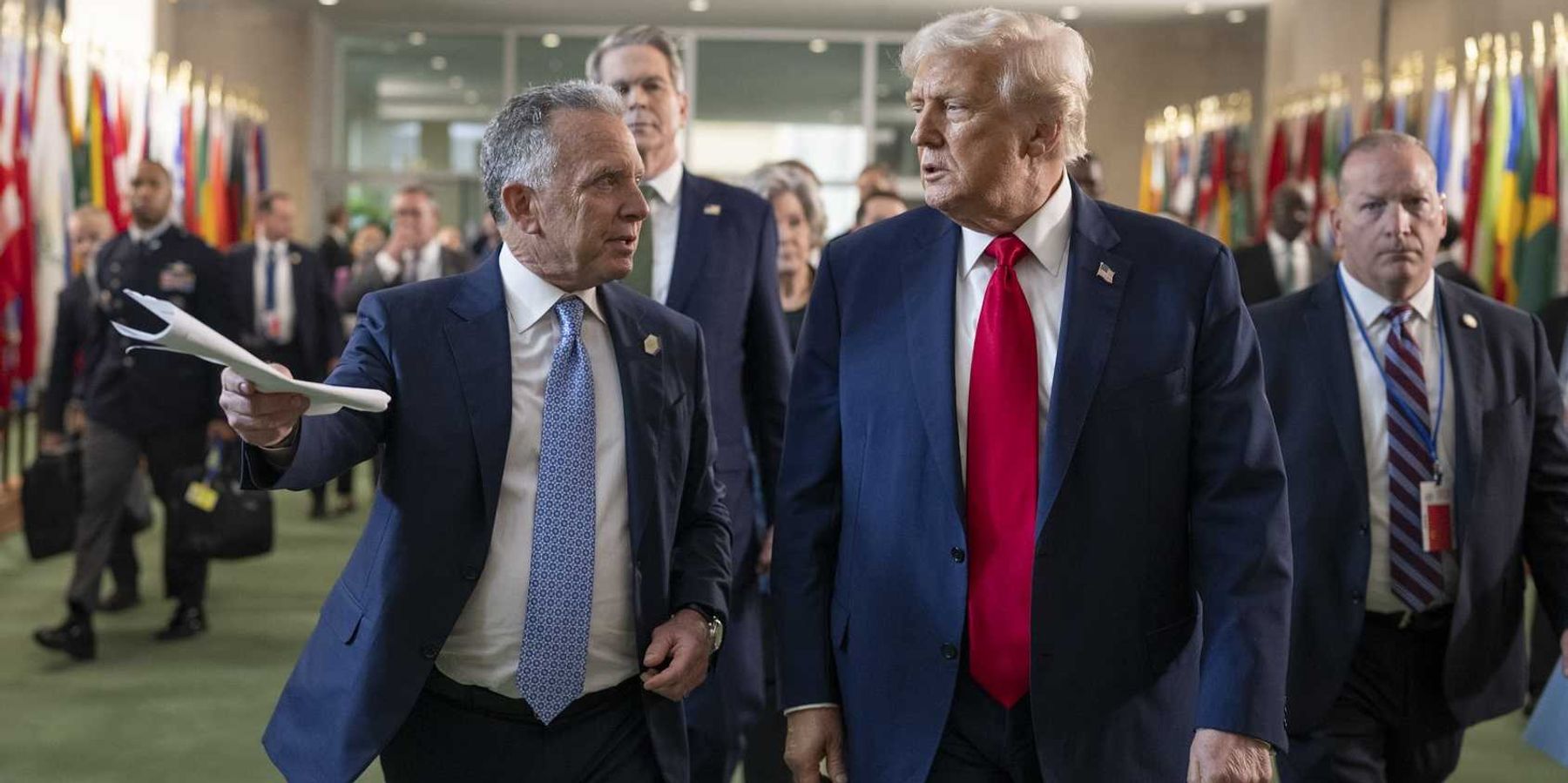
In Deir al-Balah, a mother told me her son now counts the seconds between blasts. Policy, to her, isn’t a debate; it’s whether trucks arrive and the night is quiet. Donald Trump’s 20-point plan promises ceasefire, hostages home, Israeli withdrawal, and reconstruction. It sounds complete. It isn’t.
Without enforceable mechanics, maps, timelines, phased verification, and real local ownership; it risks being a short-lived show, not a durable peace.
On paper, the plan strings together familiar parts: a ceasefire tied to hostage releases, withdrawal linked to disarmament, and a multinational stabilization effort to guard rebuilding. Used well, those tools can buy civilians time to breathe: a tranche-based exchange that releases hostages as pauses begin and expands aid corridors with each verified step; and a properly mandated, regionally backed stabilization presence that keeps fighters away from families, protects convoys, and secures reconstruction sites so hospitals, schools, and water systems can function. Modest instruments, not magic, but correctly sequenced, they save lives.
The design breaks down where hard agreements usually do. First, it effectively treats disarmament as surrender, demanding that an armed actor relinquish leverage before credible political guarantees and security protections exist. Durable settlements don’t start with a leap of faith over a void.
Second, the withdrawal language is vague. If a “pullback” arrives bundled with continuing perimeter control, airspace, crossings, or security carve-outs, residents will experience it as occupation under a new brand. Independent analysis notes the text lacks concrete timelines and operational granularity past the opening phase.
Third, enforcement leans on statements rather than machinery. Without mapped guarantor responsibilities, triggerable penalties, and pre-positioned logistics, promises turn into press releases. Reporting on the Palestinian Authority’s potential role underscores how preconditions and sequencing could stall implementation.
There’s a deeper political absence, too. This deal does not deliver what Palestinians actually hope for: self-determination and a say in their future. After high-profile recognitions of Palestinian statehood, offering a Gaza-only fix that sidelines political rights makes those gestures look symbolic rather than substantive. Having Israeli institutions effectively able to veto consequential steps feels like Oslo all over again: process without power-balancing.
That is how interim arrangements harden into permanent limbo — deference to political will instead of instruments, asymmetric leverage left intact, and verification without consequences. Analyses of the current proposal also point to how leaders can convert hesitation into de facto veto power.
If Trump is serious about peace, Jerusalem and the West Bank must be inside the plan, not promised to some later round. Facts on the ground are moving the other way. The UN Security Council has said settlements lack legal validity and violate international law. The UN humanitarian office has documented widespread settler violence and access restrictions that corrode daily life and any negotiated horizon.
Independent Israeli media and NGOs describe accelerating de facto annexation trends. A plan that ignores this landscape will not produce the security it promises.
I don’t say this as a spectator. For three decades, and, crucially, from 1994 to 2012, I worked across Israel and the Palestinian territories, running dialogues, designing confidence measures, and trying to push fragile agreements into daily reality. I arrived at Oslo believing its interim architecture could be saved. Hard experience taught me why it often wasn’t: interimism without enforcement calcifies; asymmetry invites spoilers; and externally driven programs that sideline local voices manufacture the very grievances violence feeds on. Those are not laments; they’re operating instructions.
So what would a plan that acts like peace look like? Start with measured, verifiable sequencing. Convert the hostage-for-ceasefire idea into a tranche ladder with objective indicators.
Tranche 0: a 72-hour humanitarian pause and release of the most vulnerable hostages, independently verified.
Tranche 1: further releases and sustained relief corridors.
Tranche 2: armor out of GPS-mapped grid squares; municipal functions transferred to neutral civil administrators.
Tranche 3: localized arms-reduction pilots paired with trained community policing.
Tranche 4: broader demobilization tied to political benchmarks. Publish indicators per tranche, names returned, coordinates vacated, tonnage of aid delivered, verified hand-ins, police trained, on a public dashboard so guarantors act on facts, not spin.
Next, replace applause with commitments on paper. Regional states and major donors should sign a concise guarantor treaty with annexes that spell out who does what when breaches occur: logistics deployed within 48 hours, escrowed funds released or frozen, proportionate sanctions, or a rapid-response element under hybrid command.
Add an escalation ladder, a dispute-resolution clause, and a small guarantor secretariat that tracks readiness daily. Tie money to verification outcomes so incentives are immediate and reversible. Established policy work already frames these sequencing and governance choices—use it to draft the legal plumbing.
Then give monitoring real teeth. Stand up a Verification & Rapid Response Authority (VRRA) with three pillars: a Technical Verification Unit (remote sensing, forensics, chain-of-custody); a Civilian Observers Network (local monitors and NGO liaisons); and a Rapid Response Wing (pre-positioned transport, medevac, engineering). When the VRRA issues an evidence packet—geolocated imagery, metadata, documented hand-ins—it should automatically trigger the agreed guarantor response. Monitoring that cannot cause action is theater; people in Gaza do not have time for theater.
Demobilization must not be coerced by a vacuum. It should be gradual, conditional, and reversible — and paired with a transitional political compact that guarantees participation, association, and a mapped route to representation. Pilot DDR alongside livelihoods, public hiring, micro-grants, reconstruction jobs—and community-led policing reforms so neighborhoods feel safer, not abandoned. Field reporting shows that sequencing PA governance and security responsibilities will make or break feasibility; treat that as a design constraint, not a footnote.
Reconstruction must rebuild institutions, not patronage. Create a Donor Compact & Reconstruction Authority (DCRA) with pooled escrow and a multistakeholder board, Gaza municipalities, West Bank civil society, donors, independent auditors, and a VRRA liaison. Use digitized public procurement, local-first contracting, community sign-off on major projects, and payments contingent on VRRA-verified delivery. Coverage of an Arab-backed multibillion-dollar plan illustrates how donor politics can fragment; a compact like DCRA keeps money honest and visible to the people it is meant to serve.
Finally, coherence or collapse: a Gaza-only fix will not hold. Pair Gaza tranches with West Bank protections, temporary settlement constraints tied to compliance, increased international monitoring at checkpoints, and targeted support for communities under strain, because what happens in one arena cascades into the other.
If negotiators want something immediate and practical to insist on, here it is: redraft the plan into a tranche protocol with mapped withdrawals and a public verification dashboard; sign the guarantor treaty and pre-position logistics and escrow, with an explicit escalation ladder; and stand up the VRRA and DCRA with legal charters, independent boards, and automatic triggers so verification leads to action, not statements.
Gaza’s families don’t need grandeur; they need a night without terror, a clinic with light, a school bell that rings. Recognitions of Palestine should mean voice and agency, not just new communiqués. A plan that looks like peace but acts like control will fail them. Put Jerusalem and the West Bank inside the deal. Build the scaffold, measured tranches, mapped withdrawals, independent verification, accountable reconstruction, and you buy time for politics, dignity for civilians, and a future Palestinians can recognize as their own.
- Is Israel forcing Trump to be the capitulator in chief? ›
- Trump offers Gaza plan that will please no one but Trump ›
- Gaza ceasefire hanging by a thread | Responsible Statecraft ›