

If foreign policy could decide an election, then 1992 upended expectations. Barely eight months after the Soviet flag was lowered from the Kremlin for the last time, President George H. W. Bush found himself reminding Americans that he had led the USSR peacefully into history’s dustbin while also liberating Kuwait from the clutches of Saddam Hussein.
“My opponents say I spend too much time on foreign policy, as if it didn't matter that schoolchildren once hid under their desks in drills to prepare for nuclear war,” said Bush during his acceptance speech at the 1992 Republican National Convention. “Over the past 4 years, more people have breathed the fresh air of freedom than in all of human history.”
Foreign policy mattered to Bush. He was a combat pilot during the Second World War and later served as ambassador to the United Nations, CIA Director, and Ronald Reagan’s vice president. It mattered a lot less to voters angry about a sluggish economy and high unemployment: 73% said the country was on the wrong track in 1992. There had been a recession, so economic anxiety and anti-establishment frustration were front of mind, not a Cold War victory over Communism. The president could see Americans were moving on. His approval rating had dropped from 89% in Feb. 1991 to about 40% by the nominating convention.
The surpassing importance of domestic issues was captured in a slogan coined by James Carville, the campaign manager for Arkansas Governor Bill Clinton, the ultimate winner in a 3-way race against Bush and Texas billionaire Ross Perot. “‘The Economy, Stupid!’ was posted on the wall of the Clinton campaign’s Little Rock war room early in the fall to keep campaign strategists intently focused on the economic welfare of working America,” according to historian Nelson Lichtenstein.
It is true that voters have usually prioritized their pocketbooks, but the historical record reveals some holes in this conventional wisdom — especially during overseas misadventures. Domestic and foreign policies are interconnected, as the Democratic landslide in Tuesday’s midterm elections demonstrated. One needn’t possess an advanced degree in international relations to see how the pointless war in the Persian Gulf is driving up fuel prices on Main Street.
“Pundits tend to disaggregate domestic and foreign policy, but often they are tightly linked,” historian William Hitchcock tells Responsible Statecraft. “Even if voters say they are unhappy with inflation, they don’t always make the connection between foreign war, supply chain disruption, tariffs, and the cost of gas or beef.”
“Sometimes ‘The economy, stupid’ is an easier way of saying ‘It’s foreign policy, stupid.’ They can both be right,” Hitchcock said.
If the elder Bush felt unappreciated for guiding the Cold War to a soft landing, his son felt voters' scorn for prosecuting a catastrophic war of choice: the 2003 invasion of Iraq. “Perhaps the most dramatic example of a foreign-policy midterm was in 2006, as the George W. Bush administration's policy was palpably failing,” historian Carolyn Eisenberg tells RS.
“The administration's claim that Saddam Hussein had weapons of mass destruction had been discredited, and U.S. casualties were rising with no significant improvement on the ground. New representatives were elected who had specifically run on the platform of ending the war in Iraq,” says Eisenberg. The new Democratic House majority in 2007 ultimately failed to defund the war and impose a withdrawal timeline on the Pentagon.
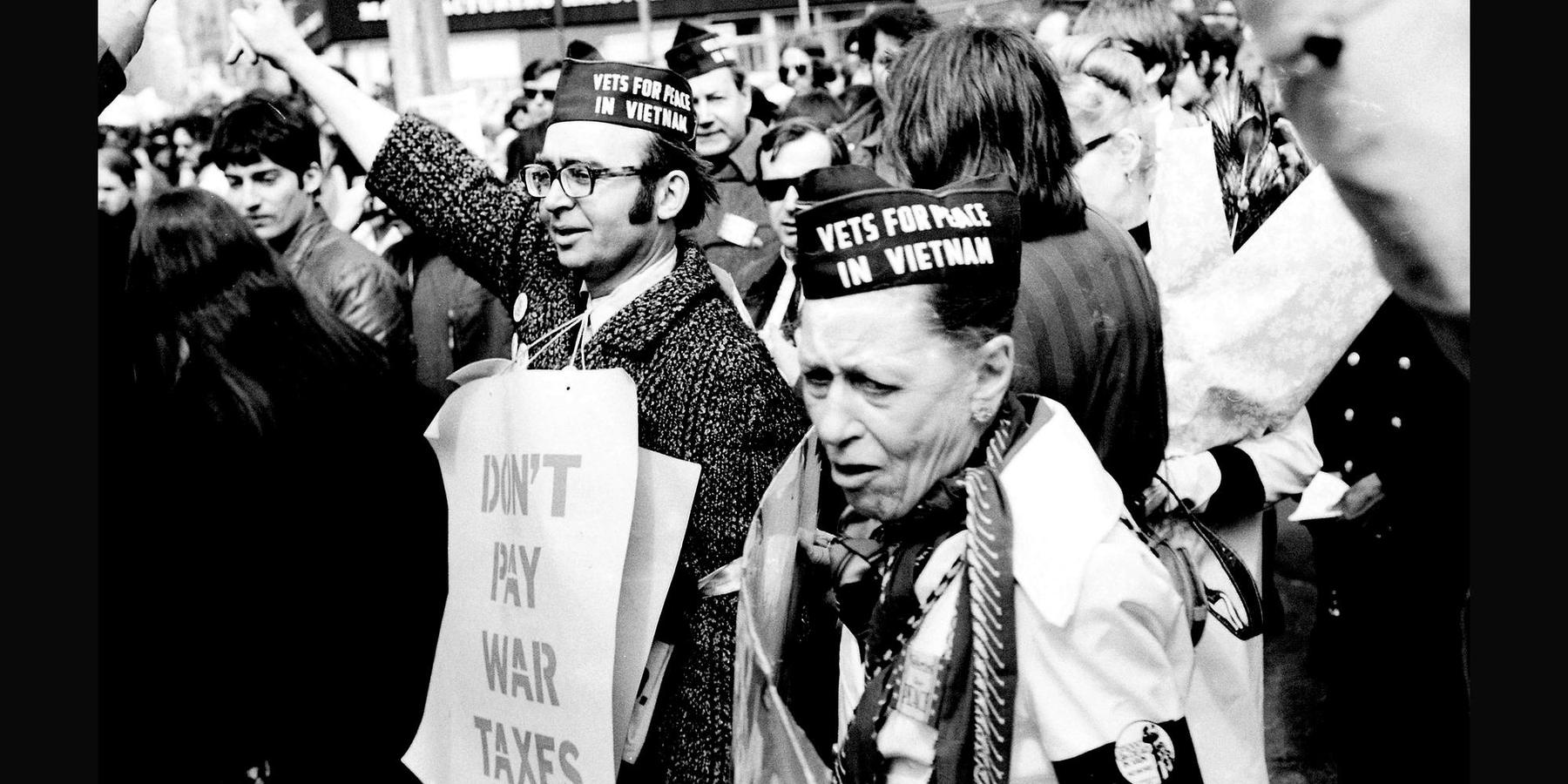
Today, Eisenberg is an expert on the Vietnam War. In the 1960s, as an antiwar activist, she witnessed the profound influence of foreign policy on a presidential election.
“The antiwar movement doomed Lyndon Johnson's candidacy and undermined Vice President Humphrey's candidacy as well. Somewhat forgotten is that Richard Nixon won the election by promising a ‘secret plan’ to end the war,” Eisenberg tells RS. “In the 1970 midterm elections, a growing number of strong antiwar candidates were elected to Congress, among them Bella Abzug and Ron Dellums. Their presence in conjunction with the growing disillusionment of many Democratic and Republican incumbents produced significant pressure on the [Nixon] White House.”
It took years for the pressure to produce results. With the U.S. commitment to Vietnam now well into its third decade, Congress finally made clear that war funding would end in January, 1973, without a peace agreement with Hanoi. Nixon and Henry Kissinger listened.
Foreign policy continued to influence voters the following year, according to historian Brandan Buck, who studies domestic opposition to U.S. wars at the Cato Institute. In the 1974 midterms, “while Watergate and [President Gerald] Ford’s pardon of Nixon dominated the election, lingering resentment over the bombing of Cambodia and Laos, and the war in Southeast Asia more generally, played a role in the rise of the ‘Watergate Babies,’ who vocally rejected the muscular liberal anticommunism of their parents’ generation,” Buck tells RS.
The salience of foreign policy is also manifest in presidents’ promises to keep the country out of conflict. Long before Donald Trump pledged "no more foreign wars," Lyndon Johnson promised not “to send American boys nine- or ten-thousand miles away from home to do what Asian boys ought to be doing for themselves.”
President Woodrow Wilson won reelection in 1916 using the campaign slogan “He kept us out of war.” The following April, Wilson asked Congress for a formal declaration of war against Germany.
By the 1918 midterms, “progressive Republicans in the Midwest and conservatives in the Northeast successfully broke Wilson’s labor-farmer coalition, in large part due to the costs of the war at home in both economic and social terms,” Buck says. “This was particularly true in places that had large German-American constituencies, like Wisconsin, where voters reacted against an administration that had publicly questioned their loyalty.”
Whatever light history shines on our current moment, it is an incontestable fact that most Americans have rejected President Trump’s “excursion” in the Persian Gulf among the many grotesqueries of his regrettable administration. “The reason we lost [the midterms] is the war,” admits Vice President JD Vance.
Public attitudes intolerant of foreign adventurism were decades in the making. A quarter-century after the onset of a misbegotten global war on terrorism, millions of Americans, especially the youngest voters, are fed up with “the lack of a plausible strategy, the rapid damage to our economy, and the appalling role of Israel, abetted by the Trump administration,” says Eisenberg.
“Donald Trump,” adds Buck, “originally built his populist movement, in part, by appealing to working- and middle-class voters who felt foreign adventurism came at the expense of domestic priorities. It appears that his political movement may well be dismantled by one of the exact issues that midwifed it. History is rarely that ironic.”
As Eisenberg can testify from her time in the activist trenches of the 1960s, antiwar voters often do not get what they want — especially not right away. It cannot be lost on anyone that, although control of the White House and Congress passes back and forth between the two major parties in our age of unpopular “forever wars,” Pentagon budgets are as opaque and bloated as ever, the national security state is ever more intrusive at home, and the liberal internationalist project is still seeking out new monsters to destroy.
As Democrats celebrate and Republicans ruminate, history suggests that, whoever wins in Washington, the people can expect more war, not peace. The question today is whether a new surge in anti-war sentiment can finally break this pattern.
- Do Democrats have bold enough ideas to break from the past? ›
- Stevens' heel turn was entirely in line with her pro-Israel backers ›
- ‘It’s the war, stupid’: Dems sweep midterms on wave of voter anger ›