

By leveraging the dual-use nature of many of their products, where defense technologies can be integrated into the commercial sector and vice versa, Pentagon contractors like Palantir, Skydio, and General Atomics have gained ground at home for surveillance technologies — especially drones — proliferating war-tested military tech within the domestic sphere.
The dual-use push
Notable examples of this dual-use push involve tech tested in the Iraq and Afghanistan wars, as part of the U.S. war on terror. Released in 2008, controversial software company Palantir’s Gotham platform was initially promoted as intelligence software for defense and counter-terrorism purposes. Piloted to predict adversaries’ use of improvised explosives during the Iraq and Afghanistan wars, and later adopted by Israeli defense and intelligence agencies amid war on Gaza, Palantir has simultaneously marketed Gotham as a data-centric policing tool.
Now adopted among U.S. law enforcement, hundreds of police departments can use Gotham to analyze data on civilians’ whereabouts. Palantir has gone on to sell similar software to other government agencies, obtaining a $30 million ICE contract this spring to help the agency track undocumented immigrants.
L3Harris Stingrays, or cell site simulators, are sophisticated phone trackers originally designed for military use; they likewise were utilized during wars in Afghanistan and Iraq. Police departments subsequently adopted these systems to track and collect information on crime suspects, though L3Harris is slowly phasing them out.
Defense contractors' domestic drone craze
Fast forward, defense contractors are similarly leveraging their battle-tested drones to capitalize on a booming domestic market.
Indeed, law enforcement interest in “drone as first responder” programs has exploded; the broader public safety drone market is expected to nearly triple within the next 10 years. Ongoing federal funding and legislative efforts also stand to buoy the sector: the Trump administration is putting $1.5 billion toward drone and counterdrone technologies, including $500 million toward state and local governments’ anti-drone security strategies ahead of the U.S. hosting the FIFA World Cup next year.
The DRONE Act, meanwhile, included in the FY2026 National Defense Authorization Act, would let police purchase and operate the systems with federal grants, thus flooding drone procurement processes with more federal funds if made law.
Over 1,000 U.S. law enforcement and security agencies now use Skydio drones, which have seen combat in wars in Gaza and Ukraine, for purposes ranging from first response to crowd monitoring at public events. Skydio has procured substantive contracts in the process, such as a $4.6 million contract equipping law enforcement in Brooklyn Park, Minnesota with police drones.
Universities like Yale, meanwhile, have used Skydio and other commercial drones, to surveil students at pro-Palestine campus protests, reflecting a larger push by higher education to incorporate drones into campus security.
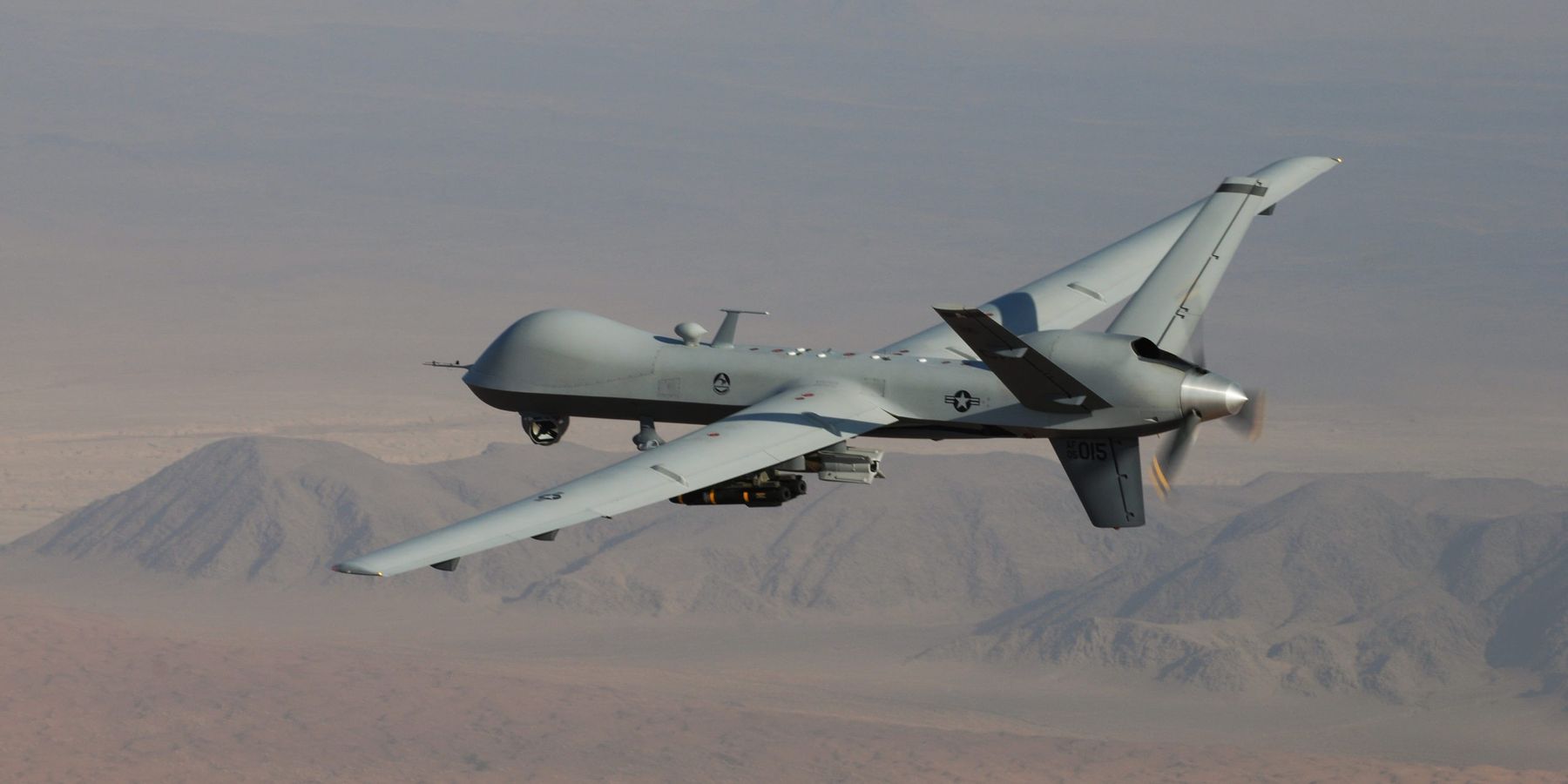
Used for lethal strikes and reconnaissance in Afghanistan, Iraq, and in the Caribbean, the MQ-9 Reaper drone, also used to search for Israeli hostages in Gaza, was deployed by U.S. Customs and Border Protection (CBP) to to support federal law enforcement operations at the L.A. protests earlier this year. CBP gave General Atomics a contract worth up to $528 million for its Reaper drones in 2022.
Utah-based army contractor Teal Drones’ Golden Eagle UAVs and Teal 2 drones have been extensively deployed in Ukraine, where Teal 2 drones provide reconnaissance capacities to Ukrainian drone pilots fighting Russian forces. CBP awarded Teal Drones with a $1.8 million contract in fall 2023 to provide those reconnaissance capacities to border patrol agents. That contract is part of a much larger, albeit non-binding, $90 million Blanket Purchase Agreement that CBP established back in 2021 with a few other companies, including defense contractor and drone manufacturer Vantage Robotics, to procure more border surveillance drones.
CBP also gave AeroVironment’s Puma 3 AE drones, which provide reconnaissance, surveillance and intelligence gathering capacities to militaries worldwide, a $5.25 million contract in 2019 for use by border patrol agents.
Indeed, the financial opportunities here could not be clearer for defense contractors: to capitalize, many are offering extensive pilot programs and beta-testing to police and border programs in pursuit of them, or otherwise making major adaptations to their products so that they can more easily be adopted into the commercial sector.
Promotional efforts are to be expected, but some contractor pushes have gone to excess. Through extensive outreach, Skydio has effectively turned many police officers into evangelists for their product. These officers not only test Skydio products and recommend them to other police departments; some have appeared in Skydio’s promotional materials, and have even helped Skydio try to get Federal Aviation Administration waivers, in moves to skirt existing regulations on how their drones are tested and flown.
An ethics crossroads
Weapons contractors have forged a pipeline bridging the products developed for conflicts abroad, and growing demand back home for adjacent technologies.
The visible proliferation of military-derived tech has sparked public debate regarding the extent these technologies should be normalized outside military use. On one hand, much of this burgeoning generation of war-borne surveillance tech has legitimate uses. Many police considering using drones as first responders, for example, say doing so can cut down response times, saving lives in the process.
On the other hand, the tech’s collective privacy risks are hard for many to ignore. Stingray devices, for example, can intercept the data of all phones in a given area — prompting concerns that Americans’ data have been collected indiscriminately. Amid fears their presence at protests could have a chilling effect on the right to assembly. Rep. Jimmy Gomez (D-Calif.) has introduced legislation that would bar military grade drones from surveilling protests.
As weapons contractor-fronted drones take to the skies, war-borne surveillance tech’s propensity to render civilians adversaries in their own communities deserves continued scrutiny.