

A group of Russian nuns were recently sighted selling holy trinkets in Swedish churches. Soon, Swedish newspapers were awash with headlines about pro-Putin spies engaged in “funding the Putin war machine.” Russian Orthodox priests had also allegedly infiltrated Swedish churches located suspiciously close to military bases and airports.
Michael Ojermo, the rector of Täby, a suburb of Stockholm, tried to quell the alarm. There is no evidence of ecclesiastical espionage, he said, and “a few trinkets cannot fund a war.”
We have arrived in Paranoid Corner. Paranoia is the mental delusion that one is being threatened, persecuted, deceived, or targeted, based on the consistent misinterpretation of others’ actions as hostile or malicious. This is reinforced by a psychological mechanism known as confirmation bias. Starting with a wrong or lunatic premise, every Russian action is interpreted in ways that confirm the premise. A close cousin is conspiracy theory: the belief in hidden causes. These psychological conditions form the holy trinity of paranoia.
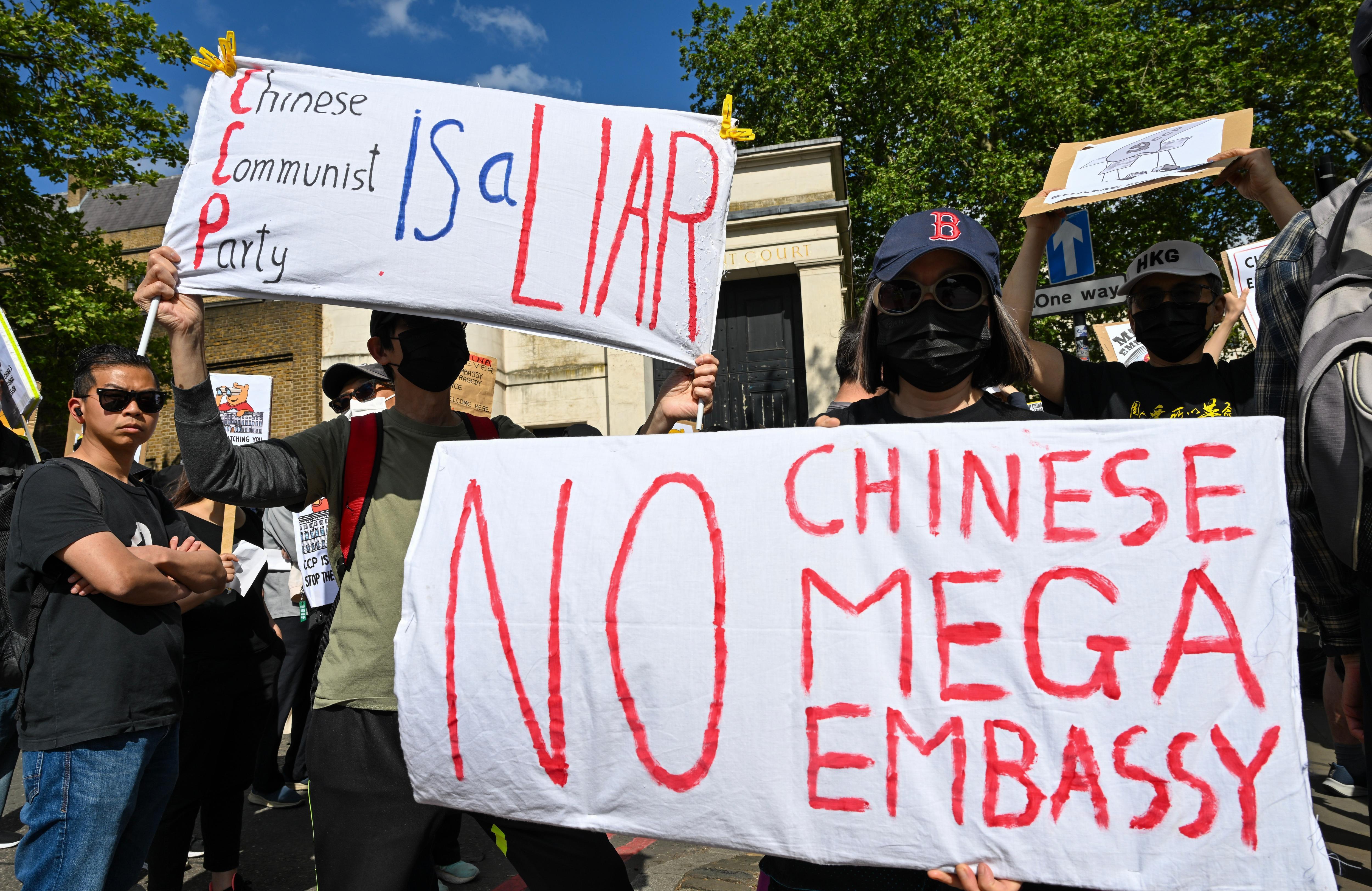
Britain’s ruling elites are well entrenched in Paranoid Corner. Not long ago, Russia was the obsessive focus of Westminster’s fears. Now the fixation has shifted east. The recent uproar over plans for a vast new Chinese embassy in London is not merely a planning dispute. It is a symptom. Headlines ring with warnings of spies behind every lamppost and Trojan horses inside every app.
Russia’s ally China offers low-hanging fruit for the conspiracy theorist. It is a dictatorship and therefore almost by definition malevolent. Its media are part of state propaganda and therefore not to be trusted. Its reach into global trade, technology, finance, and infrastructure is extensive and therefore threatening.
Former Deputy Prime Minister Oliver Dowden declared in Parliament on September 11, 2023 that China represented a “systemic challenge to the United Kingdom and to its values.” Notice here the elasticity in the concept of threat as it moves effortlessly from physical to mental harm. Prime Minister Keith Starmer’s sensible attempt this week to forge a “sophisticated relationship” with China is made much more difficult by such pervasive suspiciousness.
The ‘mega-embassy’ spectacle
Nothing illustrates Britain’s China panic more vividly than the drama over the proposed Chinese “mega-embassy” at Royal Mint Court. China purchased the site in 2018 with plans to bring its UK diplomatic operations together under one roof. Its scale was immediately politicized: “the largest embassy in Europe” became a symbolic provocation.
Critics seized on the proximity of the site to communications infrastructure in the city to conjure the image of Beijing tapping directly into Britain’s financial nerve center. The Daily Telegraph talked of “208 secret rooms” in basement plans. Perhaps torture chambers?
High-profile politicians turned planning meetings into proxy battles against the Chinese Communist Party. Tom Tugendhat, former security minister, called the embassy “a base for hostile activity inside the United Kingdom.” Shadow Foreign Secretary Priti Patel denounced the plan as a “colossal spy hub.” Sir Iain Duncan Smith framed the decision as “an invitation for interference.” In the Lords, Baroness Helena Kennedy warned against reinforcing the dangerous notion that Britain would make concessions “without reciprocity or regard for the rule of law.”
In fact, Britain’s security services assessed the risks as manageable. MI5 and GCHQ advised that while no system can eliminate “each and every potential risk,” a package of proportionate mitigations could manage the site safely. In a joint letter, MI5 head Ken McCallum and GCHQ head Anne Keast-Butler noted an operational advantage: consolidating seven separate Chinese sites into one could make surveillance and counter-intelligence more efficient. The Home Office and Foreign Office reportedly concurred that no specific security objection, including fears about cables, warranted blocking the development.
But when, on January 20, 2026, the government finally gave the go-ahead, critics complained of capitulation. The Tory leader, Kemi Badenoch, joined protests chanting “No China mega-embassy!”
Spies, students, and the New Red Scare
The embassy saga forms part of the wider narrative that China is waging clandestine warfare against Britain, infiltrating institutions, and suborning elites. This draws energy from a sequence of incidents, real and alleged, each magnified into proof of an overarching plot.
One episode was the arrest of parliamentary researchers Christopher Cash and Christopher Berry in 2023 on suspicion of spying for Beijing. When prosecutors later dropped the charges, the correction could not reverse the imaginative work the story had done. The idea of a Chinese fifth column was planted. MI5 has issued alerts to Parliament about approaches linked to Chinese intelligence. There were reports of LinkedIn profiles being used to offer promising MPs consultancy arrangements and trips — a classic pattern of recruitment.
Paranoia has infected the universities. With large numbers of Chinese students contributing substantially to the finances of British higher education, concerns have been raised that Beijing’s leverage may chill research — or, worse, that many students are Chinese spies.
The Chinese social media platform TikTok provides a further example of alleged malicious influence. The platform’s ownership structure and the legal environment in which its parent company operates raise questions about data access and influence, as they do for many technologies. MPs have been forbidden to download TikTok on their parliamentary devices — and thus to access Chinese views — due to fears of data harvesting, surveillance, and potential exploitation by the Chinese state.
Media hype and political incentives
How has this paranoid narrative gained such traction? Given the basic premise that China has malevolent intentions towards Britain, there is a political incentive to talk tough on China and to accuse opponents of appeasement. Conservatives framed the Labour government as weak; Labour felt pressure not to appear naïve; and both sides discovered that hawkishness brings short-term benefits without cost.
The media, too, has been willing — often eager — to amplify the drama. Stories of covert rooms, “police stations,” and secret agents sell. They supply intrigue, moral certainty, and a ready villain. The result is a classic feedback loop: politicians issue dire warnings that become headlines; headlines create pressure for stronger gestures; gestures become further stories of a nation “standing up” to China. The public is left with a sense of permanent siege — a mood that can be mobilized but rarely resolved.
Shadow-boxing with Beijing
Britain today is engaged in an imaginary war with China. This is not to deny that China poses challenges. Authoritarian practices, human-rights abuses, cyber capabilities, and influence operations are real issues requiring clear-eyed policy. But the feature of paranoia is that it collapses the distinction between fact and fantasy, leading to a dangerous escalation of mutual threat.
Times columnist Juliet Samuel recently wondered “what exactly will the US do … if we allow its main adversary [China] to build a vast operational hub slap-bang in the middle of the Western alliance and its critical infrastructure?” To which former Foreign Secretary Jack Straw replied: “It’s long been a fact of life that nations engage in espionage against each other,” and sensibly suggested that we should rely on intelligence advice rather than speculation to assess the severity of the threat.