

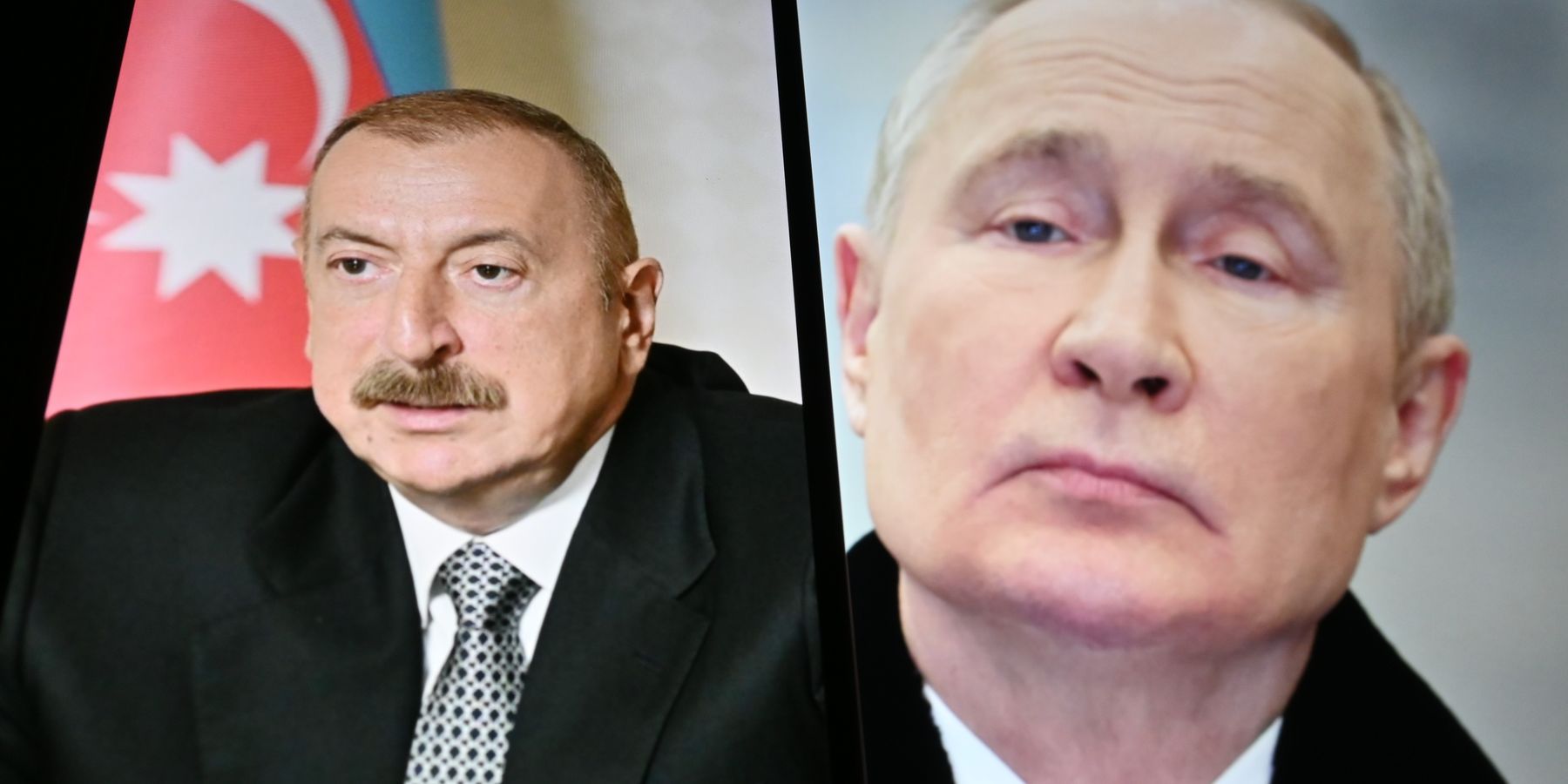
The escalating tensions between Russia and Azerbaijan — marked by tit-for-tat arrests, accusations of ethnic violence, and economic sparring — have tempted some Western observers to view the conflict as an opportunity to further isolate Moscow.
However, this is not a simple narrative of Azerbaijan resisting Russian dominance. It is a complex struggle over energy routes, regional influence, and the future of the South Caucasus, where Western alignment with Baku risks undermining critical priorities, including potential U.S.-Russia engagement on Ukraine and arms control.
The immediate spark came in June, when Russian security forces raided alleged Azerbaijani-linked criminal networks in Yekaterinburg, resulting in the deaths of two Russian nationals of Azerbaijani origin and arrests of more suspected mobsters. Baku condemned the raids as ethnically motivated, while Moscow claimed the deaths were due to natural causes.
The fallout was swift: Azerbaijan arrested Russian nationals, including Kremlin-linked media employees accused of espionage and seemingly random expatriates, while state-backed media in Baku launched a fierce anti-Russian propaganda campaign.
This clash built on deeper tensions. Since Azerbaijan’s 2023 reconquest of Nagorno-Karabakh, which sidelined Russian peacekeepers and exposed Moscow’s waning regional influence, President Ilham Aliyev has pursued an assertive foreign policy. Aliyev’s sharp public criticisms of Russia over the Azerbaijan Airlines plane crash in Russian airspace in December 2024 — in which he demanded accountability, compensation, and justice—signaled a newfound combativeness toward Moscow, marking a departure from Baku’s traditionally cautious diplomacy with its powerful neighbor.
Backed by Turkey and courted by the West for its energy exports, Azerbaijan aims to dominate the South Caucasus and serve as a critical energy hub for Central Asian exports to Europe that bypasses Russia.
Baku’s ambitions center on the proposed Zangezur Corridor, a transit route through Armenia connecting Azerbaijan to its Nakhchivan exclave and Turkey. This corridor, under prospective Ankara-Baku control, aligns with Western efforts to reduce reliance on Russian hydrocarbon export but is strongly opposed by both Russia and Iran, who fear it would bolster Turkish influence at their expense.
Armenia, caught in the middle, faces intense pressure, with Aliyev threatening military action if Yerevan resists.
Armenia’s own pivot complicates the situation. Prime Minister Nikol Pashinyan’s pro-Western government has distanced itself from Moscow, freezing its participation in the Moscow-led Collective Security Treaty Organization and signaling openness to NATO membership. Yet, this leaves Armenia isolated, as Western support remains largely rhetorical while Azerbaijan’s threats are tangible. Domestically, Pashinyan’s crackdown on opponents, labeled as “pro-Russian forces,” further destabilizes the country.
Encouraged by the growing geopolitical convergence between Armenia and Azerbaijan, some Western diplomats have rushed to back Baku, seeing an opportunity to push Russia out of the South Caucasus. The EU ambassador to Azerbaijan condemned alleged “violence, torture, and inhuman treatment” against ethnic Azerbaijanis in Russia, while the British ambassador expressed solidarity with the “Azerbaijani people.”
This framing is telling — both diplomats portrayed the Yekaterinburg incident as an unprovoked ethnic attack rather than a police operation targeting alleged criminals. While skepticism of Russian law enforcement is warranted, uncritically accepting Baku’s narrative — from a regime no less authoritarian than Moscow’s — is a deliberate political choice.
Although high-ranking EU officials like Commission President Ursula von der Leyen and High Representative for Foreign Affairs Kaja Kallas didn’t comment specifically on the latest clash, both have called Azerbaijan a “trusted partner” for energy security. Meanwhile, NATO has deepened its ties with Baku through programs like the Defense Education Enhancement Program.
This support reflects Azerbaijan’s decades-long lobbying efforts in Western capitals. Washington DC-based think tanks like the Atlantic Council, the Hudson Institute, the Foundation for Defense of Democracies, and unofficial lobby shops like the Caspian Policy Center, some of them tied to Azerbaijani state-funded initiatives, have promoted Baku as a pro-Western counterweight to Russia and Iran.
Meanwhile, lobbying firms, sometimes skirting transparency rules, have secured congressional endorsements, with lawmakers praising Azerbaijan’s geopolitical role. Now, with the Russia-Azerbaijan rift widening, these long-cultivated networks are poised to push for even deeper Western alignment.
Some in Washington, London, and Brussels may see Azerbaijan as a useful counter to Russia, but embracing Baku uncritically would be a strategic miscalculation for four key reasons.
First, Moscow maintains decisive military superiority over Azerbaijan, including nuclear capabilities and the ability to swiftly cripple Baku's critical oil infrastructure with precision strikes. The only country that could potentially come to Azerbaijan’s aid, Turkey, is unlikely to commit itself as it has its own complex relationship with Russia, of which the Caucasus is but one piece of a much bigger puzzle.
While Moscow’s focus on Ukraine limits immediate escalation, once Russia achieves its objectives there, it could shift attention to the Caucasus. Any Western-backed confrontation would be largely futile at best and, at worst, could provoke disproportionate retaliation against Azerbaijan while further destabilizing the region.
Second, overt Western support for Azerbaijan would reinforce the Kremlin’s narrative that the U.S. seeks to encircle and weaken Russia at every turn. This would make future dialogue — whether on ending the war in Ukraine or reviving arms control talks — far more difficult. Given the existential risks of a U.S.-Russia confrontation, prioritizing a minor regional rivalry over strategic stability would be shortsighted.
Third, Aliyev’s regime is no democratic ally. His government has jailed critics, stifled dissent, and weaponized nationalism — largely mirroring Putin’s own playbook. In June, it sentenced a young researcher, Bahruz Samadov, to 15 years in jail on spurious treason charges solely for advocating peace with Armenia. Backing Baku for short-term geopolitical gains would further erode Western credibility on human rights and the “rules-based international order.”
Fourth, encouraging Azerbaijani aggression — whether against Armenia or through proxy confrontations with Russia — could trigger a wider regional conflict. The U.S. has no vital national interest in the Zangezur Corridor, but it does have an interest in preventing another war that could draw in Turkey, Iran, Israel, and Russia. Such a scenario would increase pressure from the usual interventionist quarters in Washington for the U.S. to join the fray against Russia and Iran.
Rather than taking sides, the U.S. should use its renewed dialogue with Russia to quietly push for de-escalation, making clear that Washington does not seek to exploit the conflict to further isolate Moscow. Simultaneously, the U.S. should use its influence over Azerbaijan to discourage further provocations, including threats against Armenia and Russian citizens in Azerbaijan.
The U.S. does not need another proxy conflict with Russia. Washington should resist the temptation to view Azerbaijan’s defiance of Russia as an opportunity to "win" the South Caucasus. Instead, the priority must be preventing further escalation — both to avoid another humanitarian crisis and to preserve the possibility of broader U.S.-Russia dialogue on far more pressing issues, from Ukraine to nuclear arms control.