
Follow us on social

google cta
2021-11-29t125728z_1872391217_rc2deo98rmhp_rtrmadp_3_global-poy-2021-scaled

Responsible Statecraft 2021: Top 5 most-read articles of the year

This was a see-saw year with major headlines emphasizing the volatility of US relationships with the world. Our most popular stories reflect that.

Analysis | Washington Politics
google cta
google cta

The year 2021 was a see-saw in the classic sense: the Biden Administration accomplished the incredible feat of withdrawing the U.S. military from Afghanistan after 20 years of war.

Yet on many other fronts, stasis: the new president has failed to return the United States to the JCPOA, or Iran nuclear deal; tensions with Russia and China remain the same or are in many cases worse, and the crippling war in Yemen continues. Promises by the administration to stop assistance to the Saudi coalition in order to help bring about an end to that war, have gone unfulfilled.

In many ways the most-read articles on Responsible Statecraft tin 2021 mirror those major foreign policy issues and audience interest in them, with the added bonus that they provide analysis not usually found in mainstream, establishment outlets. Below are the Top 5.

Other popular pieces not on that list nonetheless reflect the concerns and outrages of the day, as well as some of the best reporting RS had on offer. This included Eli Clifton (#6) uncovering the defense industry ties held by a majority of task force members advising the president to stay in Afghanistan, and Nick Turse (#13), who found a surprising number of U.S. commandos stationed in Europe today. Annelle Sheline (#14) explored some interesting connections between American Exceptionalism in Iraq and this year's Hollywood blockbuster, "Dune," and Rachel Odell slammed Washington rhetoric painting China as a threat to the "world order" (#17). On the 20-year anniversary of the 9/11 attacks, John Mueller started a big debate suggesting the U.S. should have never invaded Afghanistan in the first place (#20).

Check out our five most read articles of 2021:

#1 Trita Parsi : Revealed: How Biden rejected a reasonable way forward in Iran Deal talks (Aug. 20)

The White House reportedly wouldn’t commit to staying in the deal for the remainder of the president’s term.

#2 Jim Lobe : Three major networks devoted a full five minutes to Afghanistan in 2020 (Oct. 20)

It should be no surprise then that Americans were shocked at the speed at which the U.S.-backed Afghan army and government collapsed and the Taliban returned to power in Kabul in a rout.

#3 Anatol Lieven: What war with Russia over Ukraine would really look like (Nov. 24)

In recent statements, Moscow seems much more realistic about the consequences of actual conflict with Kiev and Western powers.

#4 Anatol Lieven: The generals lied and the fantasy died (Aug. 16)

H.R. McMaster and other apologists for the failed policy in Afghanistan would like us to focus on anything but their complicity in it today.

#5 Alex de Waal: Ethiopia: Salvaging a failing state (Nov. 10)

Prime Minister Abiy Ahmed has lost the war; the time has come for a ceasefire to negotiate the country’s future. (A more recent update by de Waal explores how Abiy was able to turn the tide in a matter of weeks.)


Dear RS readers: It has been an extraordinary year and our editing team has been working overtime to make sure that we are covering the current conflicts with quality, fresh analysis that doesn’t cleave to the mainstream orthodoxy or take official Washington and the commentariat at face value. Our staff reporters, experts, and outside writers offer top-notch, independent work, daily. Please consider making a tax-exempt, year-end contribution to Responsible Statecraftso that we can continue this quality coverage — which you will find nowhere else — into 2026. Happy Holidays!

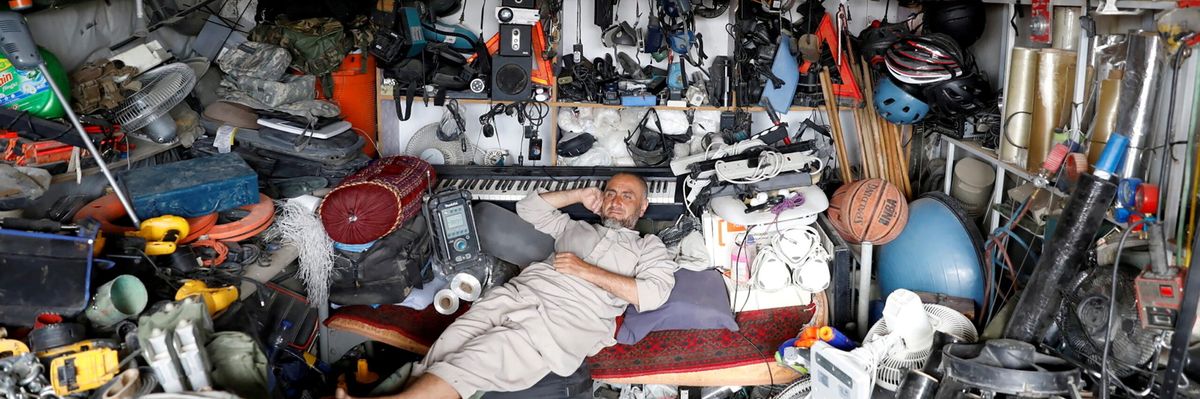
An Afghan man rests in his shop as he sell U.S. second hand materials outside Bagram U.S. air base, after American troops vacated it, in Parwan province, Afghanistan July 5, 2021. REUTERS/Mohammad Ismail/File Photo
google cta
Analysis | Washington Politics
China lion
Top photo credit: Tourists in China (Maysam Yabandeh/Creative Commons)

Taiwan shouldn't become the thorn we use to provoke China

Asia-Pacific

Japan’s Prime Minister, Sanae Takaichi, caused an ongoing diplomatic row with China in November when she stated that a Chinese blockade of Taiwan would likely constitute a threat to Japan's survival and require the mobilization of the Japanese Self-Defense Force.

Her statement marked a departure from the position of previous Prime Ministers, who followed a policy of strategic ambiguity on the Taiwan issue, mirroring the longstanding position of the United States.

keep readingShow less
Does Israel really still need a 'qualitative military edge' ?
An Israeli Air Force F-35I Lightning II “Adir” approaches a U.S. Air Force 908th Expeditionary Refueling Squadron KC-10 Extender to refuel during “Enduring Lightning II” exercise over southern Israel Aug. 2, 2020. While forging a resolute partnership, the allies train to maintain a ready posture to deter against regional aggressors. (U.S. Air Force photo by Master Sgt. Patrick OReilly)

Does Israel really still need a 'qualitative military edge' ?

Middle East

On November 17, 2025, President Donald Trump announced that he would approve the sale to Saudi Arabia of the most advanced US manned strike fighter aircraft, the F-35. The news came one day before the visit to the White House of Saudi Crown Prince Mohammed bin Salman, who has sought to purchase 48 such aircraft in a multibillion-dollar deal that has the potential to shift the military status quo in the Middle East. Currently, Israel is the only other state in the region to possess the F-35.

During the White House meeting, Trump suggested that Saudi Arabia’s F-35s should be equipped with the same technology as those procured by Israel. Israeli Prime Minister Benjamin Netanyahu quickly sought assurances from US Secretary of State Marco Rubio, who sought to walk back Trump’s comment and reiterated a “commitment that the United States will continue to preserve Israel’s qualitative military edge in everything related to supplying weapons and military systems to countries in the Middle East.”

keep readingShow less
Think a $35B gas deal will thaw Egypt toward Israel? Not so fast.
Top image credit: Miss.Cabul via shutterstock.com

Think a $35B gas deal will thaw Egypt toward Israel? Not so fast.

Middle East

The Trump administration’s hopes of convening a summit between Israeli Prime Minister Benjamin Netanyahu and Egyptian President Abdel Fattah el-Sisi either in Cairo or Washington as early as the end of this month or early next are unlikely to materialize.

The centerpiece of the proposed summit is the lucrative expansion of natural gas exports worth an estimated $35 billion. This mega-deal will pump an additional 4 billion cubic meters annually into Egypt through 2040.

keep readingShow less
google cta
Want more of our stories on Google?
Click here to make us a Preferred Source.

LATEST

QIOSK

Newsletter

Subscribe now to our weekly round-up and don't miss a beat with your favorite RS contributors and reporters, as well as staff analysis, opinion, and news promoting a positive, non-partisan vision of U.S. foreign policy.