

President Donald Trump has issued fresh threats in the context of the Iran war. Despite his boasts that the Iranian military is annihilated, he is pushing for Washington’s European NATO allies to join U.S. efforts to break Iranian de facto blockade of the Strait of Hormuz, a key maritime chokepoint in a worsening global energy crisis. He promises a “very bad” future for NATO allies if they don’t respond to his call.
The allies are in no rush to oblige, however. Spain’s Prime Minister Pedro Sanchez, who has emerged as the leader of the EU’s anti-war camp, doubled down on his messages despite the attacks by Trump and his key ally, the ultra-hawkish Sen. Lindsey Graham (R-SC).
The positions of Germany and France matter most — both are part of the E3 (with the UK) that negotiated the nuclear deal with Iran in 2015.
Germany has signaled resistance: Defense Minister Boris Pistorius wondered aloud on “what does Trump expect a handful of European frigates to do that the powerful U.S. Navy cannot? This is not our war, and we did not start it.” This spells trouble in Berlin’s ruling coalition as Chancellor Friedrich Merz was among the few European leaders who initially fully supported the U.S./Israeli war.
France, meanwhile, has offered a master class in incoherence. President Emmanuel Macron recognized that the war is “outside the international law,” yet he sent French assets to Cyprus, to protect the UK military base there after it was allegedly targeted in retaliation for its use for operations against Iran.
In his conversation with with Iranian President Massoud Pezeshkian over the weekend, Macron repeated demands that Iran stop retaliating and restore “freedom of navigation” through the strait. He also demanded concessions on Iran’s nuclear and ballistic missile programs and its “destabilizing activities regionally and internationally” – withough offering Tehran anything that would prove attractive to Tehran in return. On the contrary, the EU foreign ministers, including the French, appear to have agreed on new economic sanctions on Iran.
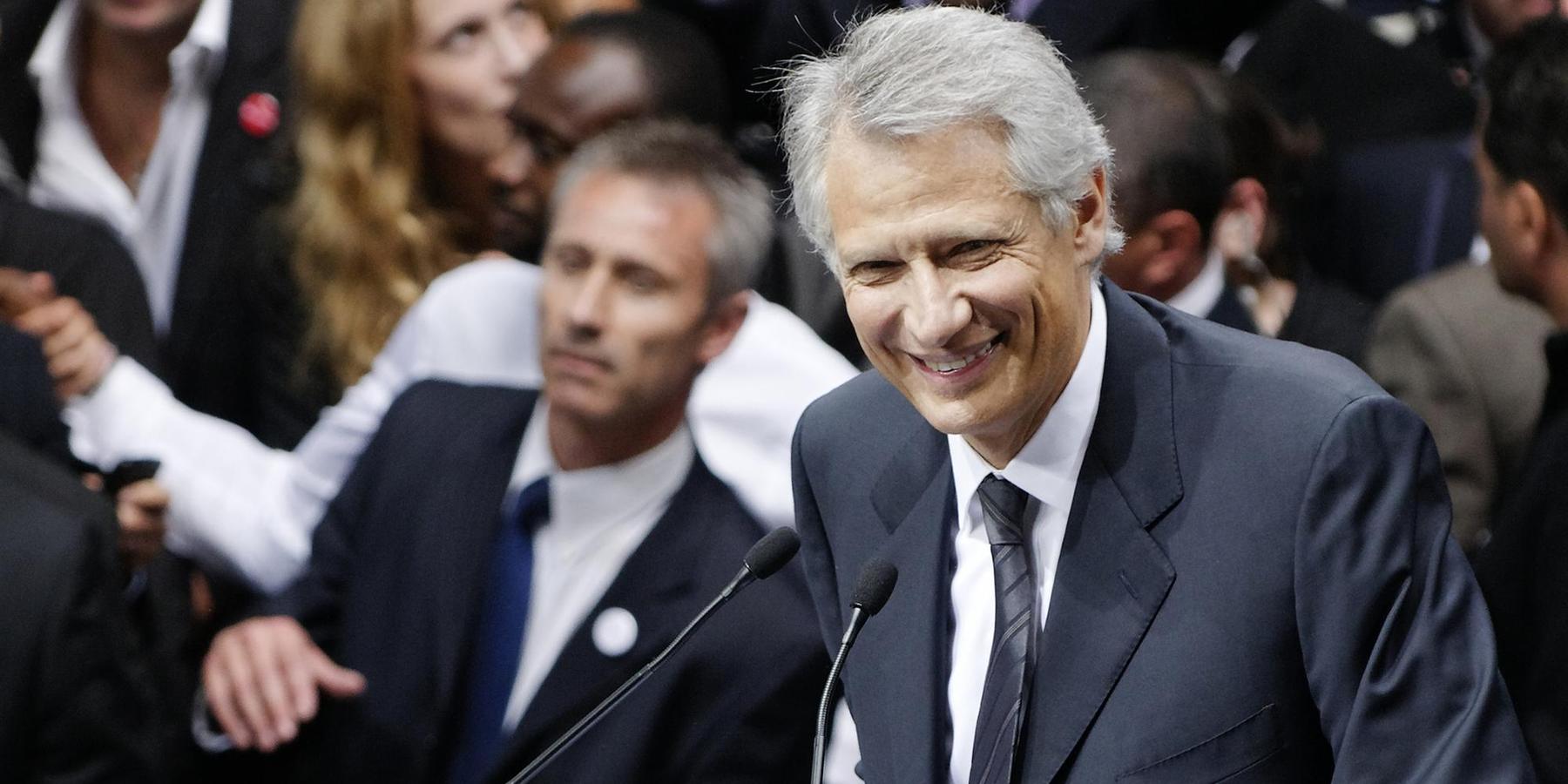
In Paris, one man is watching this with a familiar sense of dread — and a profound disappointment in his own country and continent. Dominique de Villepin, France's former foreign minister who left a memorable mark on 21st Century diplomacy by warning against the folly of the invasion of Iraq in 2003, now argues that the Iran war is not merely a repeat of 2003, but is in fact "even more dangerous and more reckless."
The Iraq War at least paid lip service to a multilateral process. Today's campaign, he laments, has "no clear objectives." It is being waged outside any U.N. or multilateral framework, an erratic "war by touch" led by a U.S. administration that, in de Villepin's view, is stumbling in the dark.
A joint campaign in the Strait of Hormuz would transform European nations from diplomatic actors into military participants of a war they never authorized. The pressure to comply — from Washington and from the usual chorus of Atlanticist voices in the European foreign policy blob — is immense.
Yet de Villepin believes that France — and Europe — should say “no” to Trump today just as he, and his then-boss, President Jacques Chirac did to President George W. Bush in 2003. That would entail a united European message that the war Trump started is “illegal, illegitimate, ineffective and dangerous.” It also means refusing any participation in that war, its diplomatic condemnation in all international forums, and imposing sanctions on Israel for “creating a tragic humanitarian situation in the Middle East,” he declared.
Even as de Villepin lauded Spain’s Sanchez as the man “saving Europe’s honor” he was scathingly critical of the leader of his own country, Macron, for failing to do any of the things he urged. For de Villepin, Macron’s equivocation is an abdication of the French and European role—a retreat from the Gaullist tradition of French strategic autonomy which he represents.
With presidential elections approaching in 2027, and Macron constitutionally barred from running for a third term, an intriguing possibility arises — a de Villepin presidential run, which he is reported to be considering.
On the face of it, the odds are enormous. De Villepin's potential return to the fray is not merely a matter of offering a contrasting voice; it would pit him against a formidable ecosystem of influence that has fundamentally reshaped French politics over the last two decades.
Since his own time in active politics (until 2007), a powerful pro-Israel lobby has solidified, including the politically hardline Representative Council of French Jewish Institutions (CRIF), and a looser network of public intellectuals and journalists engaged in a perceived struggle against “Islamism” in French politics.Those include influential hawks, such as Bernard-Henri Lévy, and journalists in outlets like Le Figaro and Le Point. These publications constantly run exposes on Qatari or Iranian "agents of influence,” while remaining conspicuously silent on the lobbying power of Tel Aviv.
This narrative has permeated the political sphere. The far right Rassemblement National (RN), currently leading in the polls, appeals to national sovereignty, yet is willing to make an exception for Israel.
This dynamic was captured in a revealing anecdote from Scott McConnell, the founder of The American Conservative, who recalled a meeting with RN’s Marine Le Pen years ago: "I shared my disdain for (Israeli Prime Minister) Netanyahu, and she kind of gave me a look and our conversation became slightly less warm. I used to regret that moment, but no longer. I wonder how she feels now."
The answer to McConnell's question is clear. While critical of Macron on virtually everything, Le Pen supported his decision for a “defensive intervention in the Middle East” in order to “protect our nationals, our military bases and help our allies.” Jordan Bardella, the RN’s likely presidential candidate and the leader of the right-wing Patriots for Europe group in the European Parliament, has aligned the caucus with Tel Aviv. Their sovereignist rhetoric crumbles the moment it conflicts with the civilizational war on Islam narrative that binds them to Israel.
Meanwhile, on the left, the leader of the France Unbowed party, Jean-Luc Mélenchon, is too polarizing a figure to unite the anti-war camp. The center-left Socialists are bereft of inspiring leadership. The party's great hope, Raphaël Glucksmann, a MEP, has been less than inspiring as a potential presidential contender, and his hawkish, neoconservative-infused interventionism aligns more with the Atlanticist establishment than with a Gaullist respect for sovereignty.
In a sign of the Socialists’ desperation, some in Paris have begun whispering, however improbably, about the return of the former, deeply unpopular president, François Hollande.
This is where de Villepin's potential candidacy could become so consequential. His positions on the central themes of the day — anti-war, multipolarity, defense of sovereignty — offers a bridge to unite the anti-war left and the sovereignist right behind a vision of French independence.
It is a long shot. Elections rarely, if ever, are won on foreign policy alone. And his elite demeanor may sit uneasily with voters disillusioned with the establishment. But in a moment when European leaders are seen as flailing in their response to Washington’s latest demands, France has at least one voice still willing to call things what they are. Whether the country is still willing to listen is the question that may define 2027.
- Flattery is for fools: Can Euros stand up to Trump — and win? ›
- The EU's pathetic response to Trump's Iran attack ›