

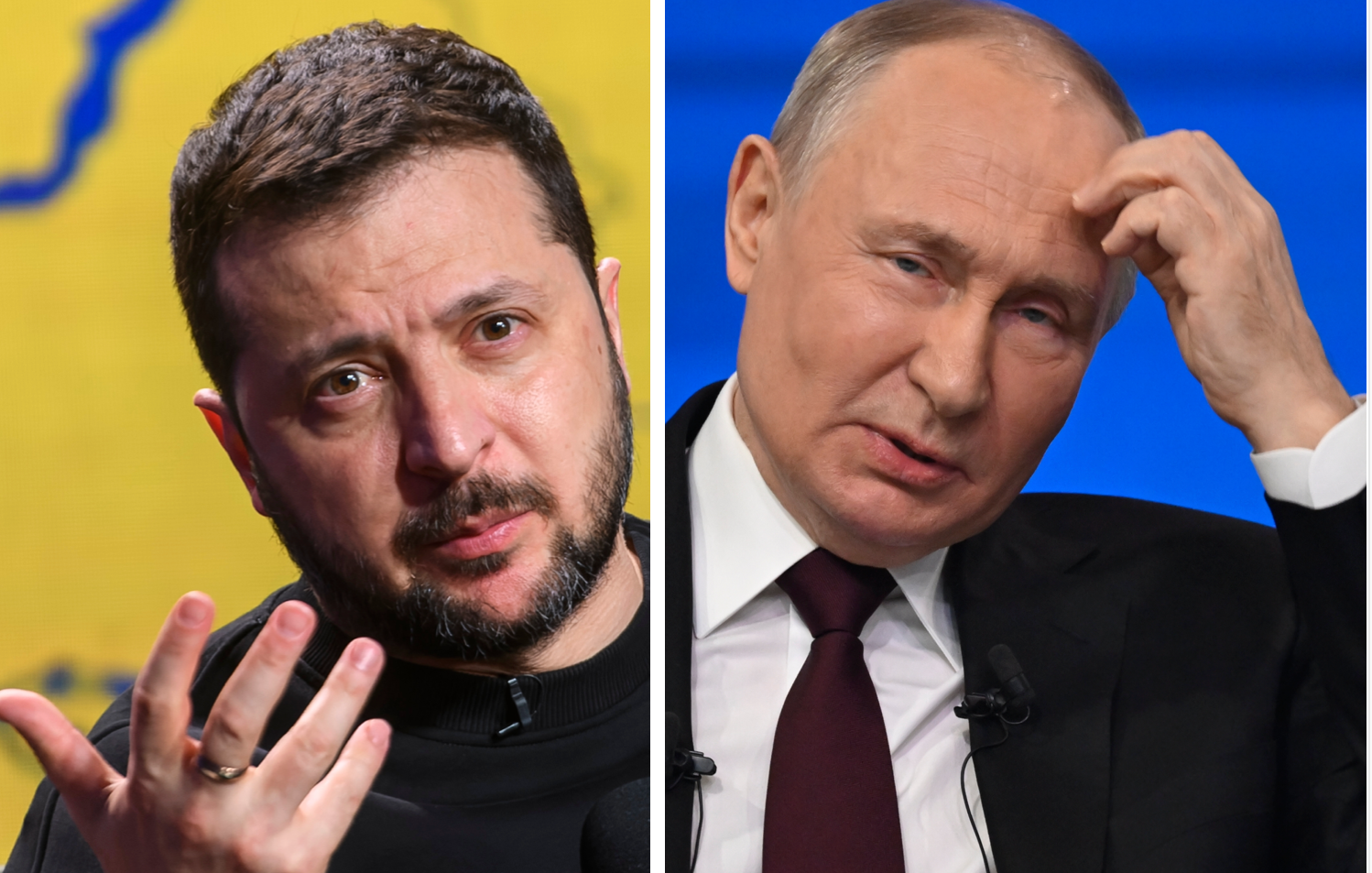
President Volodymyr Zelensky of Ukraine has said that a further round of talks between Ukraine and Russia could start as early as this week, and indicated that “everything had to be done to get a ceasefire.” Yet it is far from clear that a ceasefire will be possible. And it’s likely that the war will continue into 2026.
In June, Zelensky was pressing the European Union to go further in its sanctions against Russia, including calling for a $30 per barrel cap on Russian oil shipments. Washington effectively vetoed a lowering of the oil price cap at the recent G7 Summit in Canada. However, on July 18 the European Union agreed its 18th round of Russian sanctions since war began, overcoming a blocking move by Slovakia in the process.
This imposes a cap on Russian oil shipments at 15% below market value ($47.60 at the time the package was agreed) and places further restrictions on Russia’s energy sector. But, there is scepticism that this will dent Russian revenues without the U.S. mirroring the measures, as the prior $60 per barrel G7 cap made no noticeable difference. Zelensky hailed the package as “essential and timely.”
Despite the overtures towards peace talks, economic sanctions against Russia continue to be the preferred approach for both Zelensky and for the EU. And the clock is ticking for the focus to shift back to President Trump’s proposed secondary sanctions. Having given Russia 50 days to agree a peace deal with Ukraine or face tariffs of 100% against its major trading partners, Trump has effectively set a deadline of September 2.
Between now and then, the August holiday period will kick in during which diplomats across the Western world, much of the Russian government and, even in times of war, some of the Ukrainian government will be downshifting. Of course, wars don’t stop when holidays start. But the idea that either side will have the energy or motivation to deliver a sudden and remarkable breakthrough ceasefire deal that navigates both sides’ concerns in August is, to put it mildly, ambitious.
In any case, and as I have said before, I see little to no prospect that yet another round of sanctions will influence President Putin without genuinely substantive progress towards peace between both sides.
It’s clear that a peace deal or, at the very least a meaningful ceasefire with a clearly articulated peace process, will only be possible when the presidents of Ukraine and Russia meet, which Zelensky has pressed for.
But there is a significant element of theater here. To recap on what happened at the May peace talks in Istanbul, President Putin first proposed them, following pressure from President Trump and the EU to agree to an unconditional ceasefire in Ukraine. Zelensky then challenged Putin to meet in person in Istanbul. It was obvious to anyone who has studied Russia’s obsession with form over substance that Putin was never going to agree to a meeting without even the skeleton of a pre-prepared bilateral paper on the table to discuss.
And so, predictably, the Kremlin named a delegation led by the official who also led Russia’s delegation to the ill-fated Istanbul peace talks in March and April 2022. At the eleventh hour, Zelensky was himself pressured to name a Ukrainian delegation “out of respect” for President Trump and Turkey’s President Recep Tayyip Erdogan and the talks commenced a day later than planned. President Trump then said that no peace deal would be agreed until he met with Putin.
This time around, the Russian side has already quashed the idea of a bilateral meeting between Putin and Zelensky for the same reasons provided in May. "There is a lot of work to be done before we can talk about the possibility of some top-level meetings," said Dmitry Peskov, Putin’s long-time press spokesman.
For its part, the Ukrainian side has set three goals for Wednesday's talks: the further return of Ukrainian prisoners of war, on which there have been several encouraging exchanges since May, the return of Ukrainian children, an issue on which both sides have engaged unofficially throughout the war. The third goal is engineering a meeting between Zelensky and Putin.
Yet, this limited agenda will not be enough to satisfy the Kremlin that Ukraine is ready to negotiate and make progress towards an agreement on Russia’s so-called underlying concerns, the key concern being Ukraine’s NATO aspiration. Without the negotiations seriously getting into this and other such substantive issues as the disposition of forces and territory when the fighting stops, don’t expect a leader-level meeting any time soon.
And of course, the threat of so-called secondary sanctions as soon as September 2 means that the pressure on Russia to deliver is higher now than at the Istanbul talks in May. From Zelensky’s perspective, no peace deal in Istanbul means secondary sanctions against Russia.
This dynamic of Europe and the U.S. threatening Russia with sanctions unless progress towards peace is made, while no expectations are placed on Ukraine to make concessions, has been locked in since March of 2015. It simply will not work.
Calling on Putin to meet in Istanbul is therefore, like it was in May, an act of political theater by Zelensky. He needs to keep his Western sponsors on side and for the flow of money and arms into Ukraine to continue. He also wants to polish his image as a putative global statesman.
Meanwhile, at the most recent Contact Group of Support for Ukraine meeting, then Ukrainian Prime Minister Denis Shmyhal requested an additional $6 billion to cover this year’s deficit in defense procurement. He also urged “partners to allocate funds for Ukraine in their budget proposals for 2026, right now.”
Anyone who believes that Zelensky is really committed to accelerating moves towards peace in Ukraine may, I fear, be overly optimistic. I am increasingly convinced that war will continue into next year.
- Istanbul 2.0: Know when to hold 'em, know when to fold 'em ›
- Yes, we can reconcile absurd Russian & Ukrainian peace plans ›
- Diplomacy Watch: Did the West scuttle the Istanbul talks or not? ›