
Follow us on social

google cta
Lockheed, Northrop Grumman profit off their own inefficiencies

Lockheed, Northrop Grumman profit off their own inefficiencies

General Dynamics also saw increased revenues despite (or because of) chronic production troubles

Reporting | QiOSK
google cta
google cta

A new report finds that U.S. arms contractors’ revenues are surging, even as their programs are late and over budget, undermining military planning and drawing funds and resources away from other government priorities.

Released today, the new fact sheet by the Stockholm International Peace Research Institute (SIPRI) finds that 39 U.S. weapons companies among the world’s 100 largest arms-producing companies, collectively saw their revenues go up by 3.8% to reach $334 billion in 2024, boosted by countries’ weapons modernization efforts, and wars in Ukraine and the Middle East. The largest U.S. companies, Lockheed Martin, RTX, Northrop Grumman, and General Dynamics, all saw increased arms revenues in 2024.

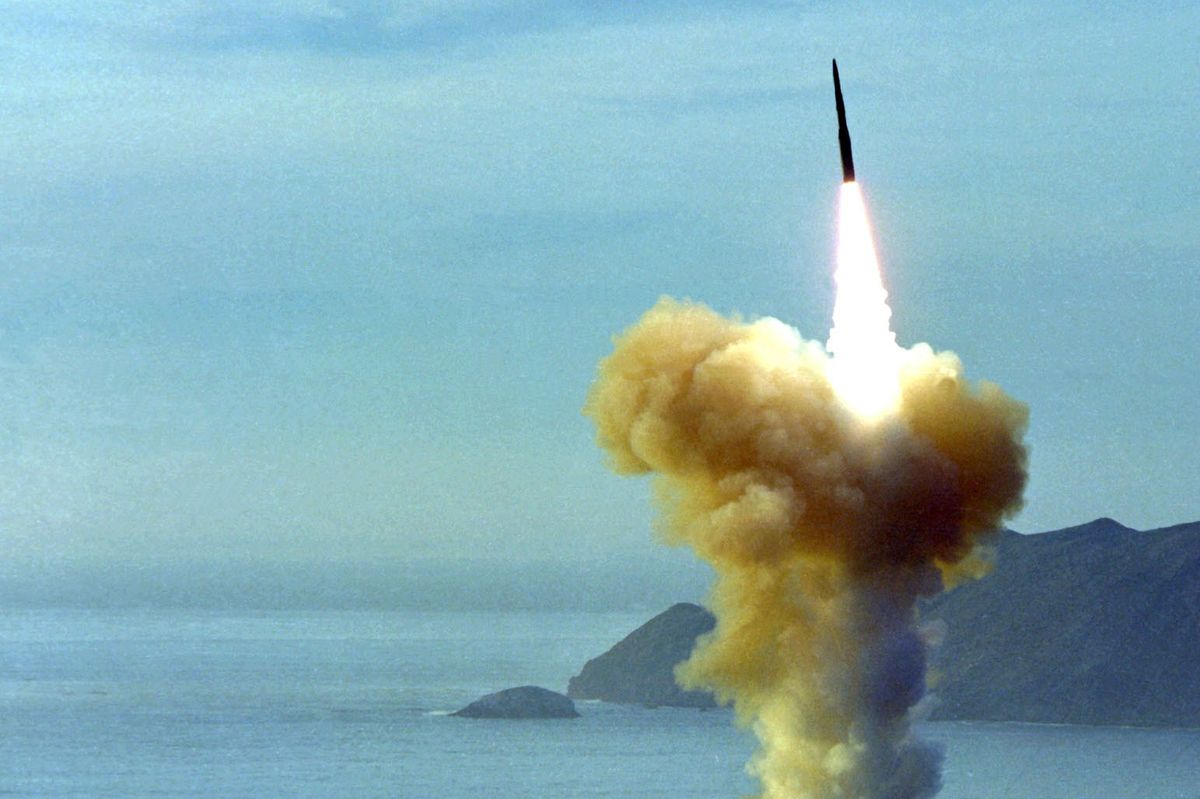
Meanwhile the cost increases and delays among key U.S. weapons programs, like the F-35 fighter jet, the Sentinel intercontinental ballistic missile (ICBM) nuclear weapons program, and Virginia- and Columbia-class submarines, appear to be out of control.

The Columbia-class submarine program, for example, is running about 16 months behind schedule and is $17 billion over budget — lining the pockets of manufacturer General Dynamics, whose revenues went up 8.1% in 2024.

The F-35 program delays boosted Lockheed Martin’s 3.2% arms revenue increase last year, where F-35s to be delivered in 2023 came later, especially because of hardware and software-related production setbacks. Northrop Grumman’s revenues jumped by 3.3%, to $37.9 billion in 2024, as production costs for its troubled Sentinel program skyrocketed to an estimated $141 billion — over 80% over original budget projections.

SIPRI researchers say these issues mar U.S. military planning, where these delays and cost overruns can divert government resources from other programs.

“The delays and rising costs [of these programs] will inevitably impact U.S. military planning and military spending,” said Xiao Liang, a researcher at SIPRI’s Military Expenditure and Arms Production Programme. “This could have knock-on effects on the U.S. government’s efforts to cut excessive military spending and improve budget efficiency.”

SIPRI also found that these delays and cost overruns may worsen in the future, as companies say restricted access to critical minerals, because of new Chinese export controls on some of them, may hamper their ability to make weapons systems on time.


www.nationalmuseum.af.mil
Sentinels of Freedom: Air Force Strategic Missiles > National ...
google cta
Reporting | QiOSK
Why Russia survived — and may thrive — after Syria regime change
Top image credit: Russia's President Vladimir Putin shakes hands with Syria's President Ahmed al-Sharaa during a meeting at the Kremlin in Moscow, Russia, on October 15, 2025. Alexander Zemlianichenko/Pool via REUTERS

Why Russia survived — and may thrive — after Syria regime change

Middle East

Late last month, Syrian President Ahmad al-Sharaa visited Moscow, for the second time since assuming office.

“I saw a lot of snow on the way and recalled a story,” he said to President Putin in the Kremlin. “I recalled how many military powers tried to reach Moscow, but failed due to the courage of Russian soldiers, and also because nature itself helped to protect this blessed land.”

keep readingShow less
Hegseth to take control of Stars & Stripes for 'warfighter' makeover
Central Command Area of Responsibility (Apr. 4, 2003) -- Command sergeant Major John Sparks delivers copies of Stars and Stripes to U.S. marines from 2nd Platoon, 3-2 India Company during Operation Iraqi Freedom. (U.S. Marine Corps photo by 1st sergeant David K. Dismukes)

Hegseth to take control of Stars & Stripes for 'warfighter' makeover

Media

During Trump’s first administration, the Stars and Stripes newspaper had come perilously close to shuttering. In 2020, the Pentagon asked Congress to cut its funding, before ultimately ordering for the paper to be closed.

After a serious bipartisan pushback from lawmakers, Trump reversed course and the newspaper, which is authorized by Congress and the US Department of Defense, and has been a staple for American service members and their families since World War I, was spared.

keep readingShow less
South Africa: Between Iran and a hard place (Donald Trump)
Top photo credit: President Cyril Ramaphosa (Photo: GCIS/Flickr) and Donald Trump (Gage Skidmore/Flickr)

South Africa: Between Iran and a hard place (Donald Trump)

Africa

South Africa is struggling to unfurl its wings as a leading middle power and advance its relations with its fellow BRICS members while keeping out of the cross hairs of the U.S. president. This has been particularly hard considering that one member of the Global South grouping — Iran — is on Donald Trump’s current list of potential military targets.

South Africa joined BRICS in 2006. The organization is supposed to serve as an intergovernmental forum for member countries to connect on issues related to diplomacy, security, and economics. But the bloc has angered President Trump, who sees it as a threat to American leadership, particularly given China’s membership in the group.

keep readingShow less
google cta
Want more of our stories on Google?
Click here to make us a Preferred Source.

LATEST

QIOSK

Newsletter

Subscribe now to our weekly round-up and don't miss a beat with your favorite RS contributors and reporters, as well as staff analysis, opinion, and news promoting a positive, non-partisan vision of U.S. foreign policy.