

Debates over foreign policy have played an unusually significant role in the intra-Republican party debate over the last year. Disagreements over aid for Ukraine were a driving force behind former Speaker of the House Kevin McCarthy’s ouster from his leadership position last October. When Sen. J.D. Vance (R-Ohio) endorsed Donald Trump’s 2024 presidential campaign, he cited his foreign policy record as the primary reason, and Nikki Haley has made her aggressive brand of foreign policy central to her challenge to Trump.
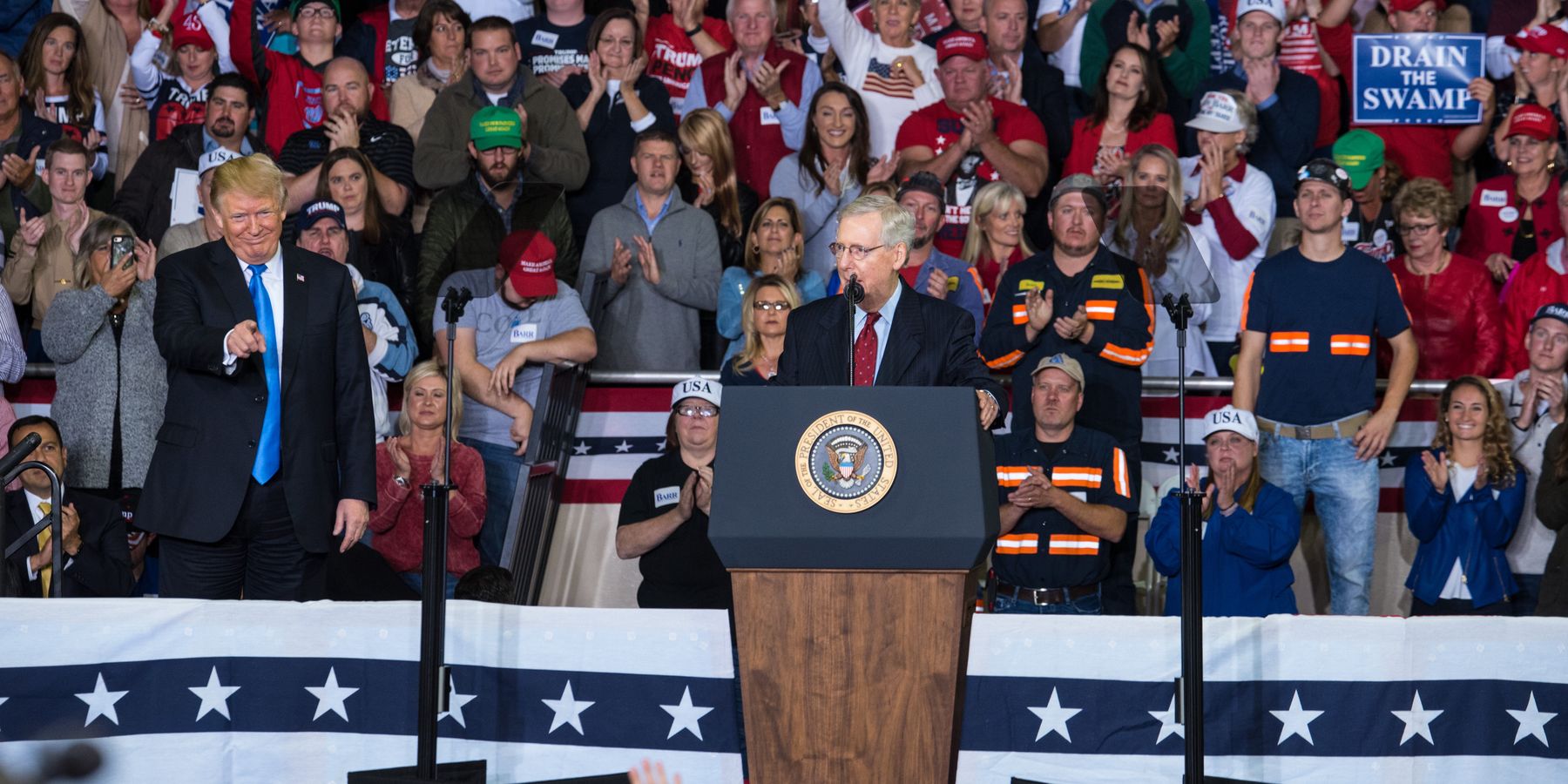
Now, the Republican Party will undergo another meaningful transition. Mitch McConnell, who has led the Senate Republican conference since 2007, announced last week that he will step down from his long-held perch following November’s elections and retire from the Senate at the end of his current term. While McConnell’s decision is not explicitly about foreign policy, it is a signal that the party’s views on a number of major issues, including America's role in the world, are changing.
“It’s a body blow for the establishment, interventionist wing of the GOP,” Jacob Heilbrunn, editor of The National Interest and author of two books on Republican foreign policy, tells Responsible Statecraft.
To be sure, there are other elements at play. McConnell is 82. He’s had a number of health events in public in recent months. A Trump return to the White House looks like a distinct possibility, and, given McConnell’s apparent distaste for the former president, the Kentucky Republican may not want to contend with the pressure of working with him for another four years. Nevertheless, there are reports that McConnell is considering endorsing Trump for a second term.
The majority leader, however, has said that he will serve out the rest of his term, which expires in January 2027, so the decision was not entirely informed by his personal life. “It suggests to me that some of this does have to do with the changing composition of the Senate Republican Conference,” Jim Antle, executive editor of the Washington Examiner magazine, tells RS.
The dynamics of that changing composition are clear: During a vote in the Senate last month on legislation that would provide foreign aid to Ukraine and Israel, 18 of the 30 Senators who were first elected before 2016 supported the bill; only four of the 19 who came to office since voted in favor.
McConnell's Foreign Policy Legacy
The post-Trump years have been atypical for McConnell. During his nearly 40 years in the Senate and his 16 years as party leader — the longest such tenure in history — McConnell has rarely made foreign affairs a policy priority and has, despite criticism from conservative activists, laboriously tried to avoid inserting himself into intra-party disputes.
But after his relations soured with the former president, McConnell became a symbol of the Republican old guard in Washington that was working to reverse Trump’s effects on the party — with a focus on one issue in particular.
“Of all the ways Trump has reshaped the Republican Party, it’s clear that McConnell sees the drift toward isolationism as the most pernicious — particularly at a moment when the fate of Ukraine and perhaps even NATO countries could be determined by the resolve of the Republican Party,” Politico’s Jonathan Martin reported last summer.
“I didn't really think he was that important on foreign policy until the Republican consensus on foreign policy started being challenged. And he was a leader in pushing back against those challenges,” says Antle.
“McConnell’s legacy is often considered domestic. It certainly was his area of interest,” adds Curt Mills, executive director of the American Conservative. “But I think, time and again, McConnell showed himself to be essentially a kind of unreconstructed George W. Bush-style Republican on foreign policy, and really did sort of stick his neck out there as the years went on.”
However, McConnell’s brand of conservatism, particularly on the foreign policy front, has been going out of style. It is reviled by more right-wing members of the party, and old Republican purveyors of it are aging out and retiring.
The conservative House Freedom Caucus mocked the departing Senate leader after his announcement, focusing on his recent rhetoric on foreign policy. “Our thoughts are with our Democrat colleagues in the Senate on the retirement of their Co-Majority Leader Mitch McConnell (D-Ukraine),” the group posted from their account on the social media platform X.
What's Next?
The Senate can be a slow place to transform. Six-year terms mean that Senators are not as subject to the whims of the voter base as their counterparts in the House. The most oft-mentioned replacements for McConnell are the so-called “Three Johns” — Thune of South Dakota, Cornyn of Texas, (the third, Barrasso of Wyoming, has announced on Tuesday that he was forgoing the opportunity to replace McConnell to run for the second leadership spot instead). They are more in the mold of the current majority leader in that they have a more temperamentally conservative approach to politics, unlike some newer GOP politicians who are willing to overthrow institutional norms in Washington.
Even though the Senate was a place for more establishment Republicans to have some level of power during the Trump years, Mills argues that the more “America First” wing of the party is more aware of and prepared to push for control of these levers of power. “I do think we're getting to the point now, where the Senate Leader is high profile enough that they can't be this major outlier on the policy,” he tells RS. In addition, he says, anybody in the party who has national aspirations will have to advocate for some degree of foreign policy restraint.
In terms of policy, the most crucial question confronting Congress is the future of aid to Ukraine. McConnell has been a strong advocate for continuing aid and, for the time being, the spending package is stuck in the House of Representatives. If the House blocks passage of the bill or passes a different version of it, the Senate GOP’s position on the issue will once again be tested. The Republican conference had largely been supportive of aiding Ukraine, but the most recent bill passed with support from fewer than half of the members.
Despite facing criticism from conservative activists, McConnell has rarely been on the losing side of any debates within the Republican Party during his time as leader, says Antle. Ukraine aid could prove to be a significant exception. And perhaps, given his stance on the issue, McConnell may feel that his voice is better placed elsewhere in the caucus.
“Maybe now he wants to play more of a Mitt Romney role. Where he's seen as this elder statesman within the party, but he has the freedom to criticize Trump,” Antle tells RS. “This is me speculating. But I think it's informed speculation. He may feel that he's reached a point where herding cats in private is less important than speaking out against some of these things in public.”
The Trump Factor
Where the next Senate GOP leader falls on this and other related issues will depend largely on the outcome of the 2024 presidential election. Trump has reportedly already been involved in the jockeying over McConnell’s successor behind-the-scenes, urging Sen. Steve Daines (R-Mont.), the chairman of the National Republican Senatorial Committee, to run. Regardless of who the leader ends up being, they will likely need to be loyal to Trump personally, but the former president may be more flexible when it comes to his policy agenda.
“If Trump really wanted to push somebody who was different from McConnell on foreign policy, I think he could have an impact, but I don't think that those are the kinds of considerations that he's going to make,” says Antle. “But it does suggest, I think, that that wing of the Senate Republican Conference is only going to get bigger and the kinds of pressures McConnell was resisting, are going to become more difficult to resist.”
Heilbrunn, on the other hand, contends that if Trump is elected, the battle for Republican foreign policy will effectively be over. “The one thing he actually cares about is foreign policy,” he tells RS, adding that Trump will not settle for a Senate advocating for a different approach, and will be “pushing for someone who will be subservient to him.”
If Trump loses, however, there will be a more contested battle over how the Republican Party may understand the country’s role in the world. While Cold War-era hawks have definitely lost the power they once had within the party, they could make the case that Trump represented a short-term outlier if he loses another election.
Even if Trump loses, Mills says, “I'm still pretty bullish on the restraint end of the Republican Party,” because the momentum in the party’s base is aligned with that movement. Foreign policy, he says, is only growing more salient for GOP primary voters.
In addition, younger and more recently elected Republicans' views on foreign policy can harken back to the GOP from before the Cold War, which often opposed foreign intervention. In this telling, Cold Warriors like McConnell and the neoconservatives that populated the George W. Bush administration are actually the outliers in the party’s history.
“I think that what Trump represents is an older and probably more durable tradition,” says Heilbrunn.
- Foreign aid vote shows stark generational divide in GOP ›
- Beware the 'America First' foreign policy phonies ›
- PBS on William F. Buckley: Not quite getting it ‘right’ | Responsible Statecraft ›
- Long-time Trump opponent, McConnell, to retire from the Senate | Responsible Statecraft ›