

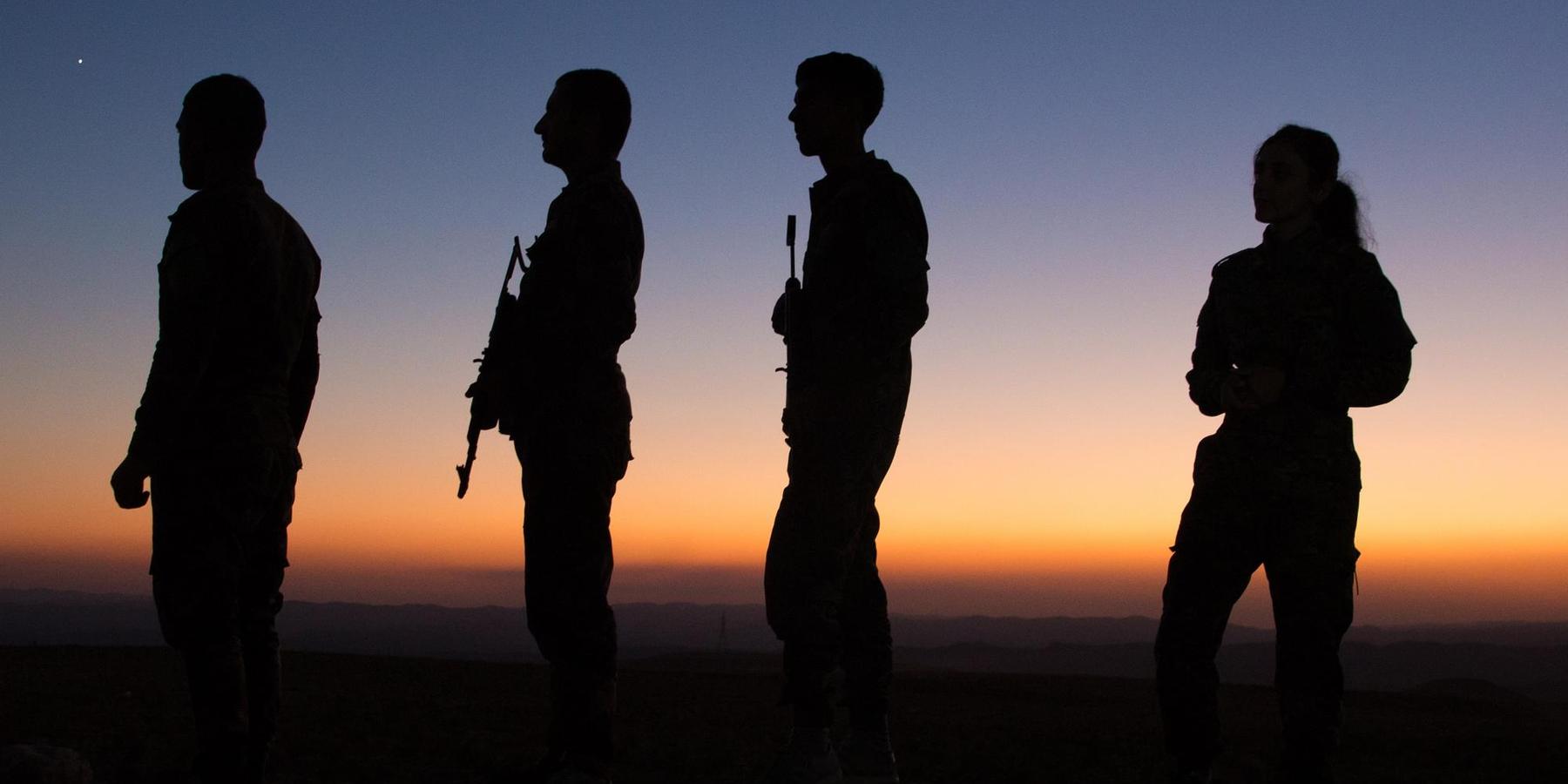
Reports indicate that Kurdish Iranian militant groups have launched an offensive against Iranian regime forces in the country’s northwest, allegedly with U.S. backing.
Kurdish groups have denied the reports. In a Washington Post story on Thursday, the White House confirmed calls with Kurdish leaders but did not say those discussions have progressed any further. Though one official, PUK leader Bafel Talabani, said, “Trump was clear in his call” on Sunday that "the Kurds must choose a side in this battle — either with America and Israel or with Iran.”
Kurds are one of Iran’s largest ethnic minorities and are concentrated along the country’s western frontier with Iraq and Turkey. During the 1979 revolution, many Kurds hoped the new Islamic Republic would grant some degree of regional autonomy. Disappointed by what they viewed as lack of recognition, several Kurdish parties soon clashed with the new state in an armed conflict that was ultimately suppressed, leaving Kurdish regions heavily securitized ever since.
The area returned to the global spotlight in 2022 after the death of Mahsa Amini, a 22-year-old Iranian woman of Kurdish background from Saqqez, who died in police custody after being detained by Iran’s morality police. Her death ignited nationwide protests that began in Kurdish regions and spread across Iran under the slogan “Woman, Life, Freedom,” gaining global recognition.
An ethnic-based insurgency, however, is unlikely to attract broad support across Iran’s population. It will also raise immediate alarm in Ankara. Turkey has long opposed U.S. cooperation with Kurdish armed groups in Syria and will certainly view the emergence of a U.S.-backed Kurdish militant foothold inside Iran with equal concern.
Many Kurds still remember that encouraging uprisings against Saddam Hussein in 1991, the United States ultimately stood aside as Saddam’s forces crushed Kurdish rebels. Washington’s recent decision to turn a blind eye as the new Syrian government moved to dismantle the de facto Kurdish autonomous zone in northeast Syria is largely viewed in a similar way.
Iranian Kurds may nevertheless forge ahead with an uprising if they view it as a fleeting opportunity.
This story has been updated
- First it was regime change, now they want to break Iran apart ›
- The cost of Trump's Iran war: $5 billion and counting ›
- With Washington's help, the Kurds are losing their grip in Syria ›
- Exclusive: Iraq’s First Lady says ‘This is not our war’ ›
- How decapitation could lead to 'dismembering' of the Iranian state ›