

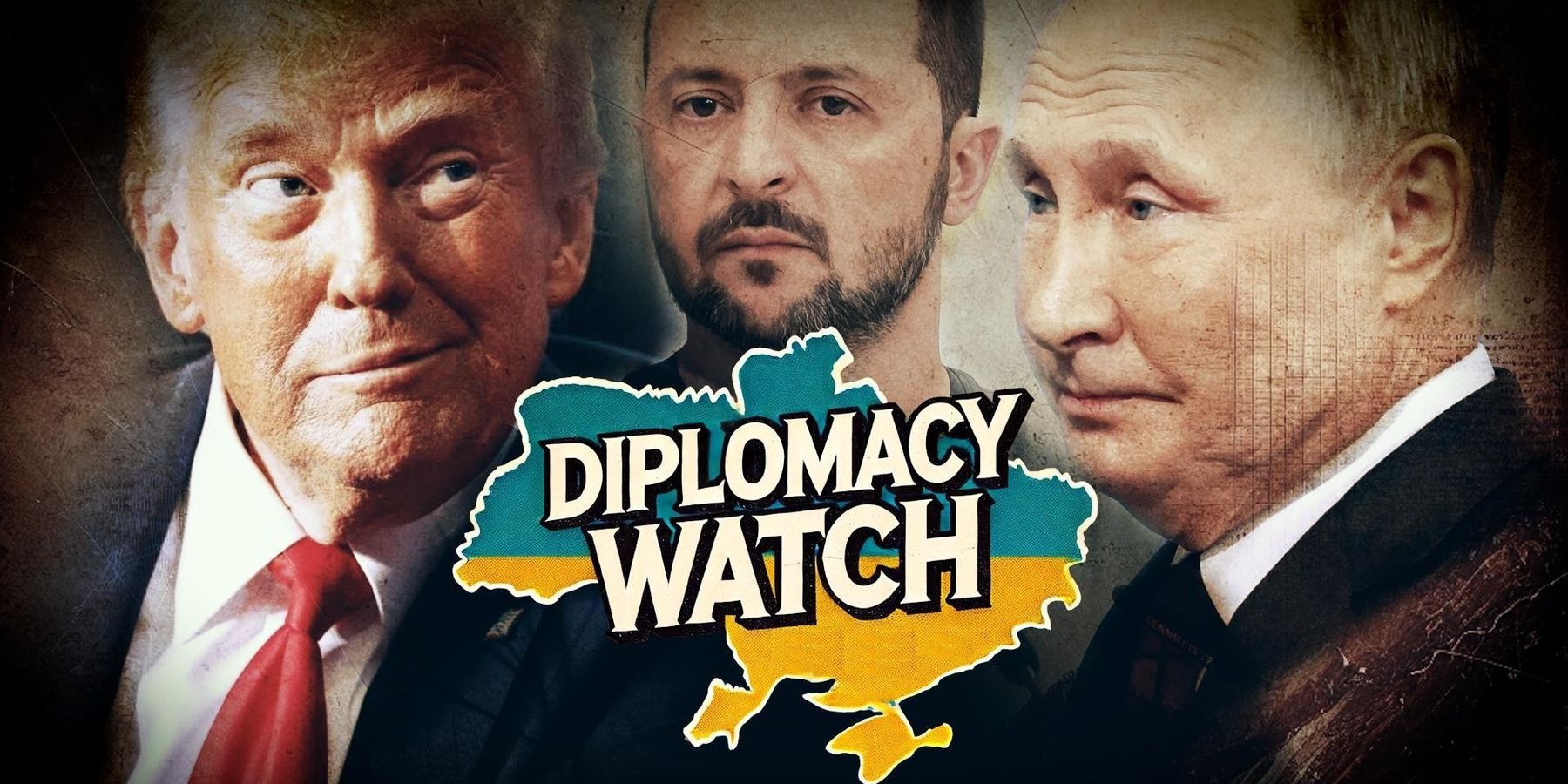
The highly anticipated peace talks in Turkey “descended into bluster and confusion,” “shambles,” and “a mess” according to reports, and were postponed until Friday, after envoys arrived but mostly used the media to vocalize frustrations with the process.
According to the New York Times on Thursday, the evening (Moscow time) ended without a meeting. Meanwhile, Ukrainian President Volodymyr Zelensky made the rounds in the press complaining that Russian President Vladimir Putin declined his offer for face-to-face talks and was instead sending his aide Vladimir Medinsky, who led the Istanbul talks in 2022.
Zelensky nonetheless called this “disrespectful” and Putin “unserious” — echoing Washington members of Congress speaking that day at the POLITICO Security Summit when he said new sanctions might be in order.
For his part, when it was clear there would be no Putin in attendance, Trump, too, decided to skip the meeting. "Look, nothing's going to happen until Putin and I get together. Okay?" Trump told a reporter regarding his no-show Thursday. "And obviously he wasn't going to go.”
"I don't believe anything's going to happen, whether you like it or not, until he and I get together, but we're going to have to get it solved because too many people are dying," Trump added.
Citing sources in Moscow, the Quincy Institute’s Mark Episkopos told RS that, whether deliberately or not, Zelensky was ignoring some important signals.
“The decision to send Mr. Medinsky is not, in itself, a gauge of the hopes Moscow vests in the upcoming talks. It is instead a symbolic and political signal that Russia seeks to pick up where the two sides left off at the end of the 2022 Istanbul talks,” he said. “This offers a window, albeit an opaque one in some ways, into Russian views on what a viable framework for war termination can look like.”
In other Ukraine war news this week
Al Jazeera reported that Poland closed Russia’s consulate in Krakow on Monday and summoned the Russian ambassador after an investigation found that Russian intelligence services had coordinated a shopping center fire in Warsaw in May of last year.
As per an agreement with the European Union, Denmark, according to Defense News, will give 830 million euro to Ukraine’s defense industry. “Denmark has taken the lead in the international efforts to strengthen defense production in Ukraine,” Denmark Minister of Defense Troels Lund Poulsen said of the measure. “It is a recognition of Denmark’s efforts on this matter that the EU has decided to channel even more funds through us this year.”
Europe approved its 17th round of sanctions on Russia on Wednesday, according to POLITICO, though the decision is still ultimately pending the approval of European defense and foreign ministers on May 20. Noting the preliminary approval of the sanctions on X, European Commission President Ursula von der Leyen said, “this war has to end. We will keep the pressure high on the Kremlin.”
President Biden's National Security Adviser Jake Sullivan, now a Harvard professor, took the opportunity Thursday, according to RS, to criticize Trump's diplomatic strategy in Ukraine, suggesting that Trump was playing him.
"And I said before I left office, 2025 should be a year of diplomacy, but that diplomacy should be standing behind Ukraine, imposing leverage on Russia and generating a good deal. And what worries me is that too frequently, over the course of the past 100 plus days, we've seen this administration take Russia's side of the issue and not use the pressure and leverage on Russia to improve the bargaining position of Ukraine," Sullivan said to his host at the above-mentioned POLITICO Summit.
"Mind you the Biden administration did not pursue direct negotiations with Russia or even bring Moscow and Kyiv together like Trump was able to do today in Turkey," wrote RS's Kelley Vlahos on Thursday. "Under Biden, the U.S. continued to fuel the war with increasingly sophisticated weapons (of which our own stockpiles are now low) and impose sanctions, both of which have done nothing to put Ukraine in a better negotiating position today."
Press remarks from U.S. Secretary of State Marco Rubio in Antalya, Turkey on May 15, 2025
“Someone from our team will be involved in the Russia talks. [Russia] sent a more, lower level group over here. I hope that those talks will be between Ukraine and Russia, with the Turkish counterparts in the room, along with someone from our team, or members of our team at the appropriate level,” Marco Rubio told press members present in Antalya, Turkey, on May 15, ahead of diplomatic talks to take place Friday.
“But I want to be frank…we don't have high expectations of what will happen tomorrow. And frankly, at this point, I think it's abundantly clear that the only way we're going to have a breakthrough here is between President Trump and President Putin. It is going to require that level of engagement to have a breakthrough in this matter. I don't think anything productive is actually going to happen from this point forward until they engage in a very frank and direct conversation, which I know President Trump is willing to do...Well, the President is impatient to end this war. He's impatient, as he's clearly said that something needs to happen soon. Too many people are dying. There's too much destruction, and I think he's ready to have that engagement and determine, once and for all, if there's a path forward, and what that path is.”
- Back to Istanbul! Key nodes for US-Russia-Ukraine talks ›
- Istanbul 2.0: Know when to hold 'em, know when to fold 'em ›