

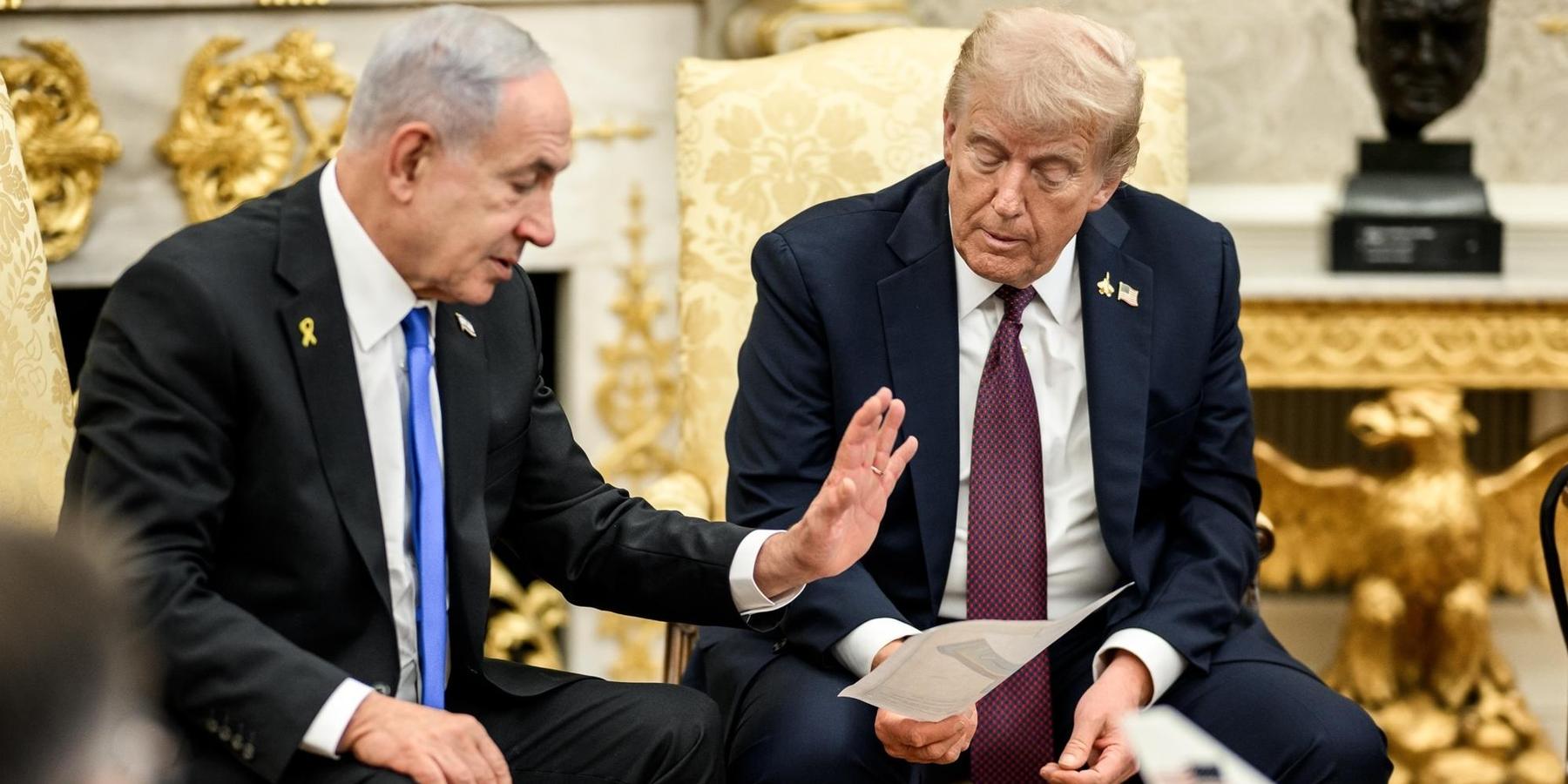
Just when a fragile glimmer of hope emerged in the Middle East, Israel has moved to extinguish it. By launching its largest wave of strikes in years against Beirut, the Bekaa Valley, and southern Lebanon — all Hezbollah’s strongholds — the Israeli government is undermining the Pakistan-brokered agreement between the U.S. and Iran that could pave the diplomatic path to end the war.
On April 7, President Donald Trump accepted Iran’s 10-point plan as a “workable” basis for negotiations with Tehran. The decision, which came shortly before his deadline for Iran to surrender or be destroyed as “a civilization,” reflects his desire to exit a war he started despite the reticence of his own army and intelligence.
Reading Trump’s self-inflicted conundrum correctly, Tehran has presented a wide-ranging list of demands, which included a comprehensive ceasefire on all fronts, including in Lebanon. Iran is driving a hard bargain not just because of its ideological commitment to the “Axis of Resistance,” but for two strategic reasons.
First, Israel has made a habit of violating ceasefires in both Gaza and Lebanon, with America’s complicity. Understandably, Iran wants guarantees that this will no longer be the case; otherwise it would likely be drawn into a direct conflict with Israel again.
Second, during the latest round of escalation, Hezbollah has proved to be a useful asset for Iran, attacking Israel from the north using capabilities that have proven to be far less degraded than the Israeli government claimed. In case there is no diplomatic agreement with Washington and the total war in the region restarts, Tehran wants to be able to count on Hezbollah as a capable asset on its side.
While Trump clearly referenced Iran’s plan, including the point on Lebanon/Israel, as a framework for negotiations, Israeli Prime Minister Benjamin Netanyahu said that the two week truce agreed by Washington and Tehran does not include Lebanon. (The White House added to the confusion Wednesday, saying that Lebanon is not part of the ceasefire.) For Netanyahu, this means, in effect, that Israel will take America’s diplomatic cover while reserving the right to escalate wherever it chooses.
And indeed, the morning after Trump’s announcement of a pause, the Israel Defense Forces (IDF) launched a new “Eternal Darkness” operation that killed hundreds in Lebanon. Iran responded that it will retaliate and withdraw from the truce if Israel doesn’t cease the strikes, putting pressure on Washington to rein in its junior partner.
Netanyahu’s true strategic aims remain unclear. He may well be taking his frustration out on Lebanon as a “consolation prize” for being left out of the U.S.-Iran diplomatic track. But can the operation succeed? While there is no doubt about the IDF’s operational prowess and Israel’s intelligence capabilities, continued bombings and assassinations of Hezbollah’s leaders have failed to defang the Lebanese group, and they now risk sabotaging the potential regional ceasefire.
This brings us to the conclusion that, for Netanyahu and his coalition, the forever war and escalation are in themselves the strategy. The longer the fighting goes on, the less likely he’ll be held accountable for his catastrophic miscalculations in Gaza, Lebanon and Iran.
Yair Golan, a former IDF deputy chief of staff, put it sharply in a Wednesday post on X: “Netanyahu promised a ‘historic victory’ and security for generations. In practice, Israel has suffered one of the most severe strategic failures it has ever known...An entire country in shelters. The IDF did its part with force and achieved results on the ground—but the Netanyahu-Smotrich-Ben Gvir government failed catastrophically in translating tactical gains into strategic victory.”
Golan further notes that none of the core goals were achieved: “The Iranian nuclear program was not destroyed. The ballistic missile threat remains. The regime in Tehran is not only still in place—it emerges from this war stronger than before. Iran holds enriched uranium, controls the Strait of Hormuz, and dictates the terms of engagement. And Israel, once again like in Gaza, is not in the room. Not deciding. Not influencing.”
Golan’s diagnosis is brutal and precise. This is not a “historic victory.” This is a total failure that endangers Israel’s security for years to come.
Worse, Netanyahu has jeopardized, perhaps fatally, Israel’s main asset: its alliance with the United States. New polling data should serve as an alarm bell for anyone in Washington still willing to condone Netanyahu’s escalations. Sixty percent of American adults now hold an unfavorable view of Israel — up from 53% last year and 42% in 2022. Even more striking is that, in both political parties, a majority of adults under age 50 view Israel negatively: 84% of Democrats and 57% of Republicans. America’s appetite for Middle Eastern wars has never been lower. The bipartisan consensus that once shielded Israeli governments from accountability is crumbling before our eyes.
These trends bode ill for Israel’s security in the long term. Even when the current war ends, it will have engendered a conviction in Tehran that the nuclear bomb is the ultimate deterrent against the future attacks — a determination Iran’s rulers had not yet made before the war. And Israel’s mindless provocations of Turkey, increasingly framed as “the new Iran,” might well push Ankara down the same path too. The nightmare scenario for Israel — facing an emboldened Iran and Turkey while America finally retreats from the Middle East — no longer looks too far-fetched in the long run.
The Trump administration’s apparent acceptance of Iran’s ten points as a basis for negotiations provides a chance to end the wars in the Middle East. For those talks to succeed, Washington is now bound to enforce a full ceasefire — and ensure that Israel does so as well. If the administration does not forcefully insist that the ceasefire applies to Lebanon as well, it will have surrendered this chance to Netanyahu’s political survival priorities. And it will do so against the backdrop of a rapidly shifting American public that no longer sees Israel as a victim, but instead as a driver of endless, unwinnable wars.
- A ceasefire on Iran's terms underscores war's strategic blunder ›
- Grief, anger, disbelief: War proponents lose it over ceasefire ›