

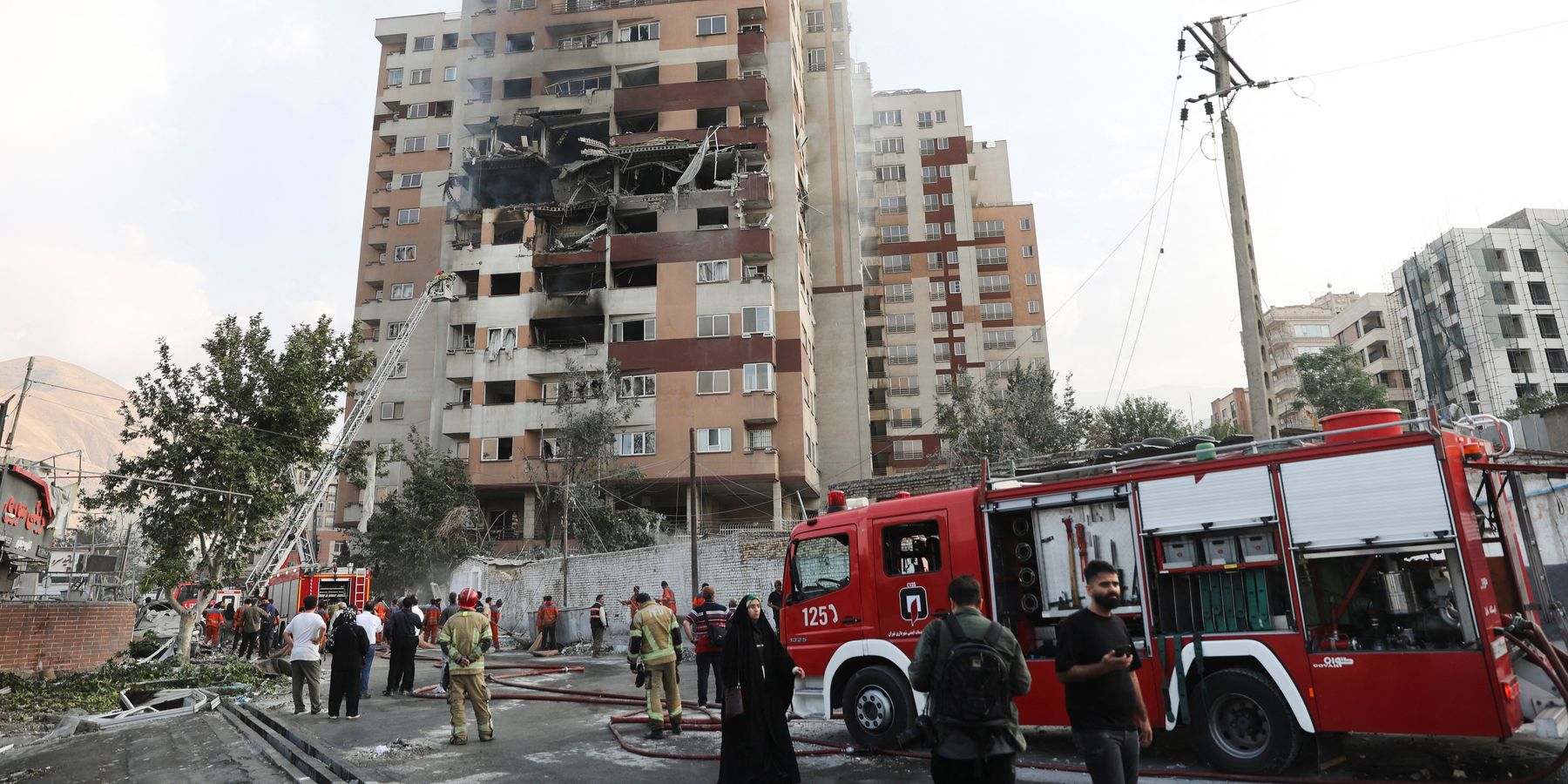
The Israeli attack on Iran is an act of naked aggression, in clear violation of international law as enshrined in the United Nations Charter and of anything that can labeled a rules-based international order.
The attack continues and expands Israel’s record of profligate use of military force throughout its region, including serial attacks on Syria, Lebanon, Yemen, and the Palestinian territories, including the devastation in the Gaza Strip that many informed and objective observers consider genocide. Israel has thrown its military weight around the Middle East far more than any other state and as such is the biggest destabilizing actor in the region.
The Israeli claim that its attack is “pre-emptive” is false. There was no indication of any imminent Iranian attack in the other direction. Nothing in press reporting or leaked intelligence suggested any such thing. Threats to initiate an attack, and associated inflammatory rhetoric, have for years come more from Israel than from Iran, whose own threats have uniformly been couched as warnings that Iran would respond vigorously if Israel attacked it.
Even the looser concept of a preventive war does not justify what Israel has done. The Iranian nuclear program has been the main focus, and Israel says its attack has hit, among other things, nuclear-related targets. But Iran demonstrated with its signature of the Joint Comprehensive Plan of Action, and adherence to it — until President Trump in his first term reneged on the agreement — that it was willing to close all paths to a possible Iranian nuclear weapon through peaceful diplomacy and strict international monitoring of its program.
As far as nuclear weapons are concerned, perspective comes from considering who is the attacker as well as who was attacked. Israel is generally understood to have long had the sole nuclear weapons in the Middle East. It acquired that nuclear force clandestinely, outside of any international control regime, and partly by stealing nuclear material from the United States.
And yet, part of its rationale for its aggression against Iran is the mere possibility that Iran might someday acquire a weapon that it has never had and that it has demonstrated the willingness to forego in exchange for normal commercial and political relations with other states.
The Israeli attack is in any case counterproductive as far as nuclear nonproliferation is concerned, as was true of an earlier instance of Israel attacking another state’s nuclear facility. The underground nature of key Iranian nuclear infrastructure, and the knowledge that Iranian scientists will retain, severely limit the extent to which any Israeli airstrikes will set back Iran’s program. Meanwhile, an armed attack by a foreign adversary strengthens whatever voices there are in Tehran arguing that Iran needs to develop a nuclear weapon as a deterrent.
As for ballistic missiles, which Israel also mentioned as a target, no case has been made that of all the armed forces in the Middle East, Iran’s should be the only one stripped of this capability. This is especially true considering that it is Israel that has the biggest capability to deliver lethal ordnance from the air at a distance.
Curbing Iranian military capability is not the sole or even the prime motivation for Benjamin Netanyahu’s government to attack Iran. Promoting maximum isolation and hatred of Iran has long been a principal Israeli foreign policy objective, in order to weaken a regional rival, distract attention from Israel’s own destabilizing actions, and prevent a rapprochement between Iran and Israel’s principal backer, the United States.
In furtherance of these objectives, Israel has opposed almost any diplomacy with Iran. Reducing the chance that current U.S.-Iranian negotiations will yield a new nuclear agreement certainly was an Israeli motivation behind the attack.
Netanyahu has additional motivations related to his need to keep a war going indefinitely to maintain his hard-right coalition in power and to delay fully facing corruption charges. With the slaughter in Gaza perhaps nearing a culmination point, beginning a new war against Iran appeared attractive to him.
Some press reports indicate Trump and his advisers knew the Israel attack was coming. In any event, there were enough indications of a coming attack that they should have known. The only appropriate U.S. response would have been to do everything possible to discourage the Israelis from attacking. We do not know that the administration did so.
Among the immediate consequences of the Israeli aggression is that people, including innocent people, will die, or have already been killed. More will die from the inevitable Iranian response. Despite recent efforts by the United States to reduce its vulnerability to a response by evacuating some personnel from the region, some of those killed or otherwise harmed are likely to be American.
In Tehran, the attack will play into the hands of Iranian hardliners, and there will some of the usual rally-round-the-flag effect. The prospects for success in the current nuclear negotiations have suffered a significant blow.
The risks of escalation into a wider war are significant. Some of the possible scenarios would involve U.S. forces.
Without a strong U.S. condemnation of the attack, the United States will share in the international opprobrium that Israel richly deserves.
- Update: US warnings, evacuations came only a day before attacks ›
- Pure Orwell: Europe condemns Iran for attacks on its own territory | Responsible Statecraft ›
- Iraq on razor's edge between Iran and US interests in new war | Responsible Statecraft ›