

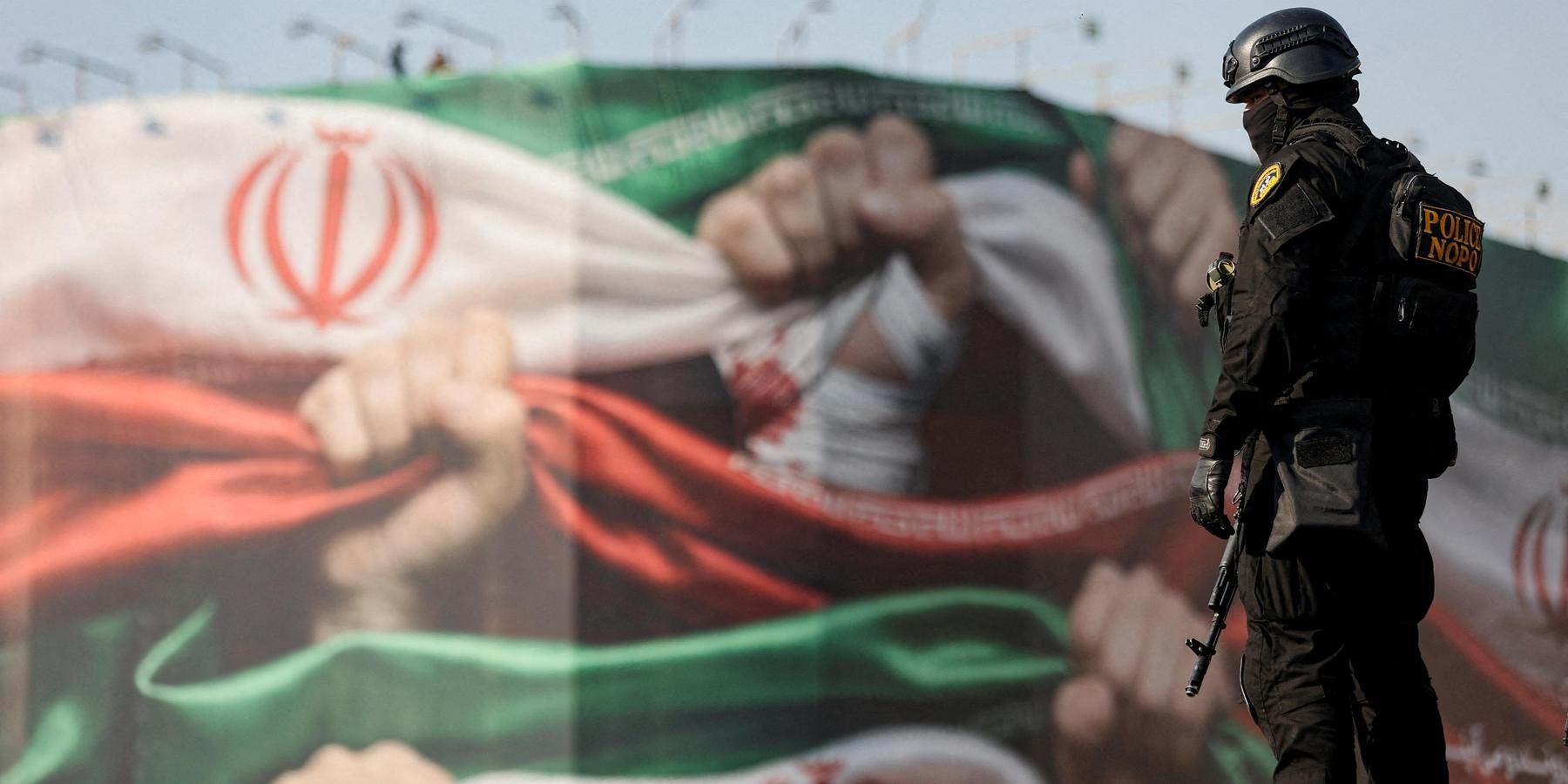
Political and economic protests have long been woven into Iran’s political fabric. From the Tobacco Movement of the 1890s which ultimately created the first democratic constitution in the Middle East, to labor strikes under the Pahlavi monarchy, to student activism and localized economic unrest in the Islamic Republic, street mobilization has repeatedly served as a vehicle for political expression.
What is new, however, is the increase in frequency, geographic spread, and persistence of protests since 2019, an episode which took the lives of more than 300 Iranians. That year marked a turning point, with nationwide anti-government demonstrations erupting across Iran in response to fuel price hikes, followed by repeated waves of unrest over economic hardship, and political repression.
This cycle reached its most visible and sustained form with the Mahsa Amini movement, which transformed a single act of state violence into a months-long national uprising, during which 551 people were killed and many others injured in the process, according to theUN Human Rights Council.
What distinguishes today's protests in Iran is their scale, acceleration and volatility, and the government’s unprecedented level of violence against its own citizens.
In late December 2025, shopkeepers in northern Tehran closed their stores in response to wild currency fluctuations and the rapid devaluation of the Iranian rial against the U.S. dollar. What began as an economic grievance quickly spilled into the streets, evolving into broader political demonstrations that targeted the core of the Islamic Republic itself, with protesters openly chanting anti-establishment slogans, demanding an end to the Islamic Republic.
The government, while initially displaying some level of restraint and acknowledging the people’s rights to protest, quickly resorted to brute force to quell the demonstrations. Reports indicate that hundreds of people — if not thousands — have been killed in the past few days. As of this writing the country is under a complete communications blackout with intermittent videos and reports getting out to the international audience.
At no point in the history of the Islamic Republic has confronted so many crises simultaneously. At home, Tehran faces a deep and widening popularity deficit. Iranian youth who have spent most of their lives under sanctions demand economic prosperity, personal freedom, and normalized relations with the outside world, goals that increasingly clash with the ideological foundations of the system. This disconnect is reflected not only in the change in culture and frequency of street protests, but also in steadily declining voter participation in national elections, where growing abstention has become a powerful signal of political disengagement and eroding legitimacy.
But beyond political acceptance, environmental and energy crises are also undermining the Islamic Republic’s legitimacy. Years of drought, declining groundwater levels, and mismanaged dam and irrigation projects have causedwater scarcity in major urban centers including the capital, Tehran. Additionally, despite possessing some of the world’s largest oil and gas reserves, Iran over the past few years has faced recurring electricity blackouts and gas shortages, particularly during peak summer and winter months further demonstrating the government’s inability to meet the needs of the population.
Overlaying these environmental and infrastructural failures is a prolonged economic crisis rooted in Western sanctions, structural distortion, and elite mismanagement. According to the Central Bank of Iran (CBI), the inflation has reached the unprecedented rate of 52%, and the Iranian currency between January 2025 and January 2026, depreciated by roughly 63 percent against the U.S. dollar on the open market, falling from around 890,000 rials per dollar in early 2025 to approximately 1.45 million rials by January 2026.
At the same time, the Islamic Republic’s long-standing external security narrative has shattered. The Islamic Republic can no longer claim that its massive investments in non-state actors, and foreign intervention has brought “security” for Iran. On the contrary, the terrorist attacks of October 7, 2023, set off a chain of regional events that not only deteriorated Iran’s region position, but for the first time since the end of Iran-Iraq war in 1988, brought conflict to the Iranian territory, manifested in the June 12-day war with Israel.
Notwithstanding these serious crises, the Islamic Republic retains coercive capacity, and its security forces have demonstrated their willingness and ability to suppress unrest. In the past few years, the security forces primarily consisted of Law Enforcement Forces (LEF) and plain clothes agents, have remained loyal to the regime and been carrying out their orders.
This stands in contrast to the Shah’s security forces who during the fateful months of 1978, not only refused to crackdown on their compatriots, but defected en masse, leaving only the officer corps of the army loyal to the monarchy. The Shah’s regime melted like snow, as one of the Shah’s generals put it.
Yet repression functions as a short-term tactic rather than a sustainable strategy. While the Islamic Republic has thus far managed to suppress protests through brute force and limited concessions, each crackdown deepens public alienation, fuels grievances, and lays the groundwork for future unrest.
Reform, meanwhile, carries its own risks: meaningful political or economic opening could weaken entrenched power centers and unsettle the regime’s delicate internal balance. The leadership thus finds itself caught between two unattractive options, unable to pursue either decisively. This dynamic helps explain why protests in Iran have become recurrent rather than exceptional. While protesters may differ in ideology, leadership, and end goals, they increasingly converge on a shared diagnosis: the Islamic Republic is incapable of addressing the problems it has helped create.
An important caveat must nevertheless be considered. Expectations of imminent regime collapse routinely overestimate protest capacity while underestimating the resilience of authoritarian systems. Although the current protests are unprecedented in scale and Iranians have displayed remarkable bravery, premature conclusions grounded in wishful thinking rarely survive empirical reality.
Born of a popular revolution and hardened in the crucible of the Iran-Iraq War, the regime — unlike the Shah’s, which remained sensitive to U.S. criticism — has demonstrated a far greater willingness to brutalize its own citizens to ensure survival. At the same time, equating repressive capacity with stability ignores the long-term corrosive effects of governance failure. The Islamic Republic occupies an uneasy middle ground: durable enough to absorb repeated shocks, yet increasingly brittle and less capable of offering meaningful solutions to the crises it faces.
As of this writing, the Islamic Republic is not on the brink of collapse. Yet it is moving down a one-way road, in which each unresolved crisis further narrows the space for meaningful course correction. The protest cycles of recent years are not aberrations, but symptoms of a governing system that retains the capacity to suppress dissent while steadily losing the ability to govern convincingly.
Ultimately, the trajectory of unrest in Iran will be determined on the ground — by the balance between the state’s willingness and ability to deploy coercive force and protesters’ capacity to sustain mobilization, impose political costs, and challenge authority.
The Islamic Republic will likely succeed in quashing this most recent battle with protestors, , but will ultimately lose the war to its people.
- ‘Locked and loaded’: Trump threatens to attack Iran ›
- As Tehran cracks down, Trump’s likely instincts are to stay out ›