

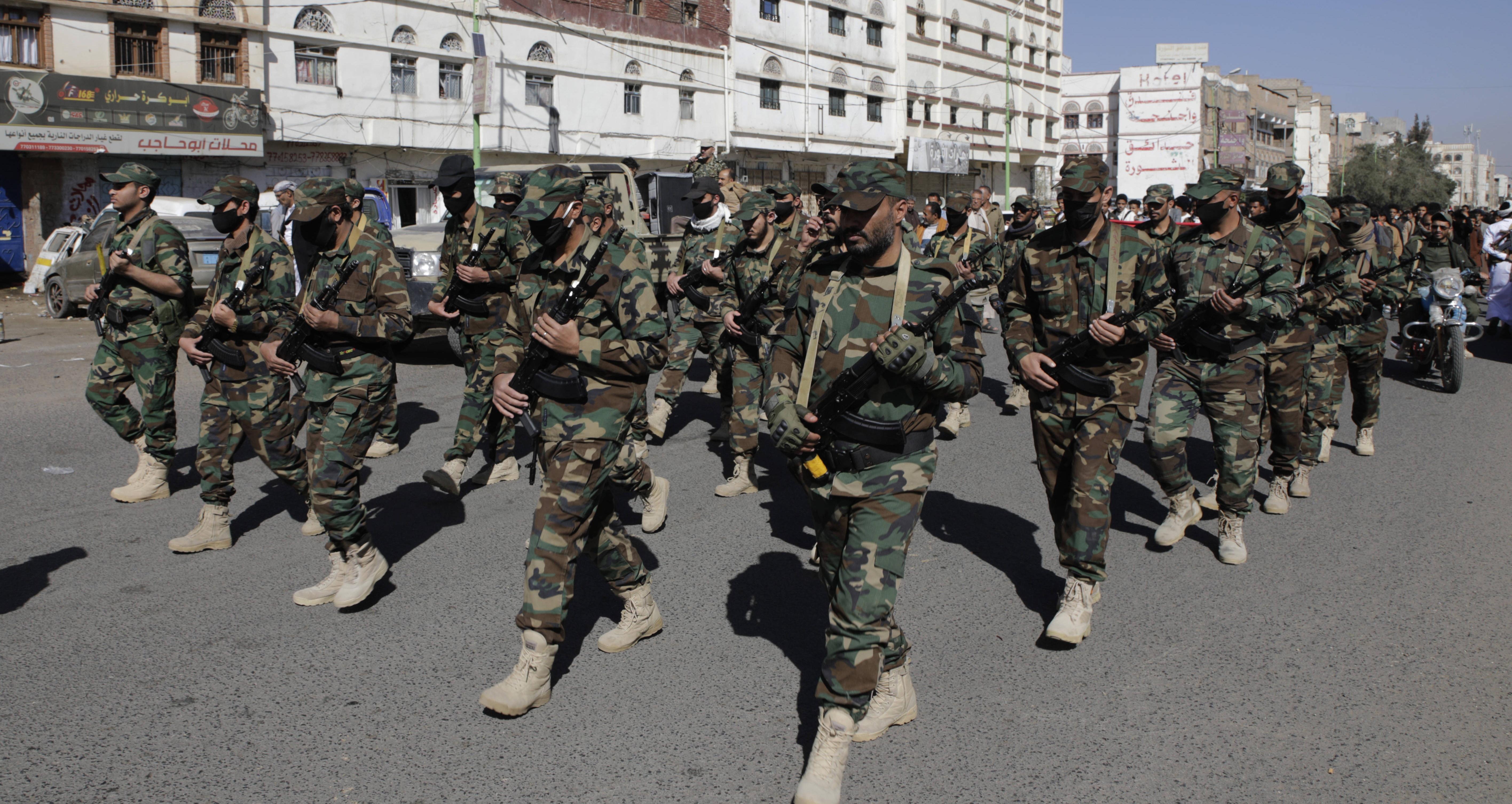
From northern Yemen, the Houthis are making clear that they are prepared for a new round of fighting, whether with the U.S. or Israel. From Iran, the message is being delivered that when, not if, American troops occupy any part of Iranian soil, the Houthis will enter the war.
The Houthi-led Ansarullah movement emerged from the last round of fighting battered, but very much unbowed. Their ceasefire with the U.S. in May 2025 stopped further Houthi attacks on Red Sea shipping and U.S.-U.K. attacks on northern Yemen. Periodic Houthi and Israeli military exchanges continued until October 2025, when an Israel-Hamas ceasefire was agreed regarding Gaza.
If the expected escalation of the U.S.-Israeli war on Iran involves U.S. marines taking Kharg Island in the Persian Gulf, then the countdown to a renewed war in the Red Sea will have begun. A senior figure close to Tehran commented in a private meeting involving the author that the arrival of American ground troops on Iranian territory would lead the Houthis to enter the war against the U.S. and Israel.
Inside northern Yemen, the regime and the people assume this is almost inevitable. A senior Ansarullah figure said March 26 that the Houthis’ armed forces were standing by. Should Iran’s military prospects in the war be set back, then Ansarullah will enter the fight.
An analyst close to Ansarullah told RS that the movement’s involvement in the Gaza War “succeeded” in its war aims. Furthermore, a greater number of missiles and drones with better accuracy than before are, he claimed, now in Houthi hands. Iranian resupply is not a determining factor in the movement’s ability to defend itself, now or in the future, he argues.
But this horizontal expansion of the war may not be one that his party, Ansarullah, or its Iranian backers, chooses.
A member of the Republic of Yemen’s upper legislative chamber, Lutfi Noaman, told me separately that Israel might bring the war to Yemen in response to any action against them by the Houthis, much as the Iranian-backed Hezbollah prompted attacks in Lebanon, where Israel is once again seeking Hezbollah’s destruction, having continued to seek the elimination of Hamas in Gaza.
However, Abdul-Malik Al-Houthi, Ansarullah’s leader running the Yemeni capital of Sanaa and much of the rest of northern Yemen, is signaling that what he cares about most is money. Fifty-seven billion dollars, in fact.
Not for the first time, the Ansarullah leadership are seeking to leverage their armed capacity in exchange for cash. A March 26 detailed listing of war-related losses provides an accounting for billions of dollars in reparations being sought from Saudi Arabia, the regional leader of the anti-Ansarullah military coalition.
The Yemeni economy is still struggling under sanctions despite the hoped for outcome of the internal Yemeni truce of 2022. It is unlikely that the Saudis would deliver such a huge amount of money to dissuade the Houthis from resuming the Red Sea war, however. Houthi opponents stress that Riyadh’s “salary” transfers to Sanaa have yet to actually reach the pockets of often desperate northern Yemeni government workers.
Saudi Arabia, for its part, wants the U.S. and Israel to finish the job they started in Iran. President Donald Trump may have other ideas, as rumours swirl of a possible deal that might see the U.S. cease its current level of military operation, but leave Israel, and thus the Gulf Arabs, still very much engaged.
Riyadh will not want the war’s possible next phase to be at its south-western border. Maintaining its working relations with the Houthis cannot just be bought, and can easily be destroyed if President Trump successfully pressures Gulf Arab states to directly join the fight against Iran. The Houthis could then resume missile strikes on Saudi Arabia and the United Arab Emirates, as well as taking the fight to the U.S. and Israel by attacking “allied” shipping in the Red Sea.
The Ansarullah-related analyst I spoke to assumes that Riyadh will want to avoid being seen as ”clearly” participating in the war. Iran, he says, has suffered from the Gulf Arabs’ deep enmity since 1979, and the Gulf Arabs know that Iran “would destroy everything” on the opposite side of the Gulf if they joined the U.S.-Israeli war.
The expected intervention of a different third party to the war — European forces mobilized against Iran ostensibly in defense of international sea lanes through either the Strait of Hormuz or the Bab Al-Mandab — could also lead the Houthis to step into the conflict. The analyst close to Ansarullah said that if, for example, Sanaa came to view the French military as fighting with the U.S. and Israel against Iran, then this would encourage the Houthis to prevent any French naval passage through the Bab Al-Mandab.
Should the U.S. be the ones to bring the war to northern Yemen by seeking to take control of the Bab Al-Mandab waterway, including possibly using Perm (Mayyun) island, then the Houthis would see themselves as under direct threat. A strategic fear of an Iranian throat-hold on two major global trade routes, if the Houthis resumed their operations in the Bab Al-Mandab, could see a pre-emptive US or Israeli action to secure it.
For now, the Houthis are watching and waiting. The Houthis’ capabilities to join Iran’s maritime interdiction are not up to those of Tehran’s asymmetric naval forces, but they proved in the Gaza War that they do not need to do that much to shut down a lot of Red Sea trade and to the detriment of all littoral states, including Saudi Arabia and Israel.
The Houthis, however, are neither reckless nor immune to the benefits of continuing their tense but manageable relations with neighbouring Saudi Arabia. Riyadh, says the Ansarullah-allied analyst, is now their only Gulf Arab adversary, after Emirati-backed southern Yemeni separatists were heavily constrained by Saudi-organized Yemeni forces from December 2025-January 2026. In theory that could make the Houthis more vulnerable inside Yemen. However, Ansarullah do not feel under any major threat from the Saudi-backed Yemenis organized as the so-called Legitimate Government of Yemen and operating from the southern port city of Aden, and still to an extent from Riyadh itself.
The Houthis would not undertake an unforced entry into the war lightly. However, the fact that the Lebanese and Iraqi theaters are both live again, much more so than in the regional war sparked in October 2023, makes a possible call to mobilize from northern Yemen in defence of “the Islamic nation” impossible to ignore.