

For years, the European Union’s policy on Israeli occupation has been a masterclass in deflection: statements expressing half-hearted concern paired with diplomatic and commercial business as usual. So when EU foreign ministers finally gave the go-ahead to sanction some Israeli settlers last week, it may have looked like Brussels has finally grown some backbone.
The move includes sanctions against Amana, which the Israeli group Peace Now calls one of the most powerful settler organizations. The list also includes HaShomer Yosh, Regavim and Nachala for their role in promoting violence and dispossession of the Palestinians. The restrictions involve travel bans, asset freezes and the prohibition for the designated individuals and organizations from accessing financial institutions under EU jurisdiction.
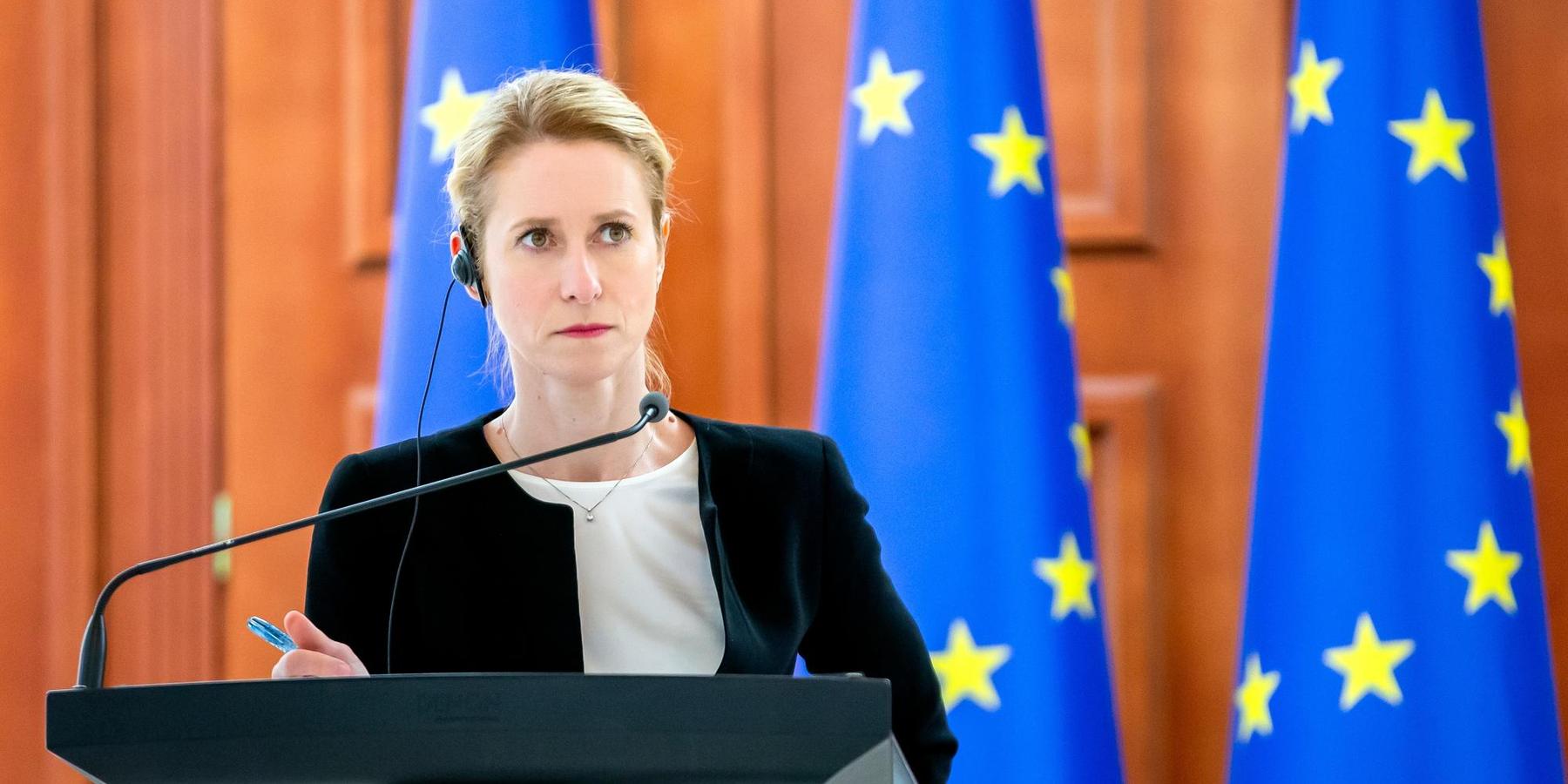
Presenting the decision, the EU’s High Representative for foreign policy, Kaja Kallas, said it was “high time we move from deadlock to delivery. Extremisms and violence carry consequences.”
Israeli reaction to the EU decision was swift and furious: Prime Minister Benjamin Netanyahu slammed the EU’s “moral bankruptcy” as “Israel and the U.S. are doing Europe’s dirty work by fighting for civilization against jihadist lunatics in Iran and elsewhere.” His foreign minister Gideon Sa’ar called the move “arbitrary and political, and without any basis.”
The decision is indeed novel. The breakthrough was enabled by a quiet but significant political shift, specifically, the change of government in Hungary, which lifted its longstanding veto. Contrary to speculation ahead of the move, Israel’s other EU allies, such as the Czech Republic or Germany, did not step up to block the measure.
But celebrating this as a turning point would be disproportionate and premature. The bigger picture remains as grim as it has been since October 2023 — and indeed, since long before.
The uncomfortable truth about the EU’s action is this: the ministers slapped symbolic sanctions on a microscopic fraction of the settler community. There are around 500,000 of them on the occupied West Bank and another 233,600 in East Jerusalem, according to U.N. estimates.
European trade policies continue to bankroll the settler project. The bloc still refuses to suspend the EU-Israel Association Agreement. That, despite the fact that its own diplomatic arm — the Kallas-led European External Action Service — has ruled that Israel is in breach of the agreement’s human rights clause. Spain, Ireland and Slovenia have officially demanded the suspension of the deal on these grounds, only to be outvoted by the EU’s big powers, including Germany and Italy.
Moreover, the EU still refuses to ban trade with Israeli settlements in the occupied West Bank, despite the clear opinion from the International Court of Justice that states must not recognize or render aid to the illegal occupation.
Specifically, the ruling states that member countries should “abstain from entering into economic and trade relations with Israel concerning the Occupied Palestinian Territory” and “take steps to prevent trade or investment relations that assist in the maintenance of the illegal situation created by Israel in the Occupied Palestinian Territory.”
That’s not an ambiguous injunction. For an entity that prides itself on upholding international law, it is a clear call for action. Absent such action, the conclusion is all too obvious: the EU is simultaneously sanctioning a few violent settlers while actively enabling the economic viability, expansion, and land grabs of the ever-growing Israeli population in the Occupied Territories.
Consider the geography of this complicity. The West Bank is home to three million Palestinians and roughly 500,000 Israeli settlers. But that statistic hides a brutal reality: according to research by the International Crisis Group (ICG), 85% of Palestinians are crowded into just 40% of the land, which is now divided into isolated, Bantustan-like “islands.” The settlements are not just multiplying; they are strategically carving up Palestinian territories to preclude any possibility of a viable Palestinian state in the future.
What has changed under the current Israeli government — a coalition that includes extremist religious Zionist parties — is the sheer pace of land grabbing. According to the ICG, during the past four years alone, the authorities have established 102 new settlements and outposts, nearly as many as were built in the previous 50 years combined. This is not an incremental creep; it is an accelerating de facto annexation.
By refusing to impose meaningful consequences for this activity, the EU acts as a direct and knowing enabler. The entities and individuals targeted by the EU’s latest measures are inseparable from the wider settlement enterprise that still enjoys full European trade privileges.
Reacting to the EU’s announcement, the Left Group in the European Parliament called these sanctions the “bare minimum” and “a pitiful fraction of what is required.” The faction’s spokeswoman on the matter, Lynn Boylan from Ireland, insisted the EU needed “a Union-wide ban on illegal settlement goods, suspension of the EU-Israel Association Agreement and a two-way embargo.”
Going forward, the full suspension of the association agreement with Israel, as proposed by Spain, Ireland and Slovenia and thwarted by Germany and Italy, has been indefinitely shelved. An EU-wide arms embargo is also unrealistic; decisions about the arms trade are considered the domain of individual member states, and it’s inconceivable that Germany or the Czech Republic would follow Spain’s example in this area.
That makes the ban on trade with illegal settlements the most likely next battlefield. It doesn’t look hopeless. France, Sweden and the Netherlands are already backing restrictions to such trade. Opposition parties in Italy, meanwhile, launched a bill to stop the import of goods and services from the settlements.
Such demands are only likely to grow in other member states and parts of the EU bureaucracy proper. It shows that the sanctioning of the handful of settlers is not going to dampen the momentum for greater scrutiny and accountability. In response to the mounting pressure, the EU Commission recently said that it “neither commits nor refuses to present a proposal to ban trade with Israeli settlements, as some countries have demanded.”
That is still woefully inadequate, but it doesn’t close the door to a belated action, and it does recognize the widening demand for it. And it certainly doesn’t prevent the commission from moving to suspend the trade related aspects of the association agreement with Israel too.
Until the EU is willing to impose costs on the settlement enterprise as a whole, its sanctions will look less like a principled stand and more like an exercise in political damage control.