

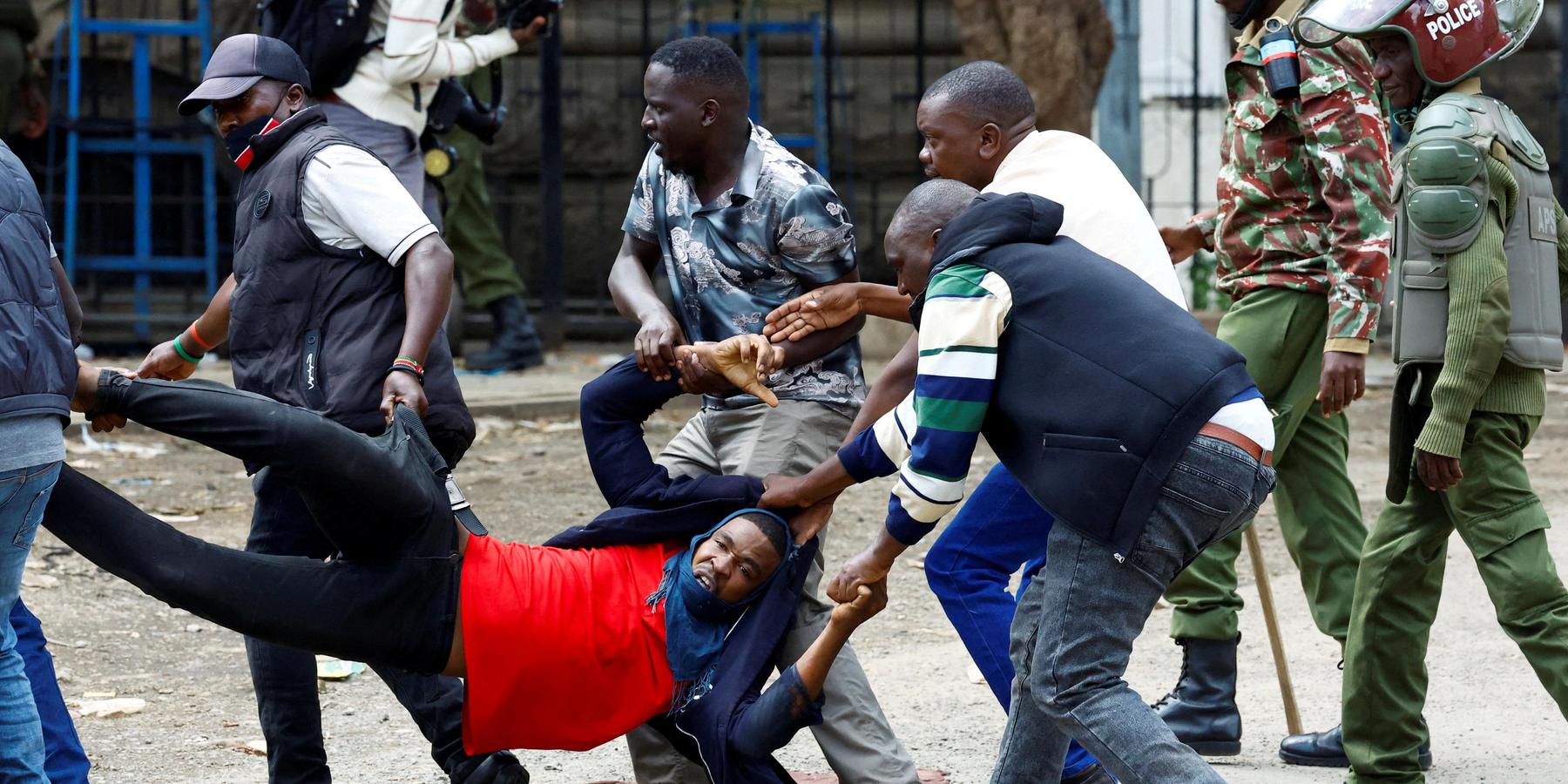
Beginning last week, waves of protesters taking part in nation-wide strikes gathered on the streets of Nairobi to demand the Ministry of Energy and Petroleum reduce its state-controlled fuel price.
What initially began as a labor initiative soon grew into violent demonstrations, pitting thousands of protesters against Kenyan police officers, who fired live ammunition on demonstrators, killing four and injuring more than 30 others.
What was at the root of the fury? Escalating diesel prices due to the U.S-Israel war with Iran and the closure of the Hormuz Strait in the Persian Gulf.
The economies of African countries have been among the most severely impacted by rising energy costs. But what was for months a mere economic problem for countries looking to contain the inflationary fallout from the war is now turning into a political headache for governments forced to contend with labor strikes and mass protests.
Kenya has seen perhaps the greatest manifestation of this trend.
On Friday, the union announced that strikes would end following successful negotiations with the government in which Kenyan President William Ruto agreed to reduce the country’s diesel price in June. But gasoline prices are likely to remain higher than the public would like because the government stood firm against lowering fuel taxes further, saying that its April decision to reduce its value-added tax on fuel from 16% to 8% had negatively impacted government revenue, risking the survival of important social services.
Similar protests have also taken over Mozambique. Following a 46% increase in diesel prices in the country since the start of the war, private minibus drivers in the country’s capital city of Maputo went on strike, bringing to a halt much of the city’s public transportation system. These striking workers demanded that the national government take action to reduce the country’s high fuel prices, which have dented their profit margins.
In Comoros, an east African island nation off the coast of Mozambique, protests also erupted in recent days against the country’s heightened fuel prices. Demonstrations began following a meeting between a town mayor and a union representing some of the country’s fishermen. The fishermen’s union joined with the merchants’ union to protest increased fuel prices after the government announced that it was increasing diesel prices by 46% and gasoline by 35%.
Following several days of violent demonstrations in which one person died and five others were injured, the government agreed to suspend a planned increase of its fuel price for June.
Across Africa, the economic toll from inflationary prices is manifesting itself in political turmoil. Part of the problem facing African governments stems from the fact that many of them have direct or indirect control over the country’s fuel prices. While it’s common for African governments to heavily subsidize the fuel industry in their respective countries, some also have direct control over the price of gasoline and diesel people pay at the pump, which they generally change once per month.
This power to set fuel prices is a double-edged sword. On the positive side, African countries have more direct control over fuel prices, which can shield them from market forces to some extent.
But in severe crises such as this one, when market pressures far outweigh the ability of governments to subsidize or otherwise support the local fuel industry without making huge financial tradeoffs, governments are forced to raise fuel prices substantially. This makes state actors easy targets to be blamed for rising fuel costs, despite the fact that African governments themselves have practically no impact on global energy prices and are simply responding to the economic demands placed on them by the supply crunch.
That supply crunch is due to the fact that, although some African countries have strong commodity reserves of energy inputs — such as crude and natural gas — Africa has very limited local refining capacity, which restricts its ability to downstream the local commodities it has on hand to generate local jobs. They therefore export unrefined commodities and import finished products. This leaves them at the mercy of international market disruptions and steep price increases.
While mass demonstrations have been contained to just a handful of African countries thus far, the entire continent is reeling from this current crisis. Egypt has dimmed street lights and billboards across Cairo in an effort to save fuel. Meanwhile, the city of Soweto in South Africa has shut down schools because buses lack the fuel needed to transport children.
Somali fishing vessels are docked en masse at port, unable to go out to sea due to a lack of affordable diesel. And even in Nigeria, which is one of the few African countries with major refining capacity thanks to its Dangote refinery, fuel prices have increased substantially due to the global pressure on prices stemming from the war.
Unless a flood of fuel hits the market soon, it’s likely that demonstrations such as the ones seen in Kenya, Mozambique, and Comoros will spread to other corners of the continent. The infrastructure damage to energy transportation routes throughout the Gulf suggests that such a flood won’t come soon.
While the United States is mostly shielded from the most intense political and economic consequences of the war, the situation in Africa shows the extent to which other regions are feeling immense stress in economic, political, and social quarters from the war’s inflationary pressures.
Washington’s foreign and defense policy is smacking square against the wellbeing of Global South states looking to provide for their citizens. All of this lends itself to a view increasingly held throughout the Global South — that the United States, which waged a reckless unprovoked war against Iran, cannot be trusted as a leader nor partner on the world stage.- More Iran war? There goes the neighborhood, and global economy. ›
- Vastly dependent on imports, Africans scramble amid oil crisis ›