

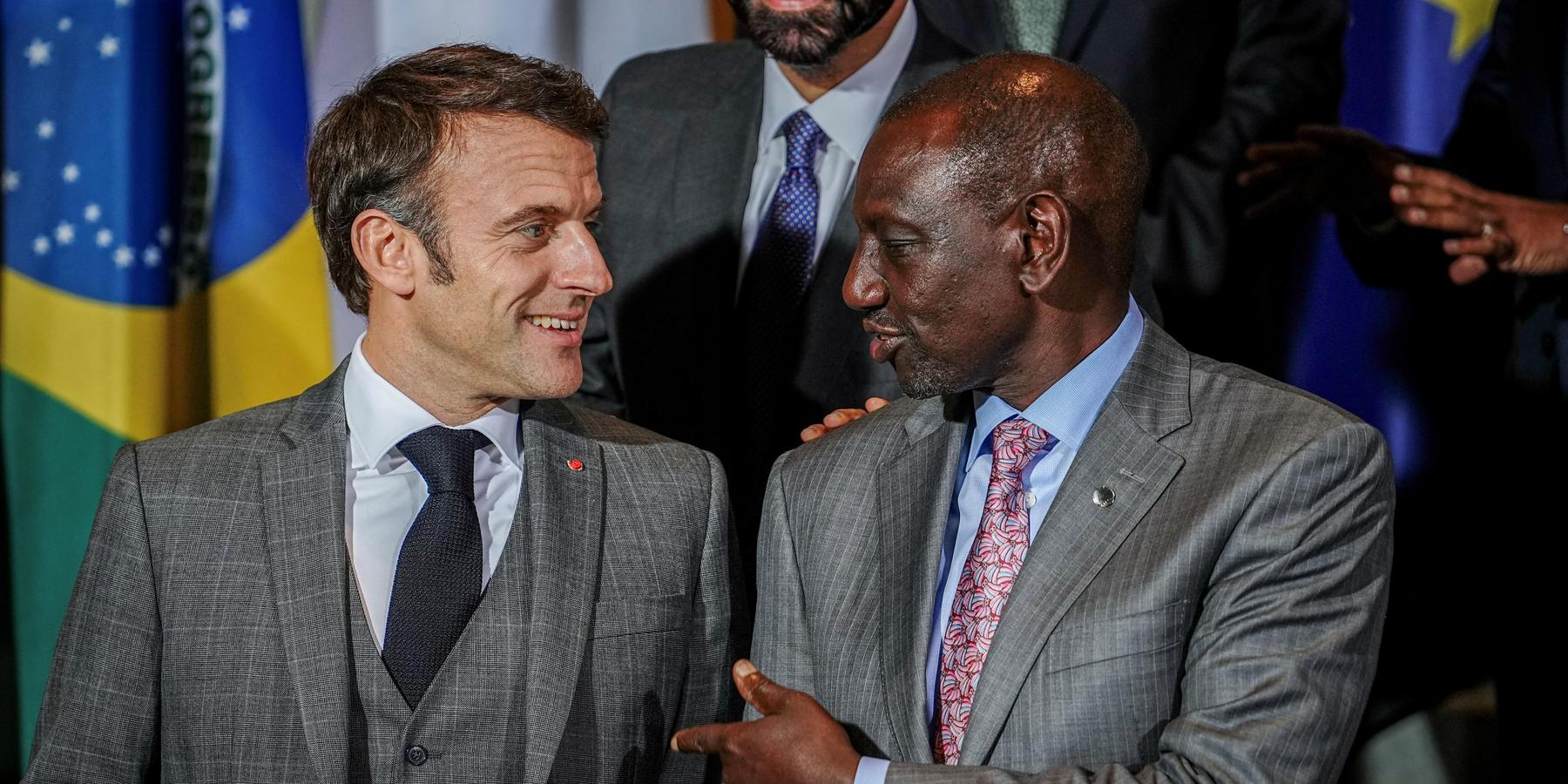
As the Kenyan people grapple with skyrocketing fuel costs precipitated by the U.S.-Israel war on Iran, their leaders are preoccupied with road and infrastructure upgrades as they prepare to host the Africa-France Summit next week. This high-level gathering marks the first time that the summit will be held in a non-Francophone, English-speaking African nation since its inception in 1973.
The summit comes on the heels of a controversial new France-Kenya defense cooperation agreement, and of the arrival of 800 French soldiers in the Kenyan port city of Mombasa for joint training exercises. These developments signal a major shift in French foreign policy toward Africa, primarily shaped by France’s humiliating exit from West Africa and the Sahel in recent years.
Beginning in 2020, a wave of military coups in Mali, Burkina Faso, and Niger brought new leaders to power. Bolstered by popular anti-colonial sentiment and denunciation of the French military’s meddling in the region, these leaders demanded the withdrawal of French troops from their territories. Senegal, Chad, and the Ivory Coast soon followed suit, making similar demands.
Calls for meaningful sovereignty precipitated a broader decline of Western influence in the region: in 2024, the government of Niger revoked the status of forces agreement with the United States, leading to the withdrawal of U.S. troops. This was a significant setback for the U.S., which had invested roughly $280 million in an air base near the town of Agadez that was integral to U.S. counter-terrorism operations in the Sahel.
In contrast to many West African leaders, the Kenyan government has long prided itself on being a chosen security partner of Euro-American states, particularly since the onset of the so-called “War on Terror.” It is among the top recipients of U.S. security assistance on the continent and hosts British and American troops on its soil. While Djibouti remains home to AFRICOM’s largest troop presence in Africa, Kenya hosts four U.S. bases, including “cooperative security locations” in Mombasa and Manda Bay, the latter of which serves as a launch pad for U.S. drone strikes in Somalia and Yemen.
More recently, Kenya led a U.S.-backed multinational police operation in Haiti and agreed to join Operation Prosperity Guardian, the Biden administration’s attempt to stop Yemen’s Houthis from attacking ships in the Red Sea. In a reflection of Kenya’s growing strategic relevance to the U.S. and NATO, President Joe Biden announced during a May 2024 state visit by President William Ruto that Kenya had been designated a major non-NATO ally — making it the third (and only sub-Saharan) African state to receive such a designation, alongside Tunisia and Egypt.
Diplomatic ties remain strong under Trump. The State Department recently provided over $70 million for a runway expansion at the Manda Bay Air Base. And, during a March phone call, Secretary of State Marco Rubio thanked Ruto for publicly condemning Iranian strikes against the Gulf states and for Kenya’s “significant contributions to peace and security in Haiti.”
With these credentials, it is not surprising that French President Emmanuel Macron has set his sights on Kenya. Macron has even invited Ruto to the G7 summit in France this June, while excluding South African President Cyril Ramaphosa — reportedly in response to pressure from Trump.
France’s pivot to East Africa is designed to distance itself from a region haunted by its violent colonial past, and to reset its relationship to the continent. Given Kenya’s strategic location along the Indian Ocean, French calculations are equally informed by growing concerns about global supply chains and maritime security. The shift is thus driven as much by economic motivations as it is by defense and security. France has reportedly offered business deals, investments and new partnership agreements to invitees of the Africa France Summit in Nairobi.
Kenyan officials say the five-year France-Kenya defense pact is designed to “enhance Kenya’s defense capacity through access to French training, technology, and expertise” in maritime security, intelligence exchange, and disaster relief, among other things. They argue that it will improve coordination, particularly in the domain of regional maritime governance and surveillance systems across the Western Indian Ocean, thereby reinforcing Kenya’s standing as a regional security anchor. The agreement is automatically renewable for an additional five years, meaning that it is ultimately a 10-year deal.
Much like the British and Americans, the French frame their role in the language of partnership and support, thereby obscuring the power inequalities that continue to structure political-economic relationships between the Global North and South. In practice, as political scientist Amy Niang has observed, France is “neither ready nor willing to deal with its former African colonies on equal footing.” Although Kenya is not a former French colony, the terms of its five-year agreement with France share the same paternalistic characteristics of earlier arrangements with West African states.
Ruto may be willing to host France in exchange for security assistance and international recognition, but his actions have prompted questions about neo-colonial arrangements that privilege France’s political-economic interests. In West Africa, similar deals entailed partnering with compliant regimes that facilitated access to strategic resources and managed dissent — with force if necessary. Whether we take France’s track record in West Africa or the U.S. and U.K.’s track record in Kenya, where Kenyan Muslims have been the target of extrajudicial killings and disappearances by U.S.- and U.K.-backed anti-terror police, Western powers have long prioritized military solutions over the rights and socio-economic needs of the people on whose territory they operate.
Kenyan lawmakers have expressed concerns about national sovereignty, noting that the defense agreement provides French troops immunity from prosecution in Kenyan courts. These concerns are informed by the 2012 murder of Agnes Wanjiru, who was last seen in the company of a British soldier stationed in Nanyuki, where community members have long complained of gross misconduct and environmental harm by British troops. The soldier is yet to be tried despite requests for his extradition to Kenya, accentuating Kenyan frustrations about the power inequalities at play.
In the words of Evans Ogada, a professor of international law and human rights, “Shielding foreign soldiers from prosecution presents the perennial challenge of uneven treaties for Kenya and Africa in general. We are forced to accept terms that are difficult and to our disadvantage.”
President Ruto has chosen to welcome the very forces that his counterparts in West Africa denounced and expelled from their territory. This confirms the Kenyan state’s opportunistic embrace of bilateralism and transactionalism at the expense of a Pan-African orientation that prioritizes collective bargaining in the face of pressure from global powers.
But it is only a matter of time before Ruto’s actions spark popular debate and resistance, as Kenyans wrestle with the implications of the French agreement. The pushback is unlikely to be limited to Kenya’s alignment with France alone, as many insist that it is time for Kenyans to challenge the presence of foreign troops altogether.
- Boycott of G20 is shortsighted and hurts US just as much ›
- How a shake-up in Senegal could strengthen Trump's hand in the Sahel | Responsible Statecraft ›