Syrian President Bashar Al-Assad has put restoration of control of all of Syria at the core of efforts to manage multiple Middle Eastern rivalries that often play out in his war-ravaged country.
Assad’s demand means different things to different parties.
For a group of Arab countries led by Saudi Arabia and the United Arab Emirates, it means returning Syria to the Arab fold as part of a bid to dial back Iranian influence, reduce drug smuggling, and return Syrian refugees and internally displaced persons to their homes.
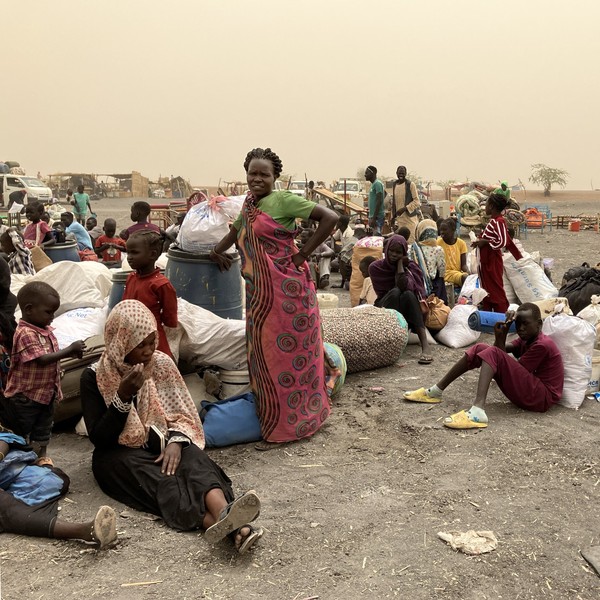
At least seven million people have fled Syria or been internally displaced since Assad sparked a civil war with his brutal crackdown in 2011 on anti-government protesters.
In response, the 22-member Arab League suspended Syria’s membership.
Assad's unwillingness to compromise on restoring his control has convinced some Arab countries that treating him as a pariah has failed to produce the desired results.
As a result, Jordan, Egypt, and Iraq joined the UAE and Saudi Arabia in engaging with Assad without holding him accountable for his conduct in the civil war.
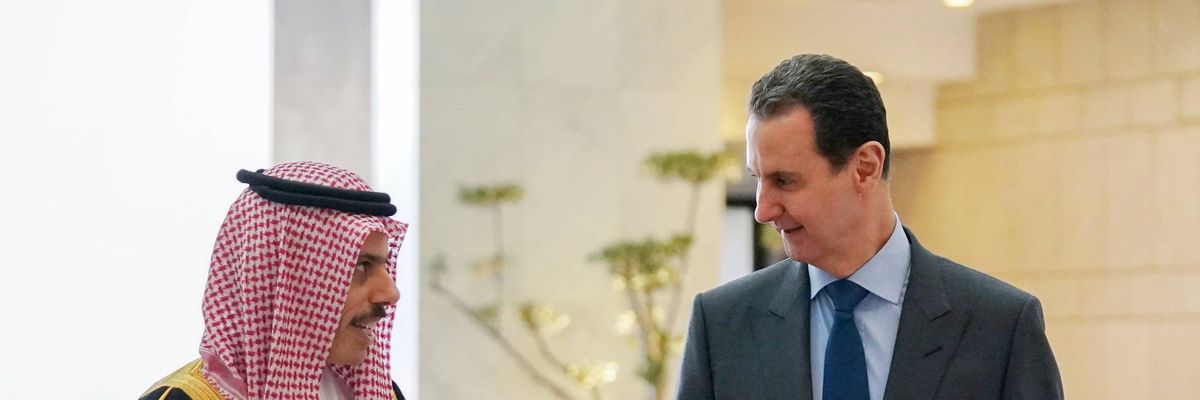
Meeting in Amman this week, the foreign ministers of Saudi Arabia, Jordan, Egypt, and Iraq joined their Syrian counterpart in demanding the restoration of the Assad government's sovereignty in all of Syria, strengthening Syrian government institutions, and ending operations by armed groups and militant organizations on Syrian soil.
The ministers also called for an end to foreign interference in Syria.
For Assad, that means U.S.-backed armed Kurdish groups, jihadists, Turkish-backed militants in northern Syria, and Turkish and U.S. forces.
The Gulf states would also include Iranian forces and aligned groups, which Assad views, alongside the Russian military, as invited by the government.
Russian-mediated talks between senior Turkish and Syrian officials that also involve Iranian representatives have so far failed to lead to a meeting between Assad and Turkish President Recep Tayyip Erdogan.
The deputy foreign ministers of the four countries met in Moscow last week to draft a roadmap for a meeting between the Syrian and Turkish leaders.
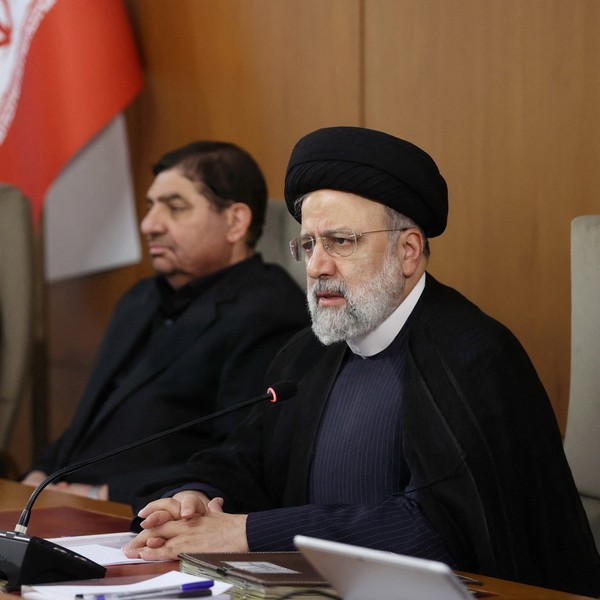
A Turkish-Syrian summit is likely to figure prominently during Iranian President Ebrahim Raisi’s visit to Damascus this week.
Until recently, Erdogan demanded Assad’s removal, supported Syrian opposition groups, and sought to prevent Syrian Kurds from carving out an autonomous region on Turkey’s border.
Assad has made a meeting with the Turkish leader conditional on Ankara’s willingness to withdraw its military from northern Syria and restore the situation that prevailed before the Syrian war.
Turkey has deployed thousands of troops in northern Syria, preventing the Russia-backed Syrian army from retaking the region.
Progress in Turkish-Syrian talks could depend on the outcome of the hard-fought Turkish presidential and parliamentary elections on May 14 that, according to opinion polls, promise to be a close race.
Also complicating Syria’s stabilization is Israel, the joker in the pack. Israel is unlikely to halt its attacks on Iranian positions and operations of Hezbollah, the Iranian-backed Lebanese Shiite militia, in Syria.
As a result, the Arab states’ caving into Assad’s demand is likely to produce, at the most, a limited quid pro quo.
Expressing opposition to Assad’s return to the Arab fold, Qatari Prime Minister Mohammed bin Abdulrahman Al-Thani noted that “there were reasons for the suspension of Syria from the Arab League and the boycott of the Syrian regime in that time, and these reasons still exist. The war has stopped, but Syrian people are still displaced, there are innocent people in prisons, there are many things."
With Arab leaders concerned that pressing Assad to hold officials accountable for wartime abuses, loosen the political reins, genuinely engage with opposition groups, and release thousands from prison would focus attention on their own autocracies and tarnished human rights records, addressing the refugee crisis is unlikely to produce results any time soon.
Moreover, encouraging refugees to return and persuading Assad to distance himself from Iran would entail significant investment in Syria’s reconstruction. That is likely to be hampered by U.S. sanctions that will remain in place, even if the Syrian leader returns to the Arab fold.
Without significant investment, few refugees will likely return to a country where an estimated 90 percent of the population lives under the poverty line, the local currency has devalued by 75 percent, and inflation is running at an estimated 55 percent.
As a result, drug smuggling may be one area where substantial results are achievable.
This week, Jordan's foreign ministry said that Syria had agreed at the meeting in Amman to take steps “to end drug smuggling,” a reference to Captagon, a highly addictive amphetamine.
Saudi Arabia, the UAE, Jordan, Iraq, Lebanon, and Greece have intercepted large amounts of Captagon manufactured in Syria. The production and illegal export of the drug worth an estimated $50 billion a year has become an economic lifeline for Assad’s regime.
U.S. Assistant Secretary of State for Near Eastern Affairs Barbara Leaf acknowledged that drug smuggling might be the major concession Arab states can wrest from Assad.
“Our approach…is to say… make sure that you get something for that engagement. And I would put ending the Captagon trade right at the top alongside ... providing relief to the Syrian people from the terrible decade of oppression that they've suffered,” she said.